EN
EN
 fr
fr  de
de  es
es  it
it  ru
ru  pt
pt  ar
ar  ms
ms  id
id 



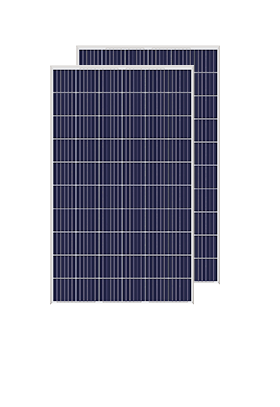



We have cooperated with more than 200 countries in solar energy projects and road lighting projects. We have exported products to many countries and participated in many important government projects around the world.




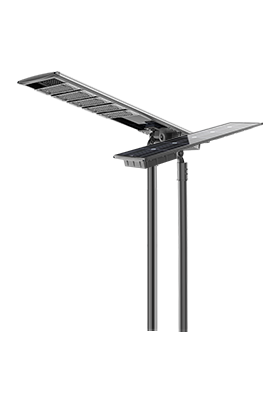


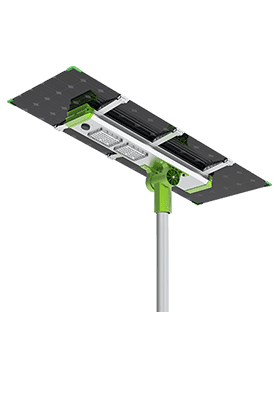
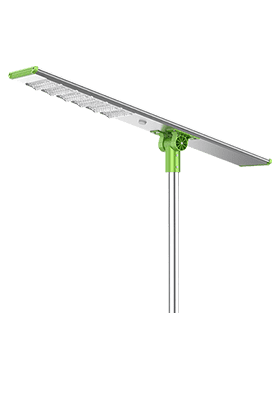
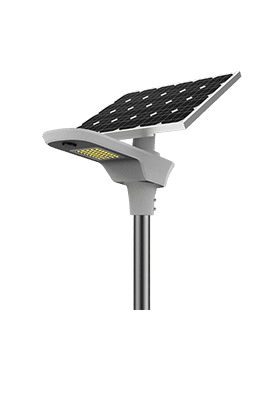


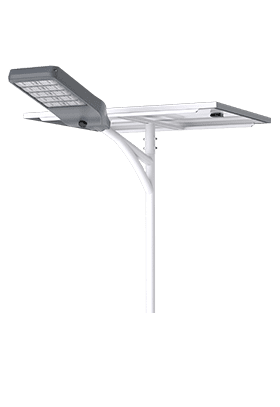
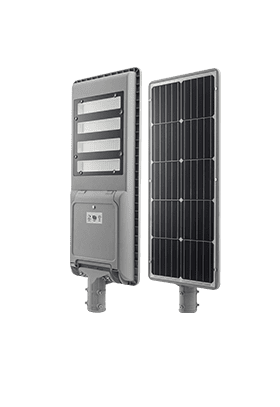
We have cooperated with more than 200 countries in solar energy projects and road lighting projects. We have exported products to many countries and participated in many important government projects around the world.

Anern has 17 years of experience in solar lighting and solar product manufacturing. Anern is headquartered in Guangzhou. With a production base of 30,000 square meters, our company has an R&D team of more than 100 people.
The U.S. market for battery energy storage is expanding rapidly across residential, commercial, industrial, and off-grid applications. As more solar projects combine photovoltaic generation with lithium batteries, buyers must look beyond battery capacity and price when evaluating an energy storage system.
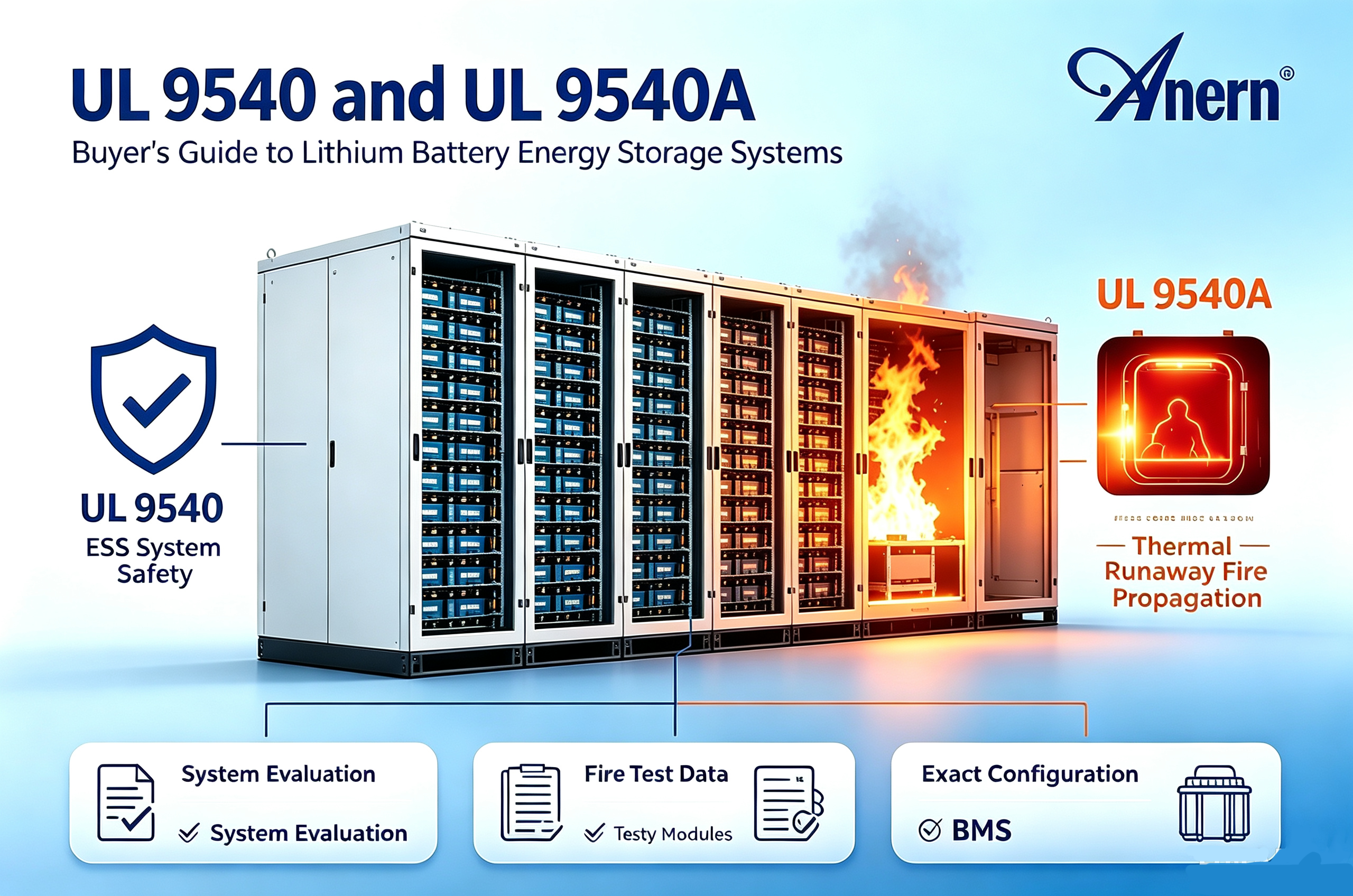
For projects using a lithium battery for solar system, two standards frequently appear in the U.S. compliance discussion: UL 9540 and UL 9540A. Although their names are similar, they serve different purposes.
UL 9540 addresses the safety of the complete energy storage system and equipment, while UL 9540A provides a test method for evaluating thermal runaway fire propagation. Understanding this distinction can help project developers, distributors, EPC contractors, and importers make better purchasing decisions.
UL 9540 is the Standard for Safety of Energy Storage Systems and Equipment. Its scope covers energy storage systems intended to receive and store energy and subsequently provide electrical energy to loads or an electric power system. The standard covers electrochemical, chemical, mechanical, thermal, and other energy-storage technologies.
For lithium battery projects, UL 9540 is important because it evaluates the ESS as a system, rather than treating the battery as an isolated component.
An energy storage system can include batteries, battery management systems, power conversion equipment, controls, protection devices, enclosures, and other components. UL 9540 evaluates how these elements work together and addresses system-level safety.
This distinction is particularly important when a project uses a hybrid solar inverter with battery. Having an individually certified battery and an individually certified inverter does not automatically mean that the combined system is a UL 9540-certified ESS.
UL 9540A is the Standard Test Method for Evaluating Thermal Runaway Fire Propagation in Battery Energy Storage Systems.
Rather than being a general product certification standard, UL 9540A provides a standardized method for studying what happens when thermal runaway occurs within a battery energy storage system.
The testing can examine thermal runaway behavior, heat and gas release, propagation between cells or modules, fire spread, deflagration risks, and the effectiveness of protection measures. UL Solutions identifies cell-level, module-level, unit-level, and installation-level testing within the UL 9540A methodology.
For buyers, the key point is simple:
UL 9540 evaluates the safety of the ESS; UL 9540A evaluates fire-propagation behavior under thermal runaway scenarios.
They are complementary rather than interchangeable.
U.S. energy storage projects are subject to a combination of product standards, electrical codes, fire codes, building requirements, and local authority requirements.
UL 9540 can provide evidence that an energy storage system has been evaluated as an integrated system rather than simply assembled from unrelated components.
This is particularly important when batteries and inverters come from different suppliers. UL Solutions explains that using individually certified components does not necessarily establish compatibility as a complete ESS. The interaction between the battery, inverter, BMS, and protection system needs to be appropriately evaluated.
For a project using a hybrid inverter with battery backup, buyers should therefore ask whether the proposed configuration is recognized as a complete ESS and whether the battery-inverter combination is covered by the relevant evaluation.
Lithium-ion battery systems can experience thermal runaway under certain failure conditions. Once thermal runaway begins, heat and gases may be released, potentially affecting neighboring cells, modules, battery units, or equipment.
UL 9540A is designed to characterize these risks and determine whether thermal runaway can propagate.
The test method becomes particularly relevant when evaluating larger battery systems, outdoor enclosures, containerized storage, and installations where fire separation or other protective measures depend on documented test results.
UL Solutions states that UL 9540A is explicitly cited in NFPA 855 for large-scale fire testing. The 2026 edition of NFPA 855 also introduces significant changes concerning large-scale fire testing and scenarios involving potential fire spread between BESS units.
This makes UL 9540A an increasingly important consideration for U.S. project planning.
Factor | UL 9540 | UL 9540A |
Main purpose | Safety evaluation of ESS equipment | Thermal runaway fire propagation testing |
Focus | Complete energy storage system | Battery thermal and fire behavior |
Typical scope | Battery, inverter/PCS, controls, protection and system integration | Cell, module, unit and installation levels |
Type | Product/system safety standard | Test method |
Main value for buyers | Demonstrates system-level evaluation | Provides fire-safety test data |
Relationship | System certification/evaluation | Supports fire-code and installation decisions |
A buyer should avoid treating a UL 9540A report as a replacement for UL 9540 certification.
Likewise, a UL 9540 listing does not mean that every possible installation configuration has identical fire behavior. The actual battery chemistry, enclosure, system design, spacing, controls, and installation conditions still matter.
When sourcing solar power systems with battery storage, U.S. buyers should request documentation at both the component and system levels.
Start with the exact product configuration. Record the battery model, chemistry, nominal voltage, capacity, inverter model, enclosure type, BMS, and intended installation environment.
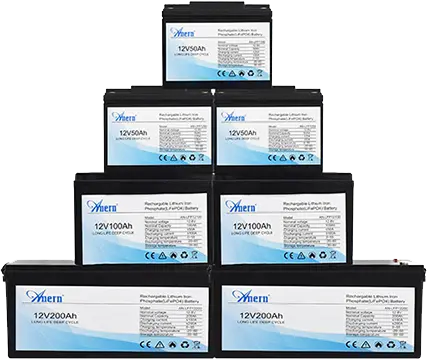
This is important because a supplier may offer multiple battery configurations. Anern, for example, lists 25.6V 200Ah, 48V 200Ah, 48V 300Ah, rack-mounted, wall-mounted, and commercial high-voltage lithium battery solutions.
The buyer should then confirm whether the documentation applies to the exact configuration being purchased, rather than a similar product in the same family.
For larger projects, also verify whether the proposed system has relevant UL 9540 evaluation and whether UL 9540A test data is available for the intended battery and installation configuration.
A common purchasing mistake is to focus heavily on capacity.
For example, a 25.6V 200Ah lithium battery and a 48V 200Ah lithium battery both have a nominal capacity of 200Ah, but they represent different voltage and energy configurations.
Anern's current portfolio includes both types, as well as 300Ah products and commercial systems such as a 60kWh/30kW high-voltage lithium battery.
Capacity alone, however, does not determine whether a battery-storage system is suitable for a U.S. installation.
Buyers should evaluate electrical compatibility, BMS functionality, inverter integration, enclosure design, installation environment, fire protection, and applicable certification requirements together.
This is especially important when comparing solar power battery storage options or calculating the expected solar power systems with battery storage price. A lower equipment quotation may not represent a lower total project cost if additional engineering, testing, or compliance work is required.
One of the most useful aspects of UL 9540A is its multi-level approach.
At the cell level, testing evaluates thermal runaway characteristics and the gases generated by the cell.
At the module level, testing examines propagation between cells and evaluates heat and gas release.
At the unit level, the focus expands to propagation between modules, heat and gas release, and potential deflagration or re-ignition.
At the installation level, testing can evaluate the performance of fire protection systems and the potential impact of a larger-scale event.
The applicable testing strategy depends on the ESS design, installation conditions, applicable codes, and project requirements. Buyers should therefore discuss the intended installation with the manufacturer and relevant code professionals rather than assuming that one test level applies to every project.
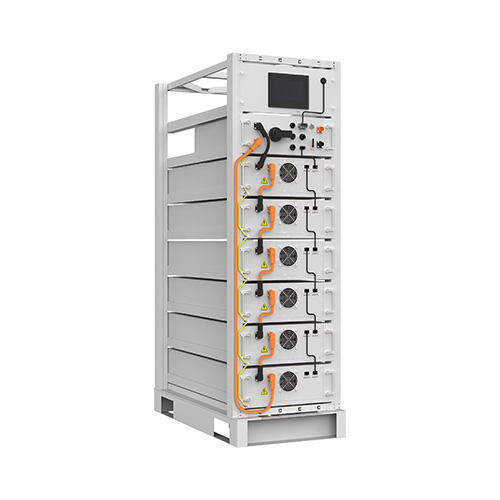
Modern solar storage systems often combine a LiFePO4 battery with an inverter capable of managing PV generation, battery charging, battery discharge, grid interaction, and backup loads.
This creates an important compliance issue: the battery and inverter cannot always be evaluated independently.
UL Solutions specifically emphasizes the importance of compatibility between the battery bank, inverter, BMS, and protection systems when forming an ESS.
Therefore, a buyer considering a hybrid battery inverter should ask:
Is the battery approved for the intended inverter?
Is the complete configuration covered by the applicable ESS evaluation?
Are BMS communication and protection functions compatible?
Does the installation match the evaluated configuration?
Is relevant UL 9540A data available when required?
Are local AHJ requirements satisfied?
These questions can be more valuable than simply comparing battery capacity or inverter output.
Anern offers a broad lithium battery portfolio for residential, industrial, commercial, and solar-storage applications. Its current range includes wall-mounted and rack-mounted LiFePO4 batteries, 100Ah, 200Ah, and 300Ah models, as well as high-voltage commercial storage systems.
The company also states that its lithium battery systems incorporate BMS technology and are designed for applications including home, industrial, and commercial solar systems. Its website identifies CE, RoHS, UN38.3, MSDS, and other safety documentation for its battery products.
For U.S. buyers, however, these documents should be considered separately from UL 9540 and UL 9540A requirements. A supplier's general battery certifications do not automatically establish compliance for a complete U.S. ESS installation.
The correct approach is to request product-specific and system-specific documentation for the proposed project.
Before purchasing a lithium battery energy storage system for the United States, buyers should confirm:
1. Product identity: Verify the exact battery, inverter, BMS, and enclosure models.
2. System evaluation: Determine whether the complete ESS has applicable UL 9540 certification or evaluation.
3. Fire testing: Check whether UL 9540A test data is available and applicable to the proposed configuration.
4. Installation conditions: Confirm that battery capacity, enclosure, spacing, location, and protection measures match the evaluated design.
5. Code requirements: Review applicable NFPA, NEC, IFC, IRC, and local AHJ requirements.
6. Documentation: Request current certificates, reports, manuals, installation instructions, and system compatibility information.
7. Project-specific review: For larger commercial systems, coordinate with the EPC contractor, fire-safety engineer, and authority having jurisdiction before equipment is finalized.
For U.S. lithium battery energy storage projects, UL 9540 and UL 9540A answer different but connected safety questions.
UL 9540 focuses on the complete energy storage system and its integrated safety, while UL 9540A provides a structured method for evaluating thermal runaway fire propagation. Neither should be treated as a substitute for the other when both are relevant to a project.
For buyers comparing a LiFePO4 battery for solar system or commercial BESS, compliance should therefore be evaluated at the system level—not simply by looking at the battery's voltage, Ah rating, or price.
As U.S. energy-storage regulations continue to evolve, early verification of UL 9540, UL 9540A, applicable fire codes, and local AHJ requirements can reduce redesign risks and help create a clearer path from procurement to commissioning. For manufacturers such as Anern, maintaining a broad battery and solar-storage portfolio provides flexibility, but U.S. buyers should always confirm that the specific configuration proposed for their project meets the applicable American requirements.