EN
EN
 fr
fr  de
de  es
es  it
it  ru
ru  pt
pt  ar
ar  id
id  ms
ms  uk
uk 



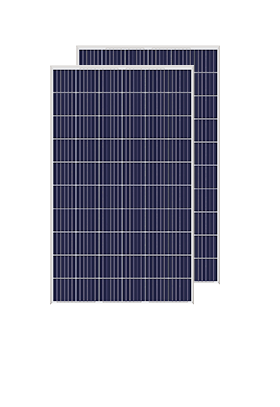


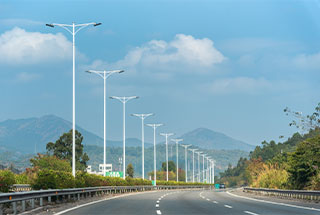
We have cooperated with more than 200 countries in solar energy projects and road lighting projects. We have exported products to many countries and participated in many important government projects around the world.




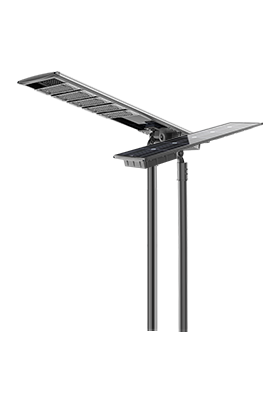


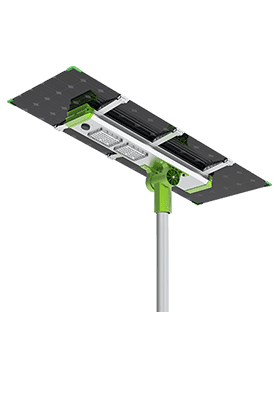
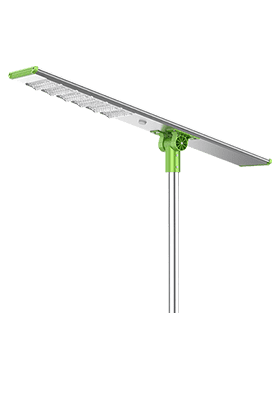
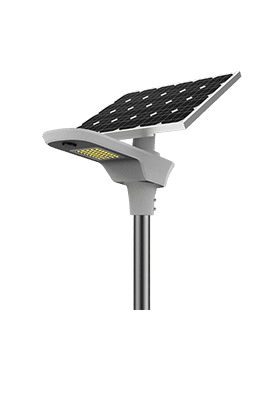


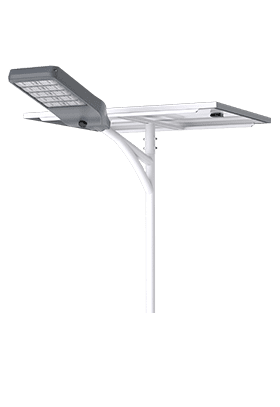
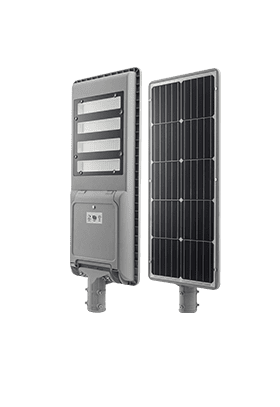
We have cooperated with more than 200 countries in solar energy projects and road lighting projects. We have exported products to many countries and participated in many important government projects around the world.

Anern has 17 years of experience in solar lighting and solar product manufacturing. Anern is headquartered in Guangzhou. With a production base of 30,000 square meters, our company has an R&D team of more than 100 people.
Reliable electricity is not simply an operating expense for a rural school or clinic. It determines whether students can use computers, teachers can deliver digital lessons, clinics can refrigerate temperature-sensitive medical supplies, health workers can respond to emergencies after dark, and public facilities can continue operating during utility outages.
A complete solar power system for a remote public facility normally combines solar panels, an MPPT or hybrid solar inverter, lithium battery storage, electrical protection, monitoring equipment and correctly separated load circuits. Outdoor solar lighting can also improve access around school entrances, clinic pathways, water points and staff accommodation without placing additional demand on the building’s main battery bank.
Solar photovoltaic systems are particularly relevant where extending the utility grid is technically difficult, electricity is unreliable or diesel fuel is expensive to transport. WHO reports that close to one billion people in low- and lower-middle-income countries are served by health-care facilities with unreliable electricity or no electricity access. The challenge is especially severe in rural areas.
Schools and clinics have different operating requirements, but they face a common problem: even a short interruption can affect essential public services.
For a school, unreliable electricity may interrupt:
Classroom lighting
Computers and digital learning equipment
Internet and communications
Science laboratories
Printers and administrative equipment
Water pumps
Fans and ventilation
Security lighting
Evening classes
Teacher accommodation
For a clinic, electricity may be required for:
Examination-room lighting
Vaccine and medicine refrigeration
Laboratory equipment
Communications
Patient-record systems
Water pumping
Sterilization equipment
Oxygen concentrators
Maternity services
Emergency treatment
Staff accommodation
The scale of the education challenge is also significant. UNESCO reports that 72% of primary schools in low-income countries lack electricity, limiting access to digital technology and other basic educational infrastructure.
The objective of a public-service solar project should therefore not be described simply as “installing panels.” It should be to deliver an electricity service with defined power capacity, operating hours, backup duration and maintenance responsibilities.
A reliable school or clinic installation consists of several coordinated components.
| System component | Main function |
|---|---|
| Solar panels | Convert sunlight into DC electricity |
| Mounting structure | Secure the PV modules to a roof or ground structure |
| MPPT solar inverter | Optimize PV output and convert DC electricity into AC |
| Hybrid inverter | Coordinate solar generation, battery storage and utility or generator input |
| Lithium battery | Store electricity for nighttime use and periods of low solar production |
| Distribution equipment | Separate and protect different building circuits |
| Smart meter or monitoring platform | Record generation, consumption, battery status and alarms |
| Solar outdoor lights | Provide independent lighting for pathways, entrances and open areas |
| Generator or grid input | Provide supplementary power where required |
| Protection equipment | Provide isolation, surge protection, overcurrent protection and grounding |
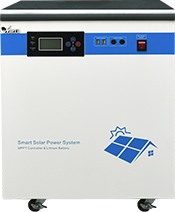
Anern’s solar power system range combines solar panels, inverters, lithium batteries and associated equipment for off-grid, hybrid and energy storage applications.
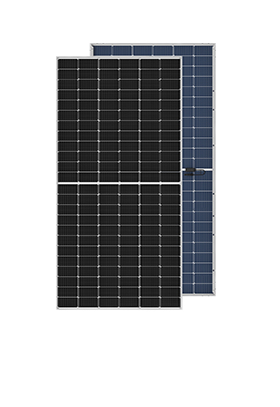
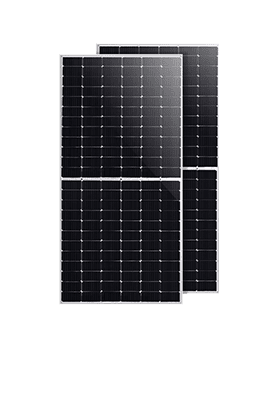
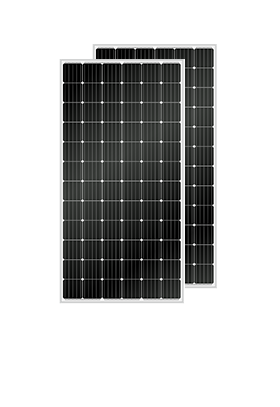
Solar panels form the generation side of the system. Their required capacity depends on daily energy demand, local solar resources, module orientation, shading, temperature and system losses.
For rooftop solar power generation for education institutions, the engineer must also assess:
Available roof area
Roof structural capacity
Roof orientation and tilt
Shading from trees and surrounding buildings
Drainage and waterproofing
Wind loading
Maintenance access
Cable routing
Lightning protection
Where the roof is unsuitable, a ground-mounted array or solar carport may be more practical.
The inverter converts the DC power produced by the PV array and battery into AC electricity suitable for school or clinic equipment.
A modern MPPT inverter continuously adjusts the operating point of the PV array to obtain more of the available solar energy as irradiance and panel temperature change. Buyers should compare MPPT voltage range, maximum PV voltage, input current, number of independent trackers and inverter output capacity. Anern’s MPPT inverter guide explains these selection parameters in greater detail.
Battery storage allows the facility to continue operating after sunset, during cloudy periods or when the utility supply fails.
LiFePO4 lithium batteries are commonly considered for public facilities because they can support frequent cycling, modular capacity expansion, battery-management-system protection and communication with compatible solar inverters.
The battery must be selected according to:
Required usable energy
Backup duration
Maximum charging current
Maximum discharge current
Inverter voltage
Peak load
Permitted depth of discharge
Operating temperature
BMS communication protocol
A physical CAN or RS485 port does not automatically confirm compatibility. The inverter protocol, battery protocol, cable pinout and software configuration must match. Anern’s Li-ion inverter compatibility guide explains how lithium batteries and solar inverters should be coordinated.
The benefits of solar panels in schools extend beyond reducing electricity purchased from the grid.
Solar panels combined with battery storage can maintain lighting and essential teaching equipment when the utility supply is unavailable or unstable.
This is particularly important for schools offering:
Early-morning classes
Evening study
Adult education
Computer training
Digital examinations
Community education programs
A grid-connected PV system without batteries can reduce daytime electricity consumption, but it may not continue operating during a grid outage. Schools requiring continuity should consider a hybrid or off-grid design with defined backup circuits.
Computers, projectors, routers, printers and communication equipment require stable electricity. Solar energy for schools can provide the foundation for digital lessons and access to online teaching resources.
UNICEF has used solar power in education programs to support computers and digital skills development. One program described schools equipped with solar panels, batteries and desktop computers, while another supported solar systems in 19 schools in Zambia, benefiting more than 6,000 students.
Solar electricity can operate borehole pumps, pressure pumps, water-treatment equipment and storage-tank controls.
These loads should be scheduled carefully. A water pump may have a high starting current, even when its average daily energy consumption is moderate. The inverter must be capable of supporting the surge demand.
Where possible, pumping can be scheduled during strong daylight hours so that the solar panels directly supply much of the required energy.
A solar panel for outdoor lights can be used independently from the building’s main system.
Solar street lights can illuminate:
School entrances
Clinic gates
Pedestrian paths
Staff accommodation
Water points
Parking areas
Outdoor waiting areas
Toilets and sanitation blocks
Emergency assembly areas
Independent solar lights reduce the need to extend underground AC wiring across a campus. They also prevent outdoor lighting from consuming the energy reserved for computers, refrigeration or medical equipment.
A school installation can also function as a demonstration system.
A monitoring screen can show students:
Current solar generation
Daily electricity production
Battery state of charge
School energy consumption
Avoided grid consumption
Historical generation patterns
Solar in schools can therefore support both infrastructure and practical STEM education. World Bank and UNICEF school programs have similarly connected solar infrastructure with education, digital skills and community resilience.
A clinic cannot be designed by taking a residential solar system and simply increasing its capacity.
Medical loads must first be divided by criticality.
These loads must receive the highest level of availability:
Vaccine refrigerators
Emergency-room lighting
Communications
Essential laboratory equipment
Maternity-room lighting
Selected oxygen equipment
Patient monitoring
Essential water pumps
Security systems
These may be disconnected or scheduled when battery capacity is limited:
Office computers
General ventilation
Non-critical room lighting
Laundry equipment
Staff appliances
Selected sterilization loads
General water heating
These can normally operate when solar production is high:
Large water pumps
Laundry
Non-essential cooling
Workshop equipment
General cleaning equipment
Battery charging for non-critical devices
Separating these circuits prevents a non-essential appliance from exhausting the energy reserved for medical services.
WHO identifies electricity as essential for immunization, childbirth, emergency care and other health services. It also notes that solar PV and other decentralized clean-energy systems can be deployed to improve the resilience of rural health-care facilities.
For equipment involved in diagnosis, treatment or life support, the system designer must verify power-quality requirements with the equipment manufacturer. Pure sine-wave output, voltage stability and a properly engineered backup architecture may be required.
The correct architecture depends on grid availability and the required level of service.
| System type | Suitable conditions | Battery included | Operation during grid outage |
|---|---|---|---|
| Grid-tied solar | Reliable utility grid and daytime cost reduction | Usually no | Normally no |
| Hybrid solar system | Utility available but unstable or expensive | Yes | Yes, for designated loads |
| Off-grid solar system | No practical grid connection | Yes | Yes |
| Solar-generator hybrid | Long cloudy periods or large seasonal loads | Yes | Yes |
| Solar microgrid | Multiple buildings or community facilities | Yes | Yes |
A grid-tied system can reduce daytime electricity purchases at a school or larger healthcare facility. It is most appropriate when grid electricity is already reliable and the primary objective is cost reduction.
However, a standard grid-tied inverter normally disconnects when the utility grid fails. Battery backup requires a hybrid system or another approved backup architecture.
A hybrid inverter manages electricity between:
Solar panels
Battery storage
Utility grid
Backup circuits
General loads
A generator, where supported
The system may prioritize solar energy, charge the battery with surplus PV power and use stored energy when solar production falls.
Anern’s guide to hybrid solar inverter working principles explains how hybrid inverters coordinate PV generation, battery storage and utility input.
An off-grid solar system is required when the school or clinic cannot depend on a utility connection.
The design must consider:
Seasonal solar variation
Battery autonomy
Load growth
Generator backup
Extended cloudy periods
Equipment starting current
Maintenance and spare parts
Remote technical support
Because there is no grid to compensate for an undersized system, the load survey and energy calculations must be completed before equipment is selected.
A system should be sized from an appliance-level load schedule rather than only from the building area or number of occupants.
For every appliance:
Daily energy in kWh = power in watts × quantity × operating hours ÷ 1,000
For example:
| Load | Quantity | Rated power | Daily use | Daily energy |
|---|---|---|---|---|
| LED classroom lights | 20 | 20W | 6 hours | 2.4kWh |
| Computers | 10 | 80W | 4 hours | 3.2kWh |
| Projector | 1 | 300W | 3 hours | 0.9kWh |
| Internet equipment | 1 set | 100W | 10 hours | 1.0kWh |
| Water pump | 1 | 750W | 1 hour | 0.75kWh |
| Other loads | — | — | — | 1.75kWh |
| Total | 10kWh/day |
Rated wattage should be checked from the actual equipment label. Refrigerators, pumps, compressors and medical equipment may have startup or cycling characteristics that are not reflected by a simple wattage calculation.
A simplified early-stage calculation is:
PV array capacity = daily energy demand ÷ peak sun hours ÷ system efficiency
If a facility uses 12kWh per day, receives five equivalent peak-sun hours and uses a preliminary system factor of 75%:
12 ÷ 5 ÷ 0.75 = 3.2kWp
After including growth and weather margins, the preliminary design might increase to approximately 4–5kWp.
This is only an initial estimate. Final design must use local irradiance, module temperature, tilt, shading and seasonal weather data.
A simplified lithium-battery calculation is:
Nominal battery capacity = required backup energy ÷ usable depth of discharge ÷ inverter efficiency
If essential loads require 12kWh and the design uses 80% usable depth of discharge with 90% conversion efficiency:
12 ÷ 0.80 ÷ 0.90 = 16.7kWh
The designer may increase this capacity for:
Additional autonomy
Battery aging
Low-temperature operation
Future loads
Extended cloudy periods
Critical healthcare requirements
The inverter must support both continuous power and surge power.
A school may have a modest average load but a high short-duration peak caused by:
Water pumps
Refrigerators
Air conditioners
Laboratory motors
Workshop tools
Printers
Medical compressors
For installations with demanding surge loads, a transformer-based or low-frequency inverter may be evaluated. Anern’s low-frequency power inverter guide discusses applications requiring stable output and stronger load-starting capability.
The use of a low-frequency inverter does not by itself certify compatibility with medical equipment. Voltage, frequency, waveform, grounding and transfer characteristics must still be verified.
The following examples are conceptual and should not be used as final quotations.
Potential loads:
Six classrooms
LED lighting
Ten computers
Router and communications
Administration office
One water pump
Outdoor security lights
Possible architecture:
Rooftop or ground-mounted PV array
MPPT hybrid inverter
LiFePO4 battery bank
Separate water-pump circuit
Independent solar outdoor lights
Remote monitoring
Potential loads:
Examination-room lighting
Vaccine refrigeration
Laboratory equipment
Communications
Computers
Water pumping
Maternity-room lighting
Selected oxygen equipment
Possible architecture:
PV array sized for critical and daytime loads
Hybrid or off-grid inverter system
Modular LiFePO4 storage
Essential-load distribution panel
Generator input
Independent outdoor solar lighting
Remote alarms and energy monitoring
Where both buildings are close together, a community energy system may supply:
School buildings
Clinic
Water pump
Staff accommodation
Outdoor lights
Communications equipment
A shared microgrid can reduce equipment duplication, but it requires proper metering, load allocation, distribution protection and clear responsibility for operation and maintenance.
There is no universal answer to solar panels for schools cost because panels are only one part of the project.
The budget may include:
Solar modules
Inverter capacity
Battery capacity
Rooftop or ground mounting
Distribution panels
DC and AC cables
Surge protection
Grounding
Monitoring equipment
Outdoor solar lights
Shipping and import charges
Remote-site transportation
Civil works
Installation
Commissioning
User training
Spare parts
Preventive maintenance
Battery autonomy is often one of the largest cost variables. A system designed only for daytime computer use will cost less than a system required to maintain a clinic for two cloudy days without a generator.
Buyers should compare cost using:
Cost per usable kWh of storage
Cost per kWp of installed PV
Expected battery replacement intervals
Generator fuel reduction
Maintenance requirements
Warranty coverage
Spare-parts availability
Project lifetime
A low equipment quotation may become expensive if it excludes cables, protection devices, mounting structures, commissioning or battery-inverter communication.
Public-service systems should be adapted to the destination rather than sold as a single global configuration.
Priority markets: Iraq, Lebanon, Syria, the UAE, Afghanistan, Yemen and Saudi Arabia.
Projects may require:
High-temperature equipment derating
Dust-control planning
Strong ventilation
Outdoor enclosures
Grid and generator coordination
Battery backup
Solar street lighting
Easy-to-clean module layouts
In Yemen, World Bank-supported programs have used solar systems to restore electricity to schools, hospitals, water facilities and other essential public infrastructure where grid and fuel supplies are limited.
Priority markets: Nigeria, Zambia, Kenya, Mali, Burkina Faso, South Africa, Egypt, Tanzania, Mozambique, the Democratic Republic of the Congo, Botswana, Ethiopia, Morocco, Cameroon, Zimbabwe, Ghana, Algeria, Libya and Uganda.
Key design considerations may include:
Off-grid autonomy
Seasonal solar variation
Lightning and surge protection
Long-distance transportation
Remote maintenance
Water pumping
Campus security lighting
Modular battery expansion
Generator reduction
Solar school and healthcare projects in Zambia, Zimbabwe and other African markets demonstrate how decentralized energy can support education, digital access and community services. (联合国儿童基金会)
Priority markets: the Philippines, Indonesia, Malaysia, Myanmar, Thailand, Vietnam and Pakistan.
Site-specific considerations may include:
High humidity
Heavy rainfall
Corrosion resistance
Flood elevation
Roof waterproofing
Wind loading
Battery-room ventilation
Outdoor enclosure protection
Schools in remote or island communities may benefit from hybrid or stand-alone systems where grid extension is difficult.
Priority markets: Colombia, Mexico, Brazil, Peru, Argentina, Chile, Honduras, Ecuador, the United States, Cuba and the Dominican Republic.
System designs may range from rooftop grid-connected installations to off-grid microgrids for remote communities.
World Bank-supported programs in Mexico and Peru have used decentralized and renewable electricity systems to serve remote communities, including schools, clinics and community facilities. (世界银行)
Priority markets: Uzbekistan, Kazakhstan, Kyrgyzstan, Tajikistan, Ukraine, Türkiye, Germany, Romania, Poland and France.
For storage-focused projects, priorities may include:
Backup during utility interruptions
Time-of-use energy management
Cold-temperature battery protection
Grid charging
Hybrid inverter operation
Indoor battery installation
Local grid-code compliance
Commercial energy storage
In Uzbekistan, World Bank-supported community investments have included solar panels that provide stable electricity for rural classrooms. (世界银行)
A successful solar schools program should cover the complete project lifecycle.
Collect:
GPS location
Building drawings
Roof photographs
Existing electrical supply
Generator information
Appliance list
Operating hours
Planned future equipment
Local weather conditions
Staff and student numbers
Separate:
Essential loads
Important loads
Deferrable loads
Prohibited high-consumption loads
This is particularly important when the system supplies both a school and clinic.
The design package should define:
PV array capacity
Inverter model and output
Battery capacity
Backup duration
System voltage
Distribution architecture
Protection devices
Cable sizes
Earthing
Mounting structure
Monitoring
Outdoor lighting
Installation should follow the approved drawings and product manuals.
Anern’s solar inverter installation guide covers mounting, ventilation, wiring, grounding, battery connection and commissioning considerations for off-grid and hybrid inverters.
Local operators should understand:
Normal system status
Battery state of charge
Load restrictions
Alarm codes
Generator starting procedures
Safe isolation
Basic cleaning
Reporting procedures
Maintenance should include:
Cleaning solar panels
Checking mounting structures
Inspecting cables and terminals
Reviewing inverter alarms
Checking ventilation
Testing protection devices
Reviewing battery communication
Verifying outdoor light operation
Anern’s solar inverter maintenance guide provides inspection and maintenance information for long-term system operation.
Project developers can use the following Anern resources during equipment evaluation and installation:
Solar Inverter Catalog — Compare inverter series, power ratings and technical parameters.
Solar Inverter User Manuals — Review model-specific settings, wiring and operation.
Solar Inverter Installation Guide — Reference mounting, connection, grounding and commissioning procedures.
Solar Inverter Maintenance Guide — Plan routine inspections and fault prevention.
Solar Product Video Center — View inverter, lithium battery, solar system and solar lighting demonstrations.
Anern’s resource center includes product manuals, installation information and videos covering solar inverters, batteries, power systems and solar street lights.
Schools, clinics and public-service projects are exposed to greater integration risk than a basic household installation.
The solar panels, inverter, battery, BMS, smart meter, protection equipment and monitoring platform must work together. Purchasing these components without confirming compatibility can lead to:
Incorrect charging
Battery communication failure
Limited backup output
Unexpected inverter shutdown
Inaccurate monitoring
Warranty disputes
Delayed commissioning
Anern supplies solar inverters, LiFePO4 batteries, complete solar power systems, commercial energy storage and solar street lighting. Its published company information states 17 years of solar manufacturing experience, a 30,000-square-meter production base and an R&D team of more than 100 people.
Buyers evaluating Chinese solar energy companies should compare manufacturing capability, system design, documentation, certification, warranty procedures and after-sales support—not only equipment price.
Anern’s solar power system project portfolio presents inverter, lithium battery and complete system installations in markets including Zambia, Chad, Myanmar and Brazil. These references allow distributors, EPC contractors and public-sector buyers to review actual system applications before specifying equipment.
The main benefits include more reliable lighting, support for computers and internet equipment, improved water pumping, outdoor security lighting, lower dependence on diesel generators and a practical resource for renewable-energy education.
Cost depends on daily energy demand, PV capacity, required battery backup, inverter output, installation type, transportation, protection equipment and local labor. A full system quotation should be based on a load schedule and site survey.
Yes, provided the roof has sufficient usable area and structural capacity and the PV array is correctly sized. Battery storage is required when electricity is needed at night or during grid outages.
An MPPT off-grid or hybrid inverter is commonly appropriate. The final selection depends on available grid power, battery voltage, maximum simultaneous load, motor-starting requirements and required backup operation.
Yes, but the distribution system must separate clinic-critical loads from school and non-essential loads. The system should also define which loads are disconnected when battery capacity is limited.
Backup duration should be determined from critical-load energy consumption, expected outage duration, weather conditions and generator availability. Critical refrigeration and emergency loads may require a higher level of redundancy.
LiFePO4 batteries are suitable when correctly matched to the inverter and BMS communication protocol. Battery voltage, charging current, discharge current, temperature and usable capacity must be verified.
Not always. Independent solar street lights can reduce the main system load and continue operating separately from the school or clinic power system.
A complete program should include facility surveys, load audits, system design, procurement standards, installation, commissioning, user training, monitoring, maintenance and spare-parts planning.
Monitoring should be reviewed regularly, while physical inspections should follow site conditions and manufacturer recommendations. Dusty, humid or corrosive environments may require more frequent inspection and cleaning.
Solar power systems can provide schools and clinics in remote communities with more than renewable electricity. They can support education, healthcare delivery, water access, communications, security and broader community resilience.
The most effective installation is not based on the maximum number of solar panels. It is based on a verified load schedule and a coordinated system that includes:
Correctly sized solar panels
An MPPT, hybrid or off-grid inverter
Adequate lithium battery storage
Separate critical-load circuits
Independent outdoor solar lighting
Electrical protection
Monitoring
Local operator training
Long-term maintenance
For schools, the system should support learning, administration, digital equipment, water and safe outdoor access. For clinics, it must prioritize critical healthcare loads and provide a defined level of backup and redundancy.
By sourcing the solar inverter, battery, panels, monitoring equipment and complete solar system from a coordinated product platform, project developers can reduce compatibility risks and develop more reliable public-service infrastructure for remote communities.