EN
EN
 fr
fr  de
de  es
es  it
it  ru
ru  pt
pt  ar
ar  ms
ms  id
id 

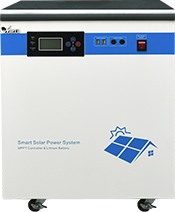


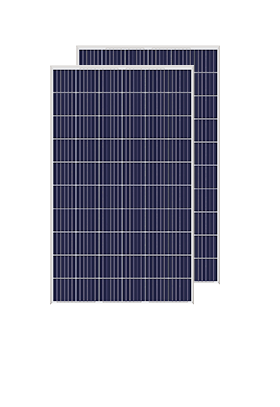


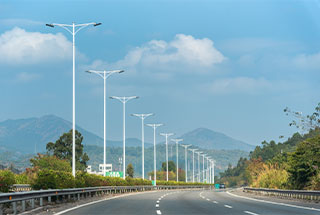
We have cooperated with more than 200 countries in solar energy projects and road lighting projects. We have exported products to many countries and participated in many important government projects around the world.




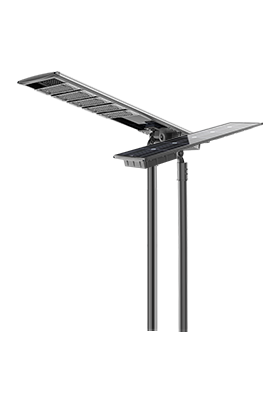


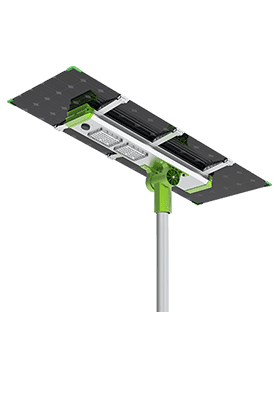
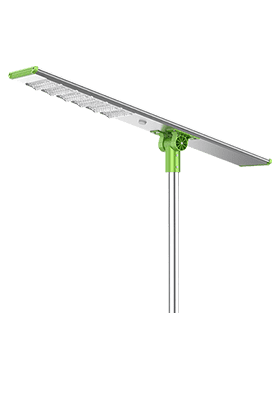
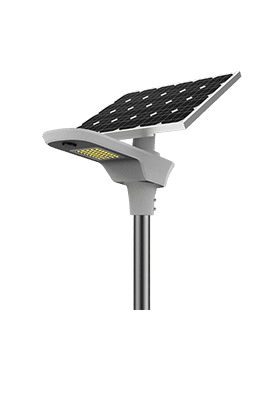


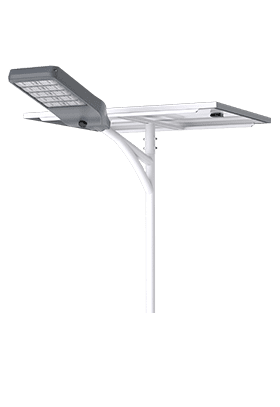
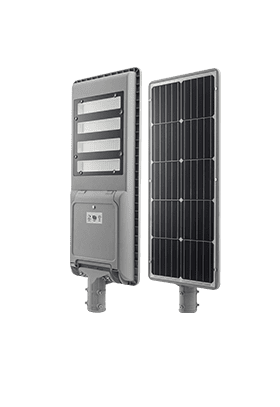
We have cooperated with more than 200 countries in solar energy projects and road lighting projects. We have exported products to many countries and participated in many important government projects around the world.

Anern has 17 years of experience in solar lighting and solar product manufacturing. Anern is headquartered in Guangzhou. With a production base of 30,000 square meters, our company has an R&D team of more than 100 people.
Wall-mounted solar battery, after being charged, will exhibit a phenomenon where the capacity decreases during storage. This phenomenon is called self-discharge, also known as charge retention capability, which refers to the battery's ability to maintain stored electricity when not in use. The percentage of self-discharged electricity over a certain period in relation to the battery's total capacity is the "self-discharge rate." The self-discharge rate is usually calculated monthly. For example, if a battery with a capacity of 12Ah discharges 0.36Ah within a month, leaving 11.64Ah, then the self-discharge rate of this battery is 3%.
The self-discharge phenomenon of batteries is related to various factors, which can be broadly divided into battery-intrinsic factors and environmental factors.
Battery-intrinsic Factors
During battery manufacturing, due to limitations in technology or environmental impacts, there will inevitably be some impurities on the materials inside the battery, such as the positive and negative plates and the separator. These impurities can cause a tiny short circuit between the positive and negative electrodes, leading to energy loss.
Additionally, the natural decomposition of internal materials and poor insulation of the battery casing can also affect self-discharge.
Environmental Factors
During the storage of wall-mounted solar battery, environmental temperature, humidity, and dust can all affect the stability of the internal materials, causing energy loss. Moreover, in energy storage batteries, the BMS (Battery Management System) itself can also consume a small amount of battery energy.
The self-discharge phenomenon is present in almost all batteries, but there's no need to worry. In reality, the self-discharge rate of batteries is very low. For lithium-ion batteries, the self-discharge rate is generally around 3% per month, which basically does not affect the normal use of the battery and does not cause any usage issues.
Energy density refers to the amount of energy stored in a unit volume or mass of a substance. The energy density of a battery is defined similarly. It is expressed as the ratio of the battery's energy to its mass, with the unit being Wh/kg (watt-hours per kilogram; if measured by unit volume, the unit is watt-hours per liter).
Its value indicates the ability of a wall-mounted solar battery to store electrical energy. Two batteries of equal mass, the one with higher energy density can store more electrical energy. Traditional lead-acid batteries have an energy density of about 40Wh/kg, while mainstream lithium batteries, depending on the specific battery materials used, can achieve energy densities between 100-350Wh/kg. The relatively new sodium batteries in the industry have an energy density ranging between 100-160Wh/kg.
Wall-mounted solar battery with higher energy density is smaller and lighter in size and volume at the same capacity, which makes their product more competitive in the market. Users evidently prefer batteries that are smaller, lighter, and can provide power for a longer duration rather than cumbersome batteries that take up a lot of space but provide only a small amount of energy. For lithium batteries, higher energy density often means longer service life, and lower self-discharge rate, and other advantages.
However, more energy storage means that in the event of thermal runaway, the potential damage could be greater, posing serious safety risks. Therefore, higher standards for the BMS (Battery Management System) and overall safety design are required for high-energy-density batteries. The production cost, manufacturing process, and other factors also increase, making it harder for the final product to be competitively priced. Thus, the manufacture of a reasonable battery product often requires considering various factors like cost, performance, safety, and price.