EN
EN
 fr
fr  de
de  es
es  it
it  ru
ru  pt
pt  ar
ar  ms
ms  id
id 



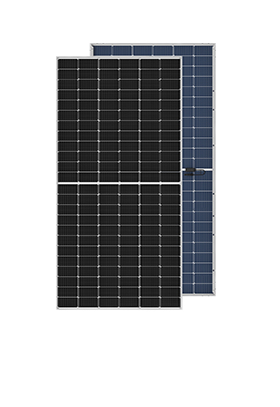
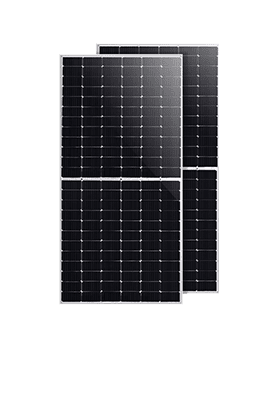
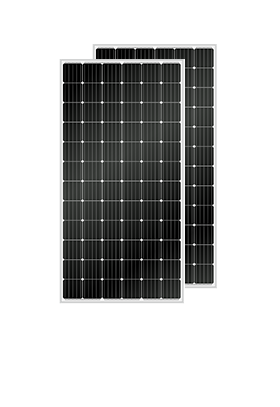
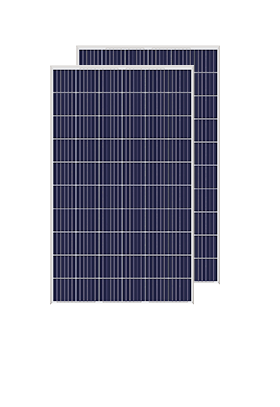



We have cooperated with more than 200 countries in solar energy projects and road lighting projects. We have exported products to many countries and participated in many important government projects around the world.




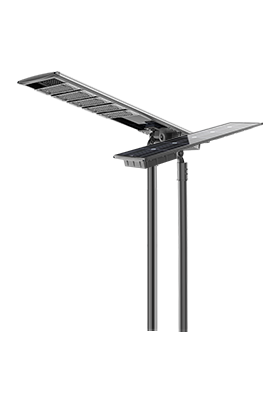


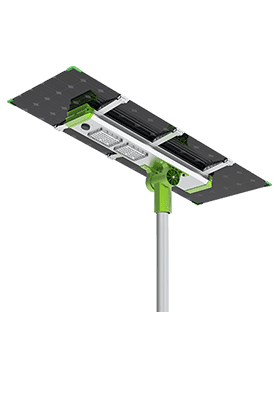
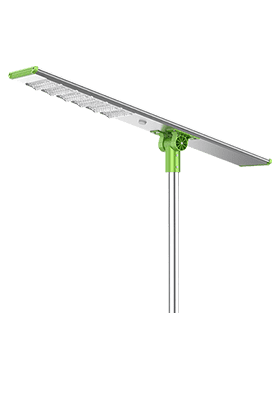
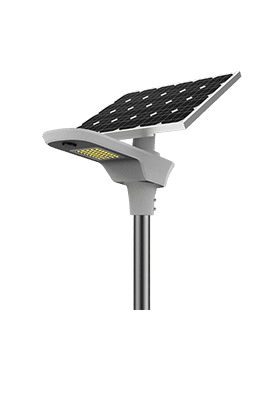


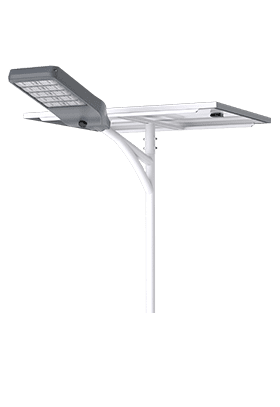
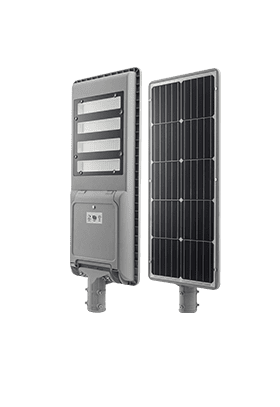
We have cooperated with more than 200 countries in solar energy projects and road lighting projects. We have exported products to many countries and participated in many important government projects around the world.

Anern has 17 years of experience in solar lighting and solar product manufacturing. Anern is headquartered in Guangzhou. With a production base of 30,000 square meters, our company has an R&D team of more than 100 people.
A solar inverter is the power conversion and control unit that converts PV DC output into grid- or load-ready AC power, while managing MPPT, protection, monitoring, and (for hybrid/off-grid models) battery and generator interaction. For EPCs and distributors, the inverter is not just a "box": it defines string design limits, safety compliance, usable energy yield, O&M workload, and warranty risk.
A solar inverter converts solar panel DC electricity to AC and regulates voltage/frequency.
Most modern inverters also perform MPPT and protection;
Hybrid/off-grid inverters additionally manage battery charging/discharging and can provide backup power through a dedicated EPS/backup output.
PV sensing: measures PV voltage/current in real time
MPPT: adjusts operating point to maximize PV power
DC link regulation: stabilizes internal DC bus
Inverter bridge switching: converts DC to AC using PWM switching
Filter + control: shapes AC waveform and controls output
grid-tied: locks frequency/phase to the grid
off-grid/backup: forms its own stable AC reference
Protection logic: over/under voltage, overcurrent, temperature, insulation monitoring (model dependent), anti-islanding
From an engineering perspective, a solar inverter typically integrates four control domains:
PV power optimization (MPPT)
DC–AC conversion (power stage)
Grid interaction (synchronization, export limiting, anti-islanding)
Energy management (hybrid/off-grid: battery + generator + load priority logic)
| Type | What it is | Typical use cases | Key advantages | Key engineering/procurement notes |
|---|---|---|---|---|
| String inverter | One inverter for one or more PV strings (often multi-string, multi-MPPT) | Residential, C&I rooftops, small ground-mount | Cost-effective; fewer units; easier spares strategy | Ensure MPPT count matches roof orientations; check max PV voltage at cold temps; consider AFCI/rapid shutdown requirements by market |
| Microinverter | Module-level inverter | Complex roofs, heavy shading, premium residential | Module-level optimization + monitoring | Higher BOM cost; roof-top maintenance considerations; supplier ecosystem matters |
| Hybrid solar inverter | PV inverter + battery inverter/charger + EMS | Self-consumption, backup, weak/unstable grids, TOU arbitrage | One unit handles PV + battery; can provide EPS/backup | Must confirm battery voltage range + BMS protocol (CAN/RS485); confirm EPS power rating and changeover time |
| Off-grid inverter (inverter-charger) | Standalone AC source, usually with generator input | Remote sites, telecom, clinics, farms, islands | True off-grid capability; generator coordination | Battery sizing critical; check overload capability, surge current, and generator compatibility |
An off-grid inverter supplies AC power without relying on the utility grid, typically working with batteries (and often a generator). For off-grid procurement, output waveform quality is a critical requirement.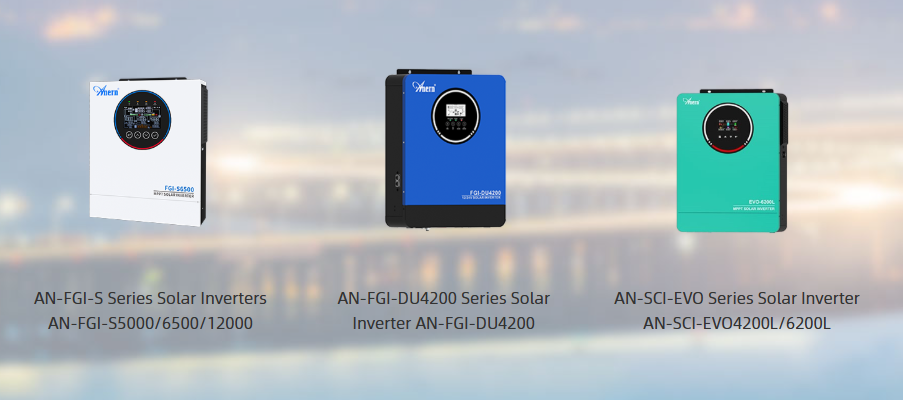
Best fit (typical projects):
Remote homes and small businesses
Farms, clinics, telecom sites
Backup systems where the grid is not available or unreliable
Key engineering / procurement checks:
Waveform requirement: For professional projects and sensitive/motor loads, pure sine wave is typically recommended to reduce overheating, noise, and compatibility issues.
Surge capability: Verify peak power and overload duration for motors, pumps, compressors, and power tools.
Battery + generator coordination: System reliability depends heavily on battery sizing, charge algorithm, and generator acceptance window.
A string inverter connects to one or multiple PV strings and converts DC power to AC at a centralized point. Most modern string inverters include one or multiple MPPT trackers, allowing separate tracking for different string groups.
Best fit (typical projects):
Residential and C&I rooftops with uniform roof planes
Sites with low shading and consistent module models/string lengths
Projects prioritizing cost per watt, simplified spare parts, and faster field replacement
Key engineering / procurement checks:
MPPT count & string assignment: For east–west roofs or partial shading, specify dual/multi-MPPT and keep different orientations on separate MPPTs.
DC input limits: Validate max PV voltage (Voc at Tmin) and ensure operating Vmp stays within MPPT range.
Weak-grid performance (where relevant): Confirm supported grid codes and voltage/frequency windows.
O&M strategy: Centralized replacement is usually easier than module-level electronics, but ensure monitoring supports MPPT/string-level diagnosis.
A microinverter is a module-level inverter installed on (or near) each PV module (sometimes one microinverter serves two modules). It performs MPPT and DC–AC conversion per module, then outputs AC.
Best fit (typical projects):
Complex rooftops with multiple orientations
Sites with partial shading (chimneys, trees, parapets)
Projects requiring module-level monitoring and granular performance visibility
Key engineering / procurement checks:
Lifecycle servicing model: More devices on the roof can increase service labor and access requirements—define replacement procedures and spares strategy.
AC-side design: Cabling, protection devices, and distribution architecture differ from DC string systems—confirm compliance with local electrical codes.
Platform reliability: Monitoring gateways, firmware management, and software stability matter more in microinverter deployments.
Recommended Readings:
Micro Inverter vs String Inverter
Power Optimizer vs Microinverter
MPPT Inverter vs String Inverter
A hybrid solar inverter integrates three functions into a single platform: solar PV inversion (DC–AC), MPPT-based PV charging control, and battery charge/discharge control (plus grid/generator interaction depending on the model). For EPCs and distributors, the key point is that a hybrid inverter is an energy management device, not only a PV inverter.
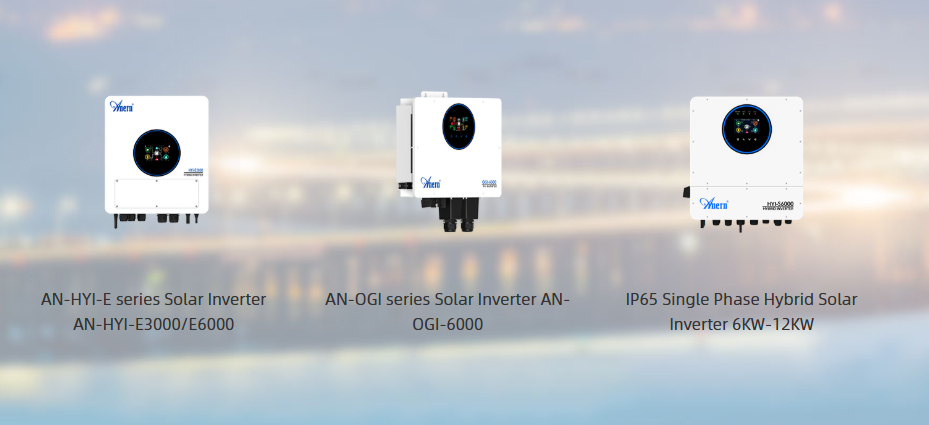
Best fit (typical projects):
Residential and small C&I systems targeting self-consumption and reduced electricity bills
Sites requiring backup power (EPS/backup output) for critical loads
Regions with weak or unstable grids, frequent outages, or large voltage fluctuations
Projects where battery retrofit simplicity and single-vendor responsibility are preferred
Key engineering / procurement checks:
Battery compatibility (must confirm before purchase):
Battery voltage class (low-voltage 48V vs high-voltage battery systems)
Supported chemistries (commonly LiFePO₄) and the approved battery list
BMS communication protocol and interface (CAN / RS485) and required settings
Backup/EPS capability (often misunderstood):
Rated EPS/backup power (continuous and surge)
Transfer time (if specified) and whether it supports "UPS-like" loads
Wiring topology: which loads are backed up vs non-backed-up
PV input design limits:
Max PV voltage (cold Voc check)
MPPT voltage range and number of MPPTs (dual MPPT recommended for complex roofs)
Max DC current per MPPT (important for high-current modules)
Grid and generator interaction (by market):
Export limiting / zero export function
Grid code compliance and anti-islanding behavior
Generator input window and start/stop logic (if applicable)
Thermal design and derating curve:
Hot-climate performance can dominate real delivered kWh and warranty risk
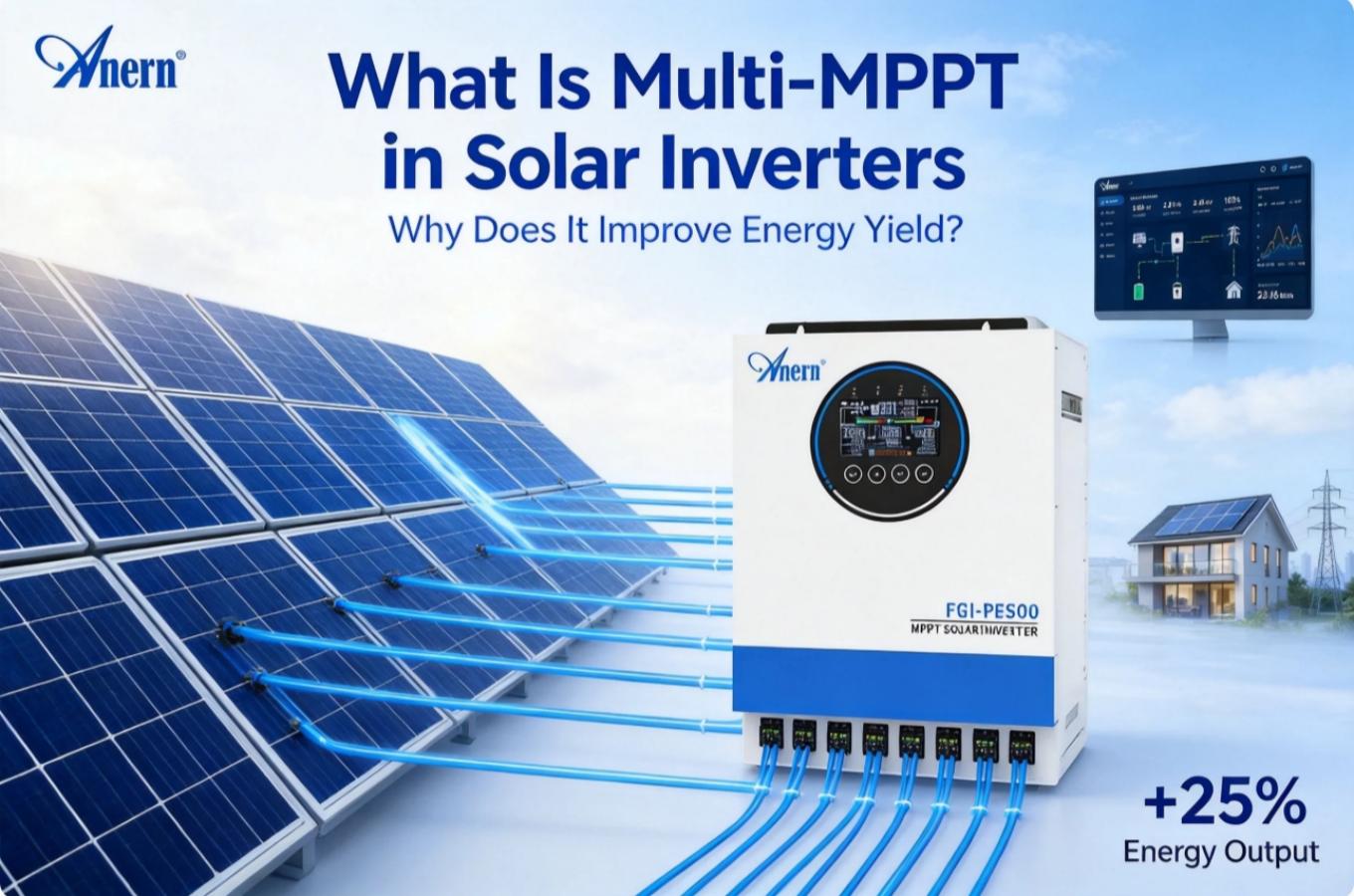
In many markets, MPPT inverter refers to an inverter with integrated maximum power point tracking, and in off-grid/hybrid applications it may also mean an inverter with a built-in MPPT charge controller for battery charging.
.jpg "MPPT Solar Inverter")
Best fit (typical projects):
Off-grid and hybrid systems requiring PV + battery coordination
Regions with weak or unstable grids where seamless energy management is needed
Projects where array design flexibility (MPPT voltage range) is a key constraint
Key engineering / procurement checks:
MPPT voltage window and array design: Determines allowable string length and whether higher PV voltage can be used to reduce cable loss.
Battery-side capability (hybrid/off-grid): Battery voltage range, max charge/discharge current, and (for lithium) BMS communication (CAN/RS485).
Operating logic: Confirm EPS/backup output rating, transfer behavior, generator interaction (if used), and protection strategy under abnormal grids.
Real-world reliability: Thermal design and control stability often impact lifespan more than marginal lab efficiency differences.

Which Type of Solar Inverter Should You Choose (Quick Decision Guide)
Confirm Voc at the coldest expected temperature stays below inverter max PV voltage
Confirm Vmp under normal operating temperature stays inside MPPT range
Confirm total string count does not exceed per-MPPT current/input limits
Many EPC designs use a moderate DC oversizing to improve inverter utilization. Final ratio should consider:
irradiance profile and clipping tolerance
grid export limits
module temperature behavior (hot regions reduce Vmp)
For hybrid projects, specify explicitly:
battery nominal voltage and operating window
BMS protocol compatibility (CAN/RS485) and approved battery list
EPS/backup output: rated power, surge power, transfer time
generator input requirements (if used): frequency/voltage window, start logic
| Item | Solar inverter | Battery inverter | Hybrid inverter |
|---|---|---|---|
| PV MPPT | Yes | No | Yes |
| Battery charge/discharge | No | Yes | Yes |
| Grid interaction | Yes (grid-tied models) | Yes (AC-coupled) | Yes |
| Typical project goal | Convert PV to usable AC | Add storage to existing system | PV + storage integrated, backup possible |
An off-grid solar inverter is designed to supply AC power without relying on the utility grid. It typically works with a battery bank (and often a generator) to provide continuous electricity for remote homes, farms, telecom sites, clinics, and areas with frequent outages. Specify off-grid models when the grid is unavailable, unreliable, or when the project requires full energy independence.
An off-grid parallel solar inverter supports parallel operation of multiple inverter units to increase total output power and/or enable redundancy. It is commonly used when a single inverter cannot meet peak load, when three-phase expansion is needed (model dependent), or when the project requires higher reliability with N+1 style design.
A split-phase solar inverter provides 120/240V split-phase AC output (typical in North America and some regional markets). It is specified for residential and light commercial systems where loads require both 120V and 240V, such as HVAC, pumps, and certain appliances. Always confirm the target country's voltage standard and panel/load distribution before selection.
An IP65 hybrid solar inverter is a hybrid inverter (PV + battery + grid control) with an enclosure rated IP65, meaning strong protection against dust ingress and water jets. This matters for outdoor installations and harsh environments (dusty, humid, coastal), helping reduce corrosion and failure risk. IP rating does not replace good installation practice—proper clearance, ventilation, and direct sun/rain shielding still matter.
A low-frequency solar inverter uses a low-frequency transformer-based architecture (typically heavier and larger). EPCs select low-frequency models when projects need high surge capability, strong tolerance for difficult loads (motors, compressors, pumps), and robust performance in demanding off-grid or hybrid scenarios. High-frequency inverters are usually lighter and more efficient, but low-frequency designs can be preferred for heavy inductive loads and rugged reliability requirements.
A solar inverter is the PV system's core power conversion and control component: it converts DC to AC, optimizes energy harvest via MPPT, ensures protection compliance, and—when hybrid/off-grid—coordinates batteries and generators. For EPC and distribution projects, the best results come from specification discipline: confirm PV voltage windows, MPPT configuration, thermal derating behavior, certifications, and service strategy before purchasing.