EN
EN
 fr
fr  de
de  es
es  it
it  ru
ru  pt
pt  ar
ar  ms
ms  id
id 

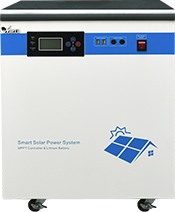


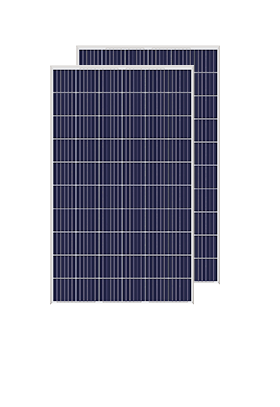



We have cooperated with more than 200 countries in solar energy projects and road lighting projects. We have exported products to many countries and participated in many important government projects around the world.




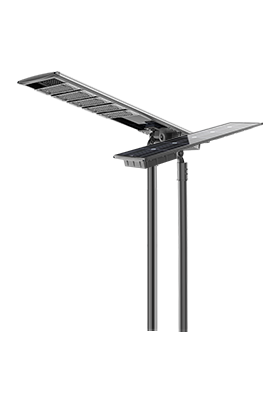


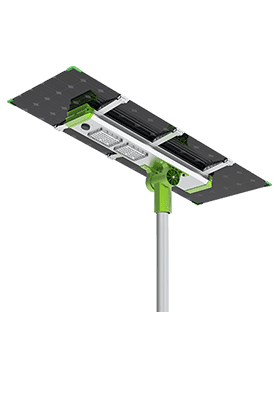
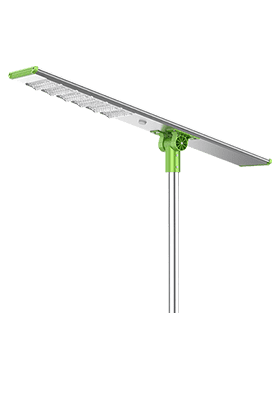
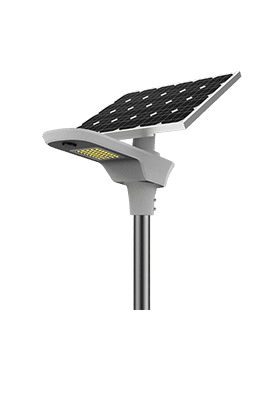


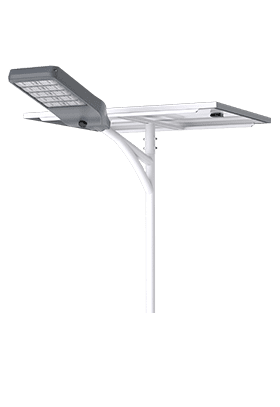
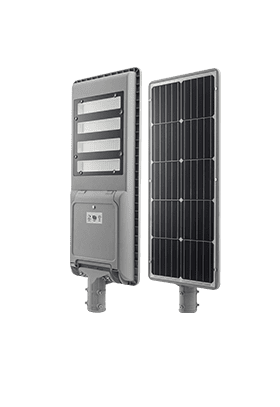
We have cooperated with more than 200 countries in solar energy projects and road lighting projects. We have exported products to many countries and participated in many important government projects around the world.

Anern has 17 years of experience in solar lighting and solar product manufacturing. Anern is headquartered in Guangzhou. With a production base of 30,000 square meters, our company has an R&D team of more than 100 people.
Selecting the right RV power inverter is a procurement and system-design decision that directly affects customer satisfaction, warranty exposure, installation complexity, and long-term service costs. From a commercial standpoint, the optimal inverter choice is the one that meets defined load requirements, integrates cleanly with the electrical architecture, complies with safety standards, and delivers predictable performance over the product lifecycle.
Solar panels and batteries provide DC power, but most RV appliances and wall-style outlets need AC power—the same kind you get from campground hookups. An inverter is a key part of an RV solar setup because it turns battery power into the AC power the RV can actually use.
For purchasing teams, the inverter largely determines what the RV power system can run reliably—from basic outlets to larger or more sensitive equipment. Since inverters vary in the cleanliness and stability of the power they produce, as well as how well they handle startup spikes and protect against faults, choosing based on clear specifications helps reduce compatibility problems, installation issues, and warranty claims.There are three mainly functions。
Energy Form Conversion
Converts DC power stored in the battery into AC power required by standard household appliances.This is the most fundamental physical function of the inverter. Without this conversion, the electrical energy stored in the battery cannot be utilized by the vast majority of conventional electrical devices.
Load Driving Support
The inverter provides stable and usable power for AC loads such as air conditioners, induction cooktops, refrigerators, and microwave ovens, including supplying standard 220V voltage and 50Hz frequency while meeting the instantaneous peak current demand during startup of high-power devices.
Power Quality Protection
The inverter delivers a pure sine wave waveform to protect the normal operation and service life of downstream electrical devices, as waveform quality directly affects the startup stability of compressor-based appliances, the safety of precision electronic equipment, and overall user experience.
Typical Use Case | Common Appliances Supported | Recommended Inverter Type | Typical Continuous Power Rating |
Entry-Level Off-Grid | Phones/laptops, TV, router, small chargers | Pure sine wave (preferred) | 600–1200 W |
Weekend Convenience | Add: small microwave or coffee maker (one at a time), more AC outlets | Pure sine wave | 1500–2000 W |
Extended Boondocking | Microwave + outlets, residential refrigerator, small kitchen appliances | Pure sine wave | 2000–3000 W |
All-Electric / Premium | Induction cooking, multiple appliances, high duty cycle | Pure sine wave + inverter-charger | 3000–5000 W+ |
The Difference Between Pure Sine Wave and Modified Sine Wave Inverters
The main difference between these two inverter types is the shape of the AC power they produce.
Power from campground hookups and most generators is a pure sine wave, meaning it is smooth and consistent. Many appliances and electronic devices are designed to operate on this kind of power. A modified sine wave inverter produces a more stepped, less smooth signal that only approximates standard AC power. For simple devices, the difference may be minor. For other equipment, it can affect performance and reliability.
Modified Sine Wave Inverters
Modified sine wave inverters were once popular because they were less expensive and easier to manufacture. They can typically run basic resistive loads such as:
simple lighting
heating elements
basic power tools
However, they often create issues with modern electronics. Devices may run hotter, make noise, or operate less efficiently. Sensitive equipment such as laptops, CPAP machines, and household-style refrigerators may not work properly and can be affected over time. As RV electrical systems have become more electronics-heavy, modified sine wave inverters have become much less common in newer solar installations.
Pure Sine Wave Inverters
Pure sine wave inverters produce AC power that closely matches utility-grade electricity. The output is smooth and stable, making it the preferred choice for sensitive electronics and modern appliances. This is why most current RV solar systems are designed around pure sine wave inverters.
That's exactly why most modern RV solar systems use pure sine wave inverters.
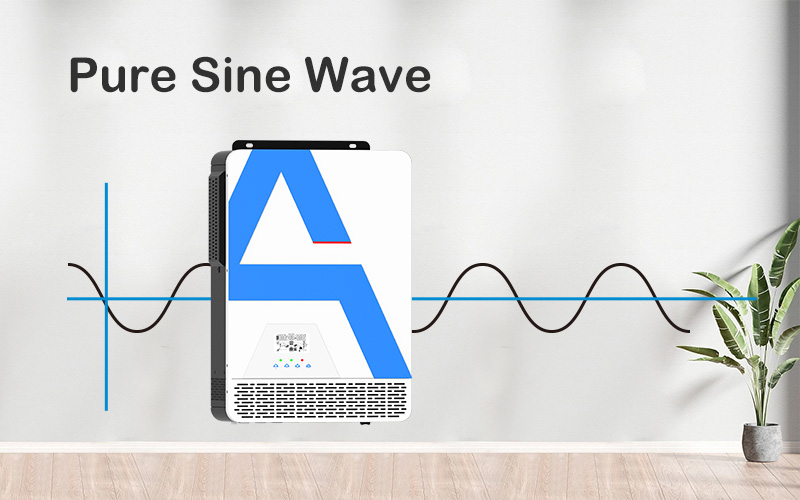
The inverter is central to an RV's AC power system; if it fails, the RV can lose AC power and may face safety risks. For purchasing and supplier qualification, protection coverage and fault response should be non-negotiable. A qualified RV solar inverter should include these five protections, and any unit missing one should not be shortlisted:
Reverse Polarity Protection: Prevents damage from incorrect battery wiring; confirm whether recovery is automatic after correction or requires fuse replacement/factory service.
Over-Temperature Protection: Prevents overheating; output derating is preferred over sudden shutdown to keep critical loads running longer.
Overload Protection: Protects against loads exceeding continuous rating; verify behavior for short startup spikes versus sustained overload, including thresholds and response times.
Low/Over-Voltage Protection: Prevents battery over-discharge and abnormal voltage damage; confirm thresholds suit lead-acid vs lithium and whether auto-restart occurs after voltage normalizes.
Short Circuit Protection: Reduces fire risk and unit damage from output shorts; prefer self-resetting or low-cost field-serviceable designs.
Special Note: Recovery method (auto vs manual reset) and whether consumables are damaged (e.g., field-replaceable fuses) directly affect downtime and repair cost, so these requirements should be written into the procurement contract.
Fault Diagnosis Method
The slower the fault is identified, the longer the vehicle stays offline.
Basic level: Fault indicator light. It only tells you something is wrong.
Intermediate level: Bluetooth/APP access to operating parameters. Allows remote checking of voltage, temperature, and fault codes, reducing on-site troubleshooting time.
Fleet level: Remote data interface and centralized monitoring platform. Enables proactive alerts and early warnings, shifting fault handling from reactive response to proactive management.
Spare Parts and Replacement Strategy
An inverter failure is manageable; downtime caused by no stock and slow RMA is not. Prioritize models that can be swapped quickly and consistently (same mounting pattern, connectors, settings retention, minimal setup) so a backup unit restores service fast. Define in the supply agreement what happens if failure rates exceed the target, such as rebates, warranty extensions, advance replacements, or financial credits.
Installation Fault Tolerance
Field wiring errors will happen; the product should be designed so one mistake does not destroy the unit. Require clear, unambiguous terminal labeling and built-in protections against common errors, especially reverse polarity and abnormal input/no-load conditions, to reduce burnouts, callbacks, and warranty cost.
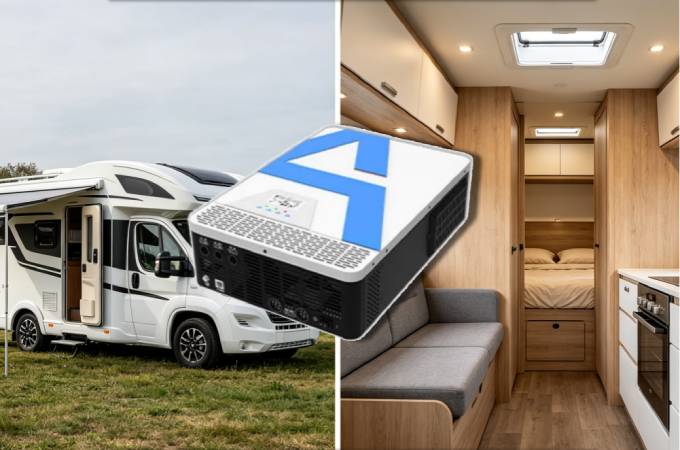
Specification sheet: Must clearly state waveform type (pure vs modified sine), continuous and peak/surge power, efficiency or idle draw if available, and a complete list of protection functions and recovery behavior. If key values are missing or described vaguely, treat it as a risk flag.
Third-party test reports or certifications: Request market-appropriate proof such as CE, ETL, and RoHS, plus any certificate numbers and the issuing lab. Confirm the documents match the exact model number and revision you plan to purchase.
B2B reference cases: Ask for comparable deployments (RV upfitters, commercial fleets, specialty vehicles), including system voltage, typical loads, install environment, and time in service. References reduce the chance of becoming the first large-scale trial.
Purchase samples from 2–3 suppliers and validate under identical wiring and battery conditions:
Simultaneous load start: Confirm the inverter can start realistic paired loads (e.g., air conditioner plus induction cooktop) without nuisance shutdowns.
Overload behavior: Verify the overload protection triggers where the spec claims, and record the response time and recovery method (auto restart vs manual reset).
Thermal performance: Run 1 hour at rated load and measure enclosure temperature, fan behavior, and whether output power derates. Thermal instability is a common real-world failure mode in RV compartments.
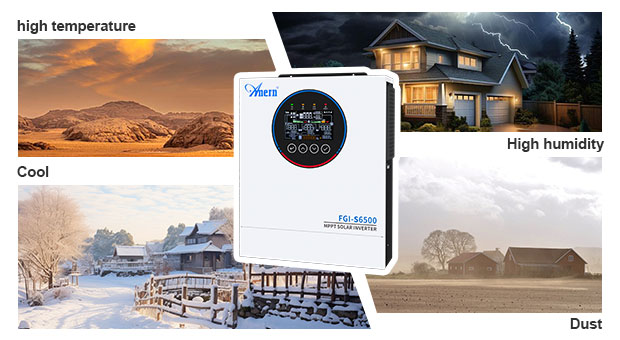
Warranty length alone is not a service plan. Define measurable commitments such as:
Fault response time (hours): When does support acknowledge, diagnose, and approve replacement?
Service model: On-site support vs return-to-repair, plus who pays shipping and how long turnaround takes.
Failure-rate allowance and remedies: Set an acceptable defect rate for bulk orders and lock in commercial compensation if exceeded, such as credits, advance replacements, or extended coverage.
Waveform selection is primarily a compatibility and risk-control decision.
So let me tell you why ANERN more suitable for power inverters for RVs.
In the North American RV market, buyers often treat the inverter as the centerpiece of an off-grid power system. In reality, what they usually want is solar-first power, longer off-grid runtime, fewer boxes to install, and lower installation and after-sales complexity. In that requirement set, ANERN's advantage typically comes from positioning its products as a solar or hybrid inverter that manages power flow between PV input, external AC input (shore power or generator), and the battery bank, rather than acting only as a device that turns battery power into AC outlets. ANERN's AN-SCI-PRO200/320 solar inverter user manual clearly defines PV input, AC input, AC output, and battery input, explains how the unit supplies loads when solar is available versus unavailable, and maps the models to two common RV battery architectures: 2. kW with 12V and 3.2 kW with 24V.
By contrast, many mainstream RV competitors fall into two categories:
Inverter/chargers: The core story is charging plus automatic transfer, which fits systems that rely more heavily on shore power or a generator. Victron's MultiPlus datasheet positions it as a true sine wave inverter combined with a sophisticated battery charger and a high-speed AC transfer switch (victronenergy.com). Go Power's IC-200 is positioned as a 3-in-1 inverter, battery charger, and transfer switch (gopowersolar.com). Xantrex's Freedom XC PRO 200 highlights RV-friendly installation and load-starting features such as higher surge capability and installer-oriented terminals.
Standalone inverters: These focus on DC-to-AC conversion and do not provide solar-first logic or system-level power coordination. For example, Renogy's 200W 12V pure sine wave inverter is positioned for RV, marine, and solar setups and emphasizes efficiency and peak surge capability.
For dealers and upfitters, this makes ANERN easier to explain in one line: less system stacking, fewer integration disputes, and fewer service headaches. When the customer explicitly wants a solar-first off-grid experience, the hybrid or solar inverter positioning aligns more naturally with the sales conversation.
How ANERN covers multiple RV system tiers
If the goal is a full SKU ladder from entry level to higher power, ANERN's available materials show several relevant product lines:
AN-SCI-PRO solar inverter 2.kVA/3.2kVA: Designed for entry to mid-power RV solar systems, with clear 12V and 24V battery architecture mapping and operating logic across PV, utility, and battery sources.
AN-SCI-EVO solar inverter: The manual title explicitly describes it as a hybrid inverter with an inbuilt MPPT controller, supporting a more integrated, higher-power direction for larger loads or greater solar input.
AN-SCI02 PRO series solar inverter (such as 360/420/620): The official PDF presents more complete PV-related specifications, including PV input voltage range, MPPT range, maximum solar charging current, and pure sine wave output, indicating a more system-oriented hybrid platform.
Brand / Model | What it is positioned as (from sources) | Best-fit RV scenario | Practical advantage in sales/delivery |
ANERN AN-SCI-PRO2000/3200 | Solar inverter / hybrid-style operating modes; 2.0kW/12V & 3.2kW/24V mapping (anern.com) | Solar-first, off-grid oriented RV builds | Easier to package as a solar-led "power hub" with clearer system-voltage selection |
ANERN AN-SCI-EVO (e.g., 3600/6200) | Hybrid inverter with inbuilt MPPT controller (anerngroup.com) | Higher power RV solar systems | One-box path toward higher-power solar + inverter integration |
ANERN AN-SCI02 PRO series (3600/4200/6200) | Hybrid solar inverter; document lists PV/MPPT ranges and pure sine wave output (anern.net) | Solar-forward RV systems needing higher PV input voltage range | Strong hybrid positioning with published PV/MPPT operating ranges |
Victron MultiPlus 2000VA | Inverter/charger + high-speed AC transfer switch (victronenergy.com) | Shore/generator integration, premium ecosystems | Clear inverter-charger narrative; solar typically via separate components |
Go Power! IC-2000 | 3-in-1 inverter/charger/automatic transfer switch (gopowersolar.com) | Space-saving inverter-charger packages | Simplifies install wiring count on inverter/charger side |
Xantrex Freedom XC PRO 2000 | Inverter/charger; highlights extended surge and easy terminals (xantrex.com) | RV builds needing strong load-starting + installer-friendly design | Good RV-centric install and difficult-load starting positioning |
Renogy 2000W 12V inverter | Standalone pure sine wave inverter; >90% efficiency, 4000W peak surge (renogy.com) | Simple DC-to-AC only systems | Straightforward inverter choice; solar control is typically separate |
This article explains that RV solar systems store energy as DC power, while most RV appliances and outlets require AC power, making the inverter a critical component that converts battery DC into usable AC. It outlines three core inverter functions for procurement teams: reliable DC-to-AC conversion, the ability to drive real RV loads including handling startup surges, and power-quality delivery (especially pure sine wave output) to protect sensitive electronics and improve appliance compatibility. It also emphasizes that inverter selection should be specification-driven, because differences in waveform quality, surge performance, and protection features directly affect installation outcomes, device reliability, service workload, and warranty risk.
What does an RV solar inverter actually do?
It converts DC power stored in the RV battery bank into AC power so standard outlets and common appliances can run off-grid.
Why do procurement teams care about continuous watts vs surge watts?
Continuous watts determine what loads can run steadily, while surge watts determine whether the inverter can start appliances with high inrush current (such as compressor-based loads).
Pure sine wave vs modified sine wave: which is recommended for RV solar systems?
Pure sine wave is generally recommended because it delivers cleaner, more stable power and is more compatible with sensitive electronics and modern appliances.
What protection functions should be considered mandatory when sourcing RV solar inverters?
At minimum: reverse polarity protection, over-temperature protection, overload protection, low/over-voltage protection, and short-circuit protection.
How does inverter choice affect installation and warranty risk?
Inverters vary in power stability, surge handling, and fault protection. Selecting based on clear specifications reduces compatibility issues, installation problems, and preventable warranty claims.
[1] https://www.thervgeeks.com/rv-power-converter/
[2] https://www.ti.com/lit/an/slva670a/slva670a.pdf?ts=1778802265912