EN
EN
 fr
fr  de
de  es
es  it
it  ru
ru  pt
pt  ar
ar  id
id  ms
ms  uk
uk 






We have cooperated with more than 200 countries in solar energy projects and road lighting projects. We have exported products to many countries and participated in many important government projects around the world.






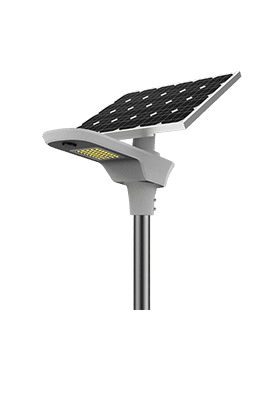


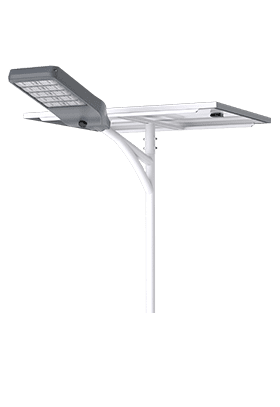
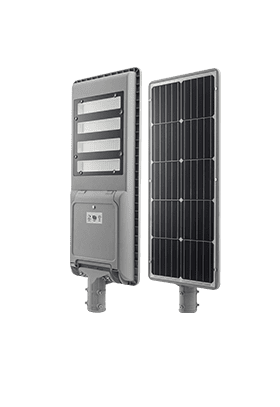
We have cooperated with more than 200 countries in solar energy projects and road lighting projects. We have exported products to many countries and participated in many important government projects around the world.

Anern has 17 years of experience in solar lighting and solar product manufacturing. Anern is headquartered in Guangzhou. With a production base of 30,000 square meters, our company has an R&D team of more than 100 people.
A li-ion inverter converts the direct-current electricity stored in a lithium-ion battery into alternating current that can be used by household appliances, commercial equipment and off-grid electrical loads.
However, selecting an inverter for a lithium-ion battery involves more than matching a battery to an inverter with the correct wattage. The inverter must also support the battery’s nominal voltage, charging parameters, discharge current, battery management system and intended application.
The best inverter for a lithium-ion battery is therefore not necessarily the inverter with the highest power rating or the lowest price. It is the inverter that can operate safely and efficiently with the selected battery, solar array, electrical loads and required backup time.
For homes and sensitive electronic equipment, a pure sine wave inverter with lithium battery compatibility is normally the preferred option. For a solar installation, an MPPT hybrid or off-grid inverter can also manage solar charging and coordinate electricity between the PV array, lithium battery, utility grid and connected loads.
The terms li-ion inverter (lithium battery inverter) generally refer to an inverter designed or configured to operate with a lithium-ion battery bank.
They do not describe one universal category of inverter.
A basic inverter may be able to convert lithium battery power into AC electricity, but this does not automatically mean that it can charge the battery correctly or communicate with its battery management system.
Search phrases such as inverter lithium ion, inverter lithium and lithium ion power inverter usually describe the same purchasing requirement: buyers are looking for inverters with lithium batteries that can operate as a compatible power system.
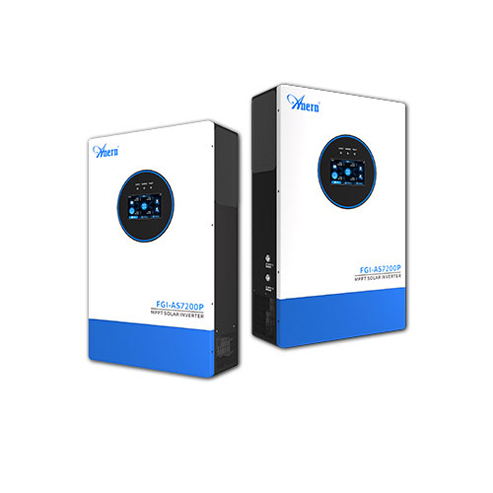
Many batteries used in residential and commercial solar systems are LiFePO4 batteries. Lithium iron phosphate is part of the lithium-ion battery family, but it has different voltage, charging and protection requirements from lead-acid batteries. Buyers should therefore identify the exact battery chemistry instead of relying only on the word “lithium.”
A lithium-compatible inverter should provide:
The correct battery-voltage range
Configurable lithium charging parameters
Suitable continuous and surge output
Adequate charging current
Low-voltage and overvoltage protection
Compatible BMS communication when required
Pure sine wave AC output for sensitive loads
A typical lithium battery with inverter system has four main operating stages.
First, the lithium battery stores DC electricity. Its battery management system monitors cell voltage, current, temperature and operating limits.
Second, the inverter draws DC power from the battery within the permitted discharge range.
Third, the inverter converts the DC electricity into AC electricity at the voltage and frequency required by household or commercial equipment.
Finally, if the system uses an inverter-charger or hybrid solar inverter, the battery can be recharged from solar panels, the utility grid or a generator.
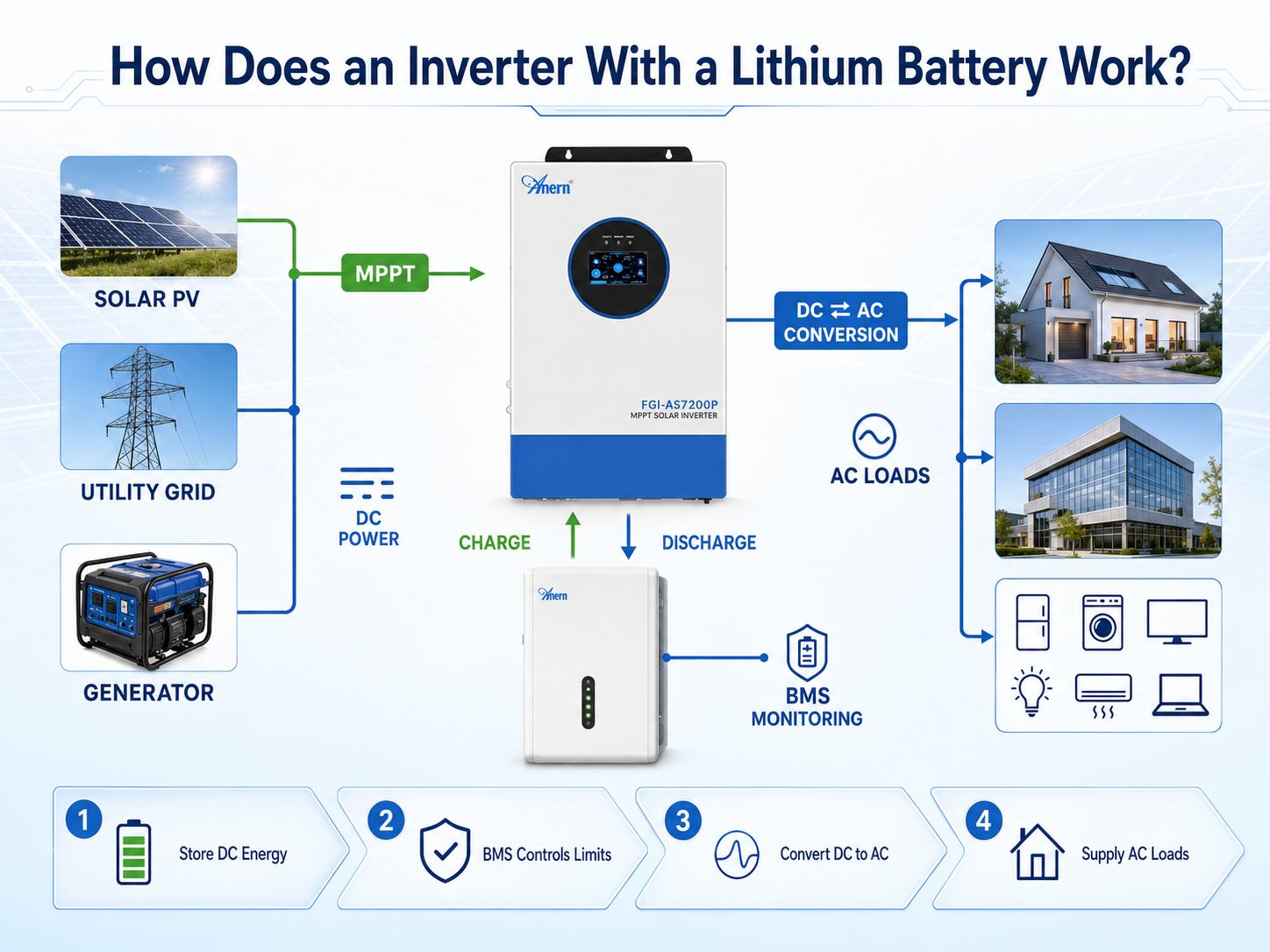
In a solar system, the MPPT charge controller adjusts the operating point of the solar array to obtain power efficiently as sunlight and panel temperature change. Buyers who want to understand this function in greater detail can read Anern’s MPPT inverter guide.
A hybrid inverter provides additional energy-management functions. It can coordinate electricity among solar panels, batteries, the utility grid and backup loads. Anern’s guide to hybrid solar inverter working principles explains the differences between hybrid, off-grid and conventional inverters.
The battery and inverter should always be treated as one coordinated power system. Sharing the same voltage or communication connector does not automatically guarantee compatibility.
The battery input range of the inverter must match the nominal and operating voltage of the battery bank.
Common low-voltage systems include:
12V battery systems
24V battery systems
48V or 51.2V battery systems
Larger commercial energy-storage systems may use high-voltage battery platforms.
A 12V inverter should not be connected directly to a 48V battery bank. Buyers must also compare the battery’s complete operating-voltage range rather than only its nominal voltage.
Lower-voltage systems require higher DC current to produce the same inverter output. For example, assuming 90% inverter efficiency, a 3,000W load would require approximately:
| Battery voltage | Approximate DC current |
| 12V | 278A |
| 24V | 139A |
| 48V | 69A |
This is why 48V systems are generally more practical for multi-kilowatt home inverters. They reduce current requirements and make cable, fuse and protection-device selection more manageable.
The charging parameters of an inverter for lithium-ion battery use must match the battery chemistry.
Important settings include:
Bulk or absorption voltage
Maximum charging current
Low-voltage cut-off
Battery restart voltage
Maximum discharge limit
Equalization setting
Temperature compensation
State-of-charge reserve
Charging settings intended for lead-acid batteries should not automatically be applied to LiFePO4 batteries. In particular, lead-acid equalization should normally be disabled unless the lithium battery manufacturer provides different instructions.
If the battery manufacturer provides an approved inverter list or charging profile, installers should follow that documentation.
The battery management system protects the lithium battery against abnormal voltage, current and temperature conditions.
In a closed-loop system, the inverter and battery exchange operating data through a supported communication protocol. CAN and RS485 are commonly used, but having the same physical port does not guarantee that two products can communicate.
Compatibility may depend on:
Communication protocol
Cable pinout
Battery address
Inverter protocol selection
Battery firmware
Inverter firmware
Maximum number of parallel battery modules
When closed-loop communication is not available, some approved systems can operate through configured voltage parameters. This should only be done when both manufacturers permit it.
The inverter’s continuous output must support all appliances that may operate at the same time.
Lighting, televisions and communication devices usually have relatively stable demand. Refrigerators, pumps, compressors and motors may require much more power when they start.
The inverter must therefore support both:
Continuous operating power
Short-term startup or surge power
For televisions, computers, refrigerators, communication equipment and other sensitive appliances, a pure sine wave inverter with lithium battery storage is generally recommended.
A low-frequency inverter may be suitable where strong surge capacity and transformer-based construction are priorities. Anern’s low-frequency power inverter overview provides more information about this type of inverter.
A lithium battery inverter cannot deliver its full output if the battery or BMS cannot supply enough current.
A preliminary calculation is:
DC current = AC load power ÷ (battery voltage × inverter efficiency)
For example, if a 1,000W load is powered by a 12.8V battery through a 90%-efficient inverter:
1,000W ÷ (12.8V × 0.90) = approximately 87A
The following components must all support the required current:
Battery cells
Battery BMS
DC cables
Fuse
Circuit breaker
Battery disconnect
Inverter terminals
The startup current of motors and compressors should also be considered.
Different applications require different inverter configurations.
An off-grid inverter is suitable when the system must operate independently from the utility grid.
A hybrid solar inverter is useful when solar, battery and utility electricity need to be coordinated.
A parallel-capable inverter is suitable when the project requires higher output, three-phase operation or future expansion.
A portable inverter with lithium-ion battery storage is more suitable for mobile power, temporary work sites, outdoor use and essential backup loads.
Before choosing an architecture, buyers should define whether the project requires:
Backup power switching
Solar self-consumption
Generator input
Grid export
Split-phase or three-phase output
Remote monitoring
Parallel expansion
Time-of-use charging and discharging
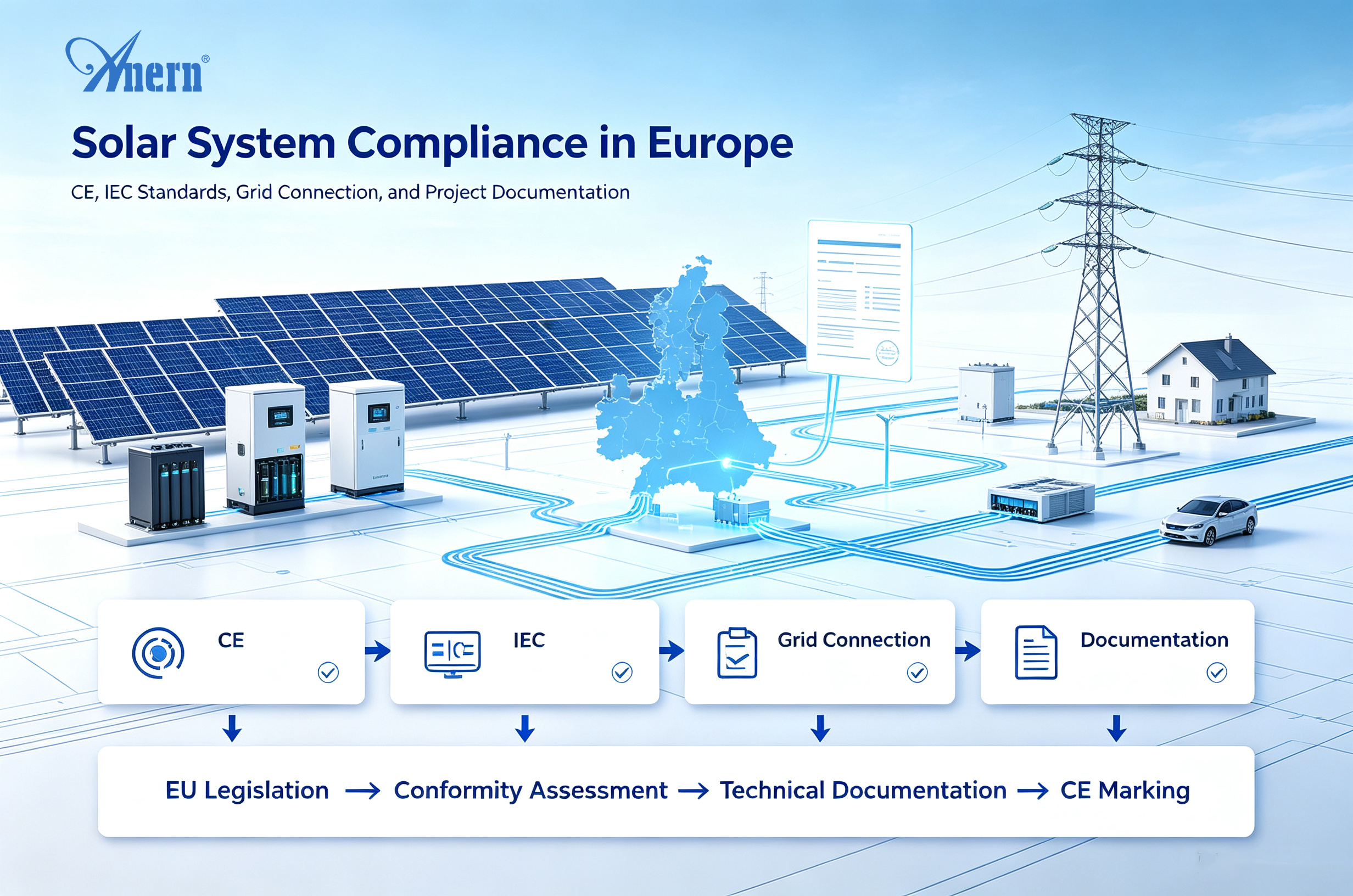
Compliance requirements depend on the installation type and destination market.
For stationary and industrial lithium batteries, IEC 62619:2022 specifies safety requirements and tests for secondary lithium cells and batteries, including stationary applications.
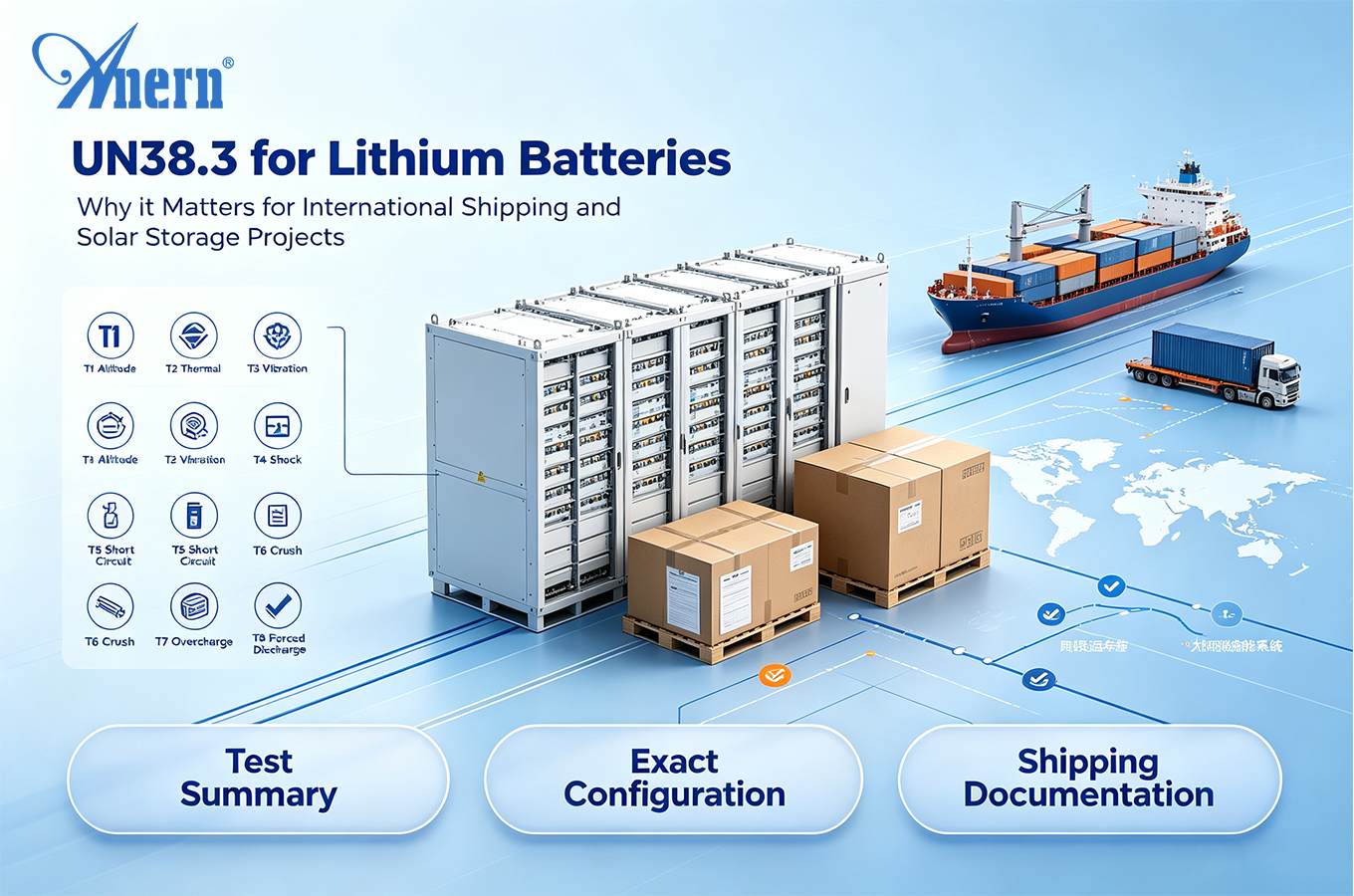
Lithium batteries shipped internationally must also comply with applicable transport requirements. Subsection 38.3 of the UN Manual of Tests and Criteria addresses lithium battery transport testing.
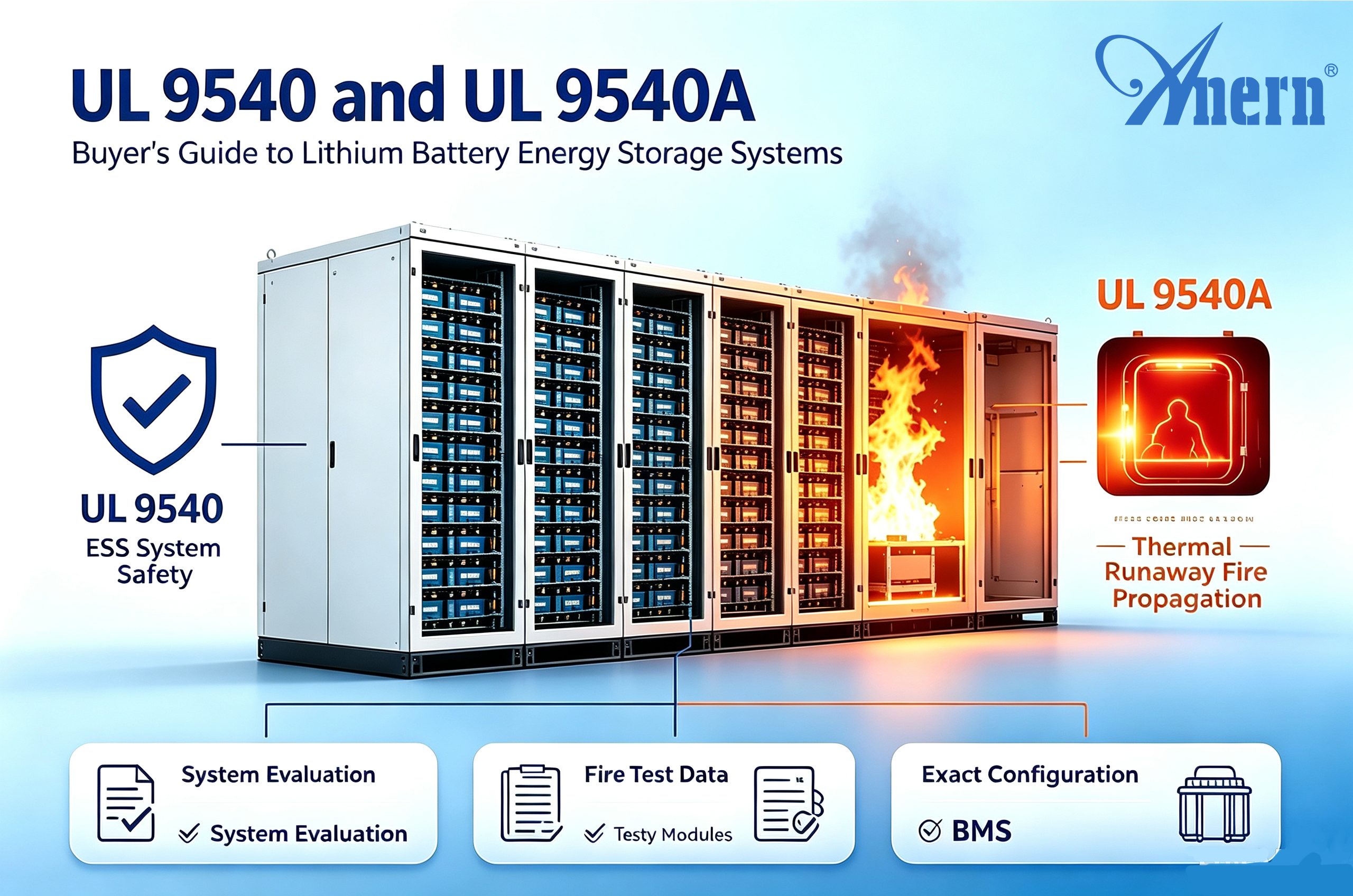
For markets that use UL standards, energy-storage system evaluation may consider the battery, inverter, control system and protection system as a complete assembly. UL also emphasizes the importance of verifying compatibility between the inverter, battery bank and BMS.
Buyers should request compliance documents for the exact product model rather than accepting a general certificate issued for a different series.
Inverter power and battery capacity describe two different electrical characteristics.
Inverter output is normally measured in watts or volt-amperes. Battery energy is measured in watt-hours or kilowatt-hours. Ampere-hours only indicate useful storage capacity when the battery voltage is also known.
Use the following calculations:
Nominal battery energy = Battery voltage × Battery capacity
Usable AC energy = Nominal battery energy × permitted depth of discharge × inverter efficiency
Estimated runtime = Usable AC energy ÷ average AC load
The calculated result is only an estimate. Actual runtime can be affected by battery temperature, ageing, cable losses, inverter standby consumption and changing appliance loads.
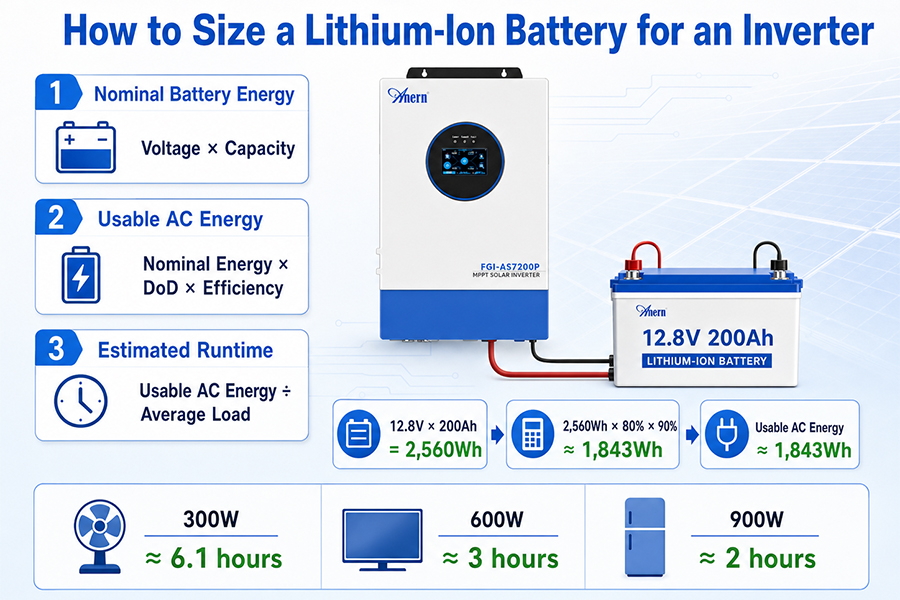
A 12.8V 200Ah lithium battery stores:
12.8V × 200Ah = 2,560Wh
Assuming 80% usable depth of discharge and 90% inverter efficiency:
2,560Wh × 0.80 × 0.90 = approximately 1,843Wh of usable AC energy
This battery could theoretically supply:
A 300W load for approximately 6.1 hours
A 600W load for approximately 3 hours
A 900W load for approximately 2 hours
These values are planning estimates rather than guaranteed runtimes.
Buyers searching for a Mecer 200Ah lithium battery or another brand-specific 200Ah product should not compare capacity alone. They should also compare:
Nominal voltage
Usable energy
Lithium chemistry
Continuous BMS current
Maximum charging current
Communication protocol
Cycle-life test conditions
Warranty
Certifications
Approved inverter compatibility
There is no fixed battery size for a 1kVA inverter with lithium battery storage.
First, determine the inverter’s actual watt rating because 1kVA does not always equal 1kW. Then calculate the average connected load and desired backup time.
For example, if the average load is 400W and the required backup time is five hours:
400W × 5 hours = 2,000Wh of required AC energy
After allowing for inverter losses and the permitted depth of discharge, the nominal battery capacity should be higher than 2,000Wh.
The battery BMS must also be able to supply the inverter’s maximum continuous and surge current.
The phrase 3000 watt lithium battery can refer to two different requirements:
A 3,000W inverter
A battery with approximately 3,000Wh of stored energy
These values are not interchangeable.
Watts describe how quickly power can be delivered. Watt-hours describe how much energy is stored.
A 3,000Wh battery could theoretically run a 1,000W load for less than three hours after accounting for usable depth of discharge, inverter losses and system consumption. It does not necessarily mean the battery can safely supply a 3,000W load; that also depends on its voltage and BMS discharge-current rating.
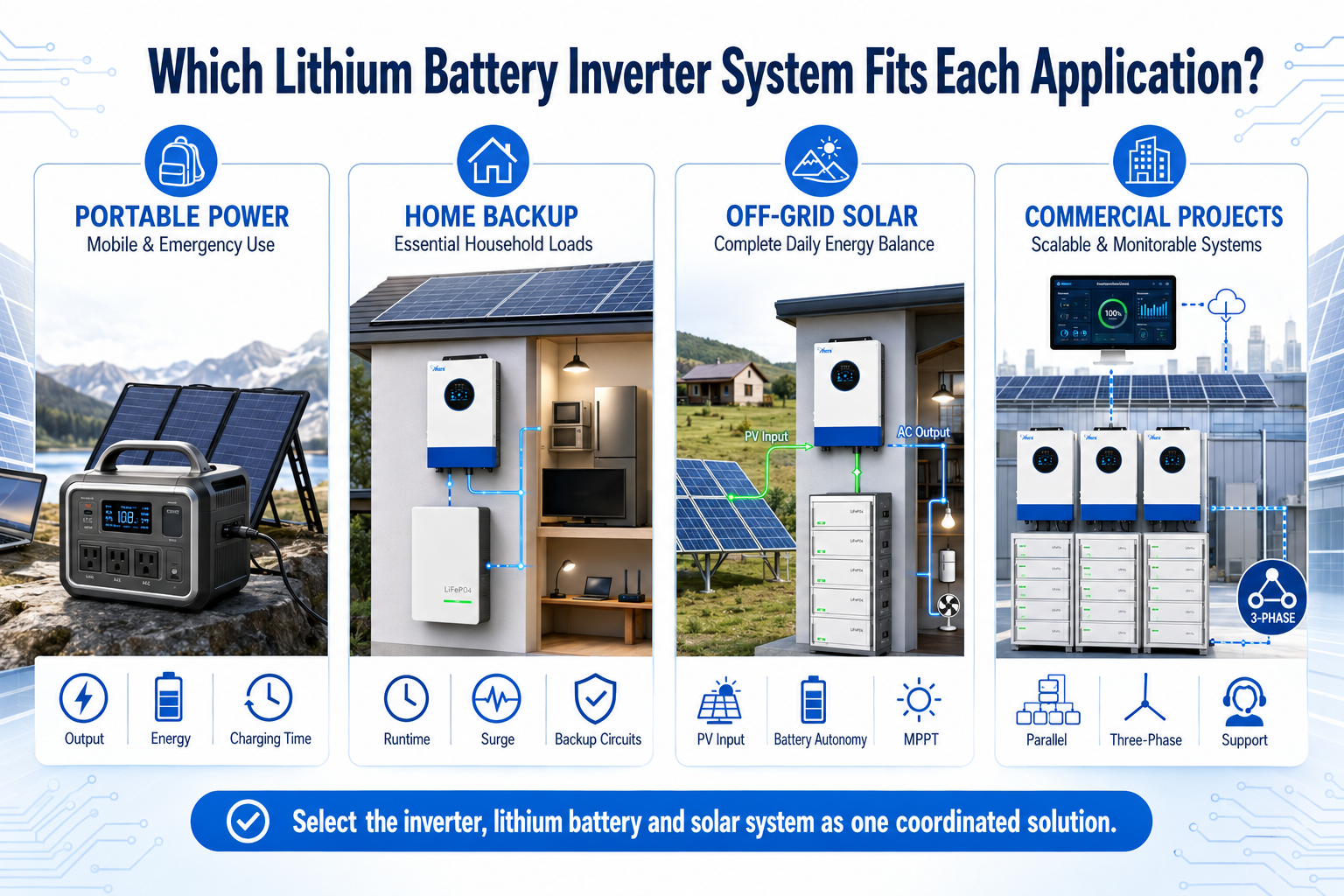
A portable inverter with lithium-ion battery storage normally combines a lithium battery, inverter, charging system and AC outlets in one enclosure.
It can be used for:
Mobile work
Outdoor activities
Communications equipment
Temporary power
Small emergency loads
Remote monitoring devices
Buyers should compare continuous output, surge capacity, battery energy, charging time, solar-input voltage and outlet standards. Portable design does not eliminate the need for ventilation and electrical protection.
A lithium battery for home inverter applications should be sized from an essential-load schedule and required backup period.
A small home system may support:
Lighting
Fans
Television
Internet equipment
Computers
Selected refrigeration
Larger systems may operate pumps, air conditioners and broader household loads, but they require higher inverter output, more battery energy and careful surge-power analysis.
A hybrid MPPT inverter combined with wall-mounted or rack-mounted LiFePO4 batteries can coordinate solar generation, battery charging, utility input and backup power.
The system should clearly define which household circuits are connected to the backup output. Installing a large inverter does not mean every appliance should automatically become a backup load.
An off-grid solar system must be designed around a complete daily energy balance.
The solar array must supply daily consumption and restore the energy discharged from the battery. The battery must support nighttime demand and the required number of low-sun days. The inverter must support continuous and surge loads, while the MPPT input must match the PV string voltage and current.
This is why the solar inverter, solar battery and complete solar system should be selected together.
Component-level purchasing can result in:
An inverter that cannot communicate with the battery
A battery that limits inverter output
Insufficient solar charging capacity
Incorrect PV string voltage
Excessive DC current
Inadequate backup time
Difficulty obtaining technical support
Commercial buyers should also evaluate:
Parallel and three-phase operation
Battery expansion
Centralized monitoring
Remote fault diagnosis
Batch consistency
Spare-parts availability
Installation documentation
Technical training
Warranty procedures
After-sales response
Sample testing should reproduce the intended battery, PV and load conditions rather than test the inverter as an isolated product.
There is no universal lithium battery inverter price without a defined specification.
A quotation may cover:
The inverter only
An inverter with lithium battery
A battery and inverter package
A complete solar system
Solar panels and mounting structures
Electrical protection devices
Monitoring and communication accessories
Important price factors include:
Inverter output and surge capacity
Hybrid or off-grid architecture
Pure sine wave output
Low-frequency or high-frequency design
MPPT input range and number of trackers
Battery voltage and usable kWh
Battery BMS and communication functions
Enclosure protection rating
Certifications
Monitoring functions
Warranty
Order quantity
Customization
Shipping destination
Procurement teams should compare total system value instead of headline price. A lower-priced inverter may require additional equipment or may not communicate with the selected battery.
An oversized battery may add unnecessary cost without solving an inverter power problem. Similarly, an oversized inverter may increase standby consumption and require larger battery cables and protection devices.
A manufacturer covering solar inverters, lithium batteries and complete solar systems can evaluate the connections between different product lines before shipment.
This is particularly valuable for distributors, EPC contractors, wholesalers and project buyers who require repeatable configurations and model-specific technical documentation.
Anern’s solar inverter catalog and product data sheets cover hybrid, off-grid, MPPT and low-frequency inverter ranges. Buyers can use these documents to compare available power levels before requesting a battery-matched system.
The article about Chinese solar energy companies also explains the role of Chinese manufacturers that supply solar inverters, lithium battery storage, solar panels and integrated solar solutions to global markets.
Manufacturing capability should also be supported by real deployment evidence. Anern’s solar power system project cases include solar inverter, lithium battery and complete system installations across residential, commercial and off-grid applications.
Published examples include:
50 sets of 10kW off-grid home solar systems with lithium battery storage in Kenya
400 MPPT hybrid solar inverters for commercial buildings in Lebanon
80 sets of 10.2kW EVO solar inverters in the Democratic Republic of the Congo
These cases demonstrate project experience at different scales, although every new system must still be designed according to its own loads, climate, grid conditions and local requirements.
Correct equipment selection must be followed by professional installation.
Before installing a lithium-ion power inverter, verify:
Battery polarity
Cable cross-section
Fuse and circuit-breaker ratings
Grounding
DC disconnect devices
Terminal torque
Communication cables
Battery addresses
Inverter settings
Startup and shutdown sequence
Installation should be completed by qualified personnel under applicable local electrical regulations.
Anern provides several technical resources for buyers and installers:
Solar inverter brochures and data sheets for preliminary product comparison
Solar inverter user manuals for settings, operating modes, warnings and fault codes
Solar inverter installation guide for wiring, battery integration and commissioning
Solar inverter maintenance guide for electrical inspection, cleaning and operating checks
Solar inverter, battery and system videos for visual product and installation references
Always use the technical document for the exact inverter and battery model being installed.
No. The inverter must match the battery voltage and operating range. An inverter-charger must also support the correct lithium charging parameters. The battery BMS must be able to supply the required continuous and surge current.
The best inverter is one that is approved for the battery chemistry and voltage, supports the required continuous and surge load, and provides suitable charging, protection and BMS communication functions. For sensitive household electronics, pure sine wave output is normally recommended.
Yes, particularly for small backup and portable applications. However, DC current becomes very high when inverter power increases. Larger home systems normally use 24V or 48V batteries to reduce current.
Runtime depends on battery voltage and connected load. A 12.8V 200Ah battery stores 2.56kWh nominally, while a 51.2V 200Ah battery stores 10.24kWh nominally. Usable runtime must also account for permitted depth of discharge and inverter efficiency.
Not always. “Lithium inverter” usually describes a lithium-compatible inverter sold separately. “Inverter with lithium battery” may describe a package, while a portable energy-storage product may integrate the battery and inverter in one enclosure.
No. A 3,000W inverter describes the rate at which power can be supplied. A 3,000Wh battery describes the amount of stored energy.
Only if the existing inverter-charger supports the lithium battery’s voltage range and charging settings. Equalization, temperature compensation and low-voltage protection must also be reviewed. Written compatibility confirmation should be obtained before replacement.
Not every system requires closed-loop communication, but it is valuable for state-of-charge reporting and coordinated protection. If communication is unavailable, voltage-based operation should only be used when approved by both manufacturers.
A reliable inverter lithium battery system begins with compatibility rather than inverter wattage alone.
Buyers should match the battery voltage and chemistry, verify charging parameters and BMS communication, calculate continuous and surge power, confirm battery discharge current and size storage according to energy demand and backup time.
For a portable backup unit, a lithium-ion battery for home inverter use or a complete off-grid solar project, the same principle applies: the inverter, battery and solar array should be specified as one coordinated system.
Anern supplies solar inverters, lithium batteries and complete solar power systems for residential, commercial and project applications. Buyers can review Anern’s technical downloads and global project cases before requesting a configuration based on their load list, backup duration, installation environment and destination-market requirements.