EN
 fr
 de
 es
 it
 ru
 pt
 ar
 id
 ms
 uk


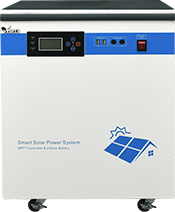


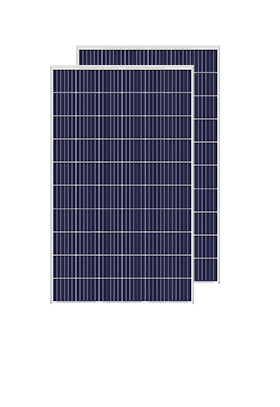


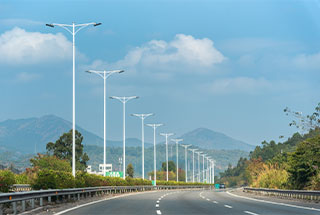
We have cooperated with more than 200 countries in solar energy projects and road lighting projects. We have exported products to many countries and participated in many important government projects around the world.




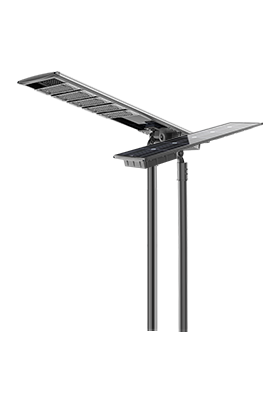


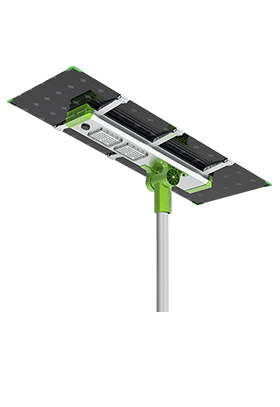
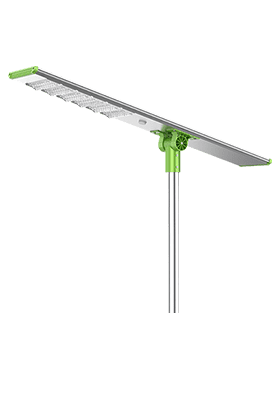
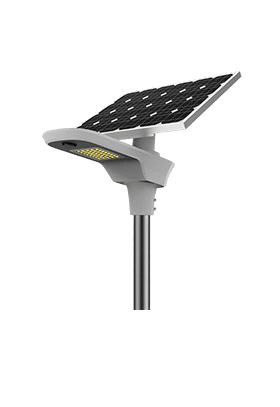


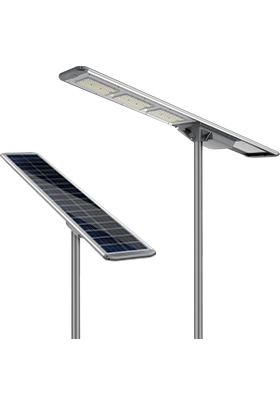
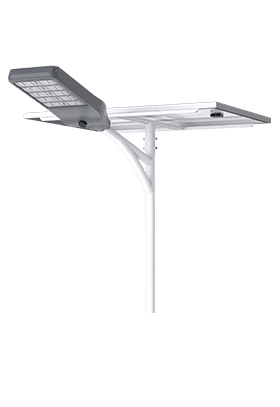
We have cooperated with more than 200 countries in solar energy projects and road lighting projects. We have exported products to many countries and participated in many important government projects around the world.

Anern has 17 years of experience in solar lighting and solar product manufacturing. Anern is headquartered in Guangzhou. With a production base of 30,000 square meters, our company has an R&D team of more than 100 people.
Choosing outdoor solar flood lights requires a balance between useful light on the ground and the energy available through the night. A fixture that produces an impressive burst of brightness may not maintain that output until dawn. The right comparison includes measured light output, the lighting schedule, usable battery energy, and the solar energy available to replenish it.
For yards, entrances, parking areas, and remote work sites, define what must remain visible and when. Some locations need continuous lighting; others can use a lower background level with temporary brighter output. Both approaches can work, but their runtime claims must be evaluated under the conditions in which they will operate.
Begin with the task and the area rather than the largest wattage label. A pedestrian entrance, a storage yard, and an active loading zone have different visibility needs. Define the required illuminated surface, mounting height, operating hours, and any minimum background level before comparing products. Applicable project requirements should guide the lighting target.
Lumens describe total emitted light, while lux describes light reaching a surface. Beam distribution and aiming determine how effectively the fixture's output covers the area. A concentrated beam can produce a bright center with weak edges; a wide beam may illuminate a larger area at a lower level. Glare and light spilling onto neighboring property should be checked at the same time.
For commercial solar flood lights, compare photometric information or measured coverage at a stated mounting height and operating mode. Confirm the relationship between the model designation, actual electrical input, and measured output. Use the measured input power and light output at the selected operating mode to assess brightness and overnight energy use.
At a given usable battery capacity, higher electrical demand generally shortens the time the light can operate. The relationship is approximately energy divided by power when demand is steady. Real performance also depends on driver losses, controller consumption, temperature, protective cutoffs, and any programmed output reduction.
Compare energy in watt-hours, not battery ampere-hours alone. A hypothetical 20 Ah battery at 3.2 V stores about 64 Wh nominally; 20 Ah at 12.8 V represents about 256 Wh. The identical ampere-hour number hides a fourfold difference in nominal energy. Neither value establishes how much energy the controller makes available for lighting.
Usable energy should account for the permitted operating window and the relevant battery condition. A fully charged new battery in mild weather is not the same test condition as an aged battery after a cloudy day. Avoid treating a favorable single-night test as a guarantee of year-round performance.
A light may also step down automatically as the night progresses or as battery voltage falls. Ask for the output-versus-time profile. “Operates for 12 hours” can describe continuous low output, several hours of high output followed by dimming, or intermittent motion events. Those are different lighting services.
Constant output suits areas that require an uninterrupted minimum light level. A timer can reduce output after a known busy period, while motion activation can reserve higher output for occasional activity. The choice should follow the site's visibility requirement and actual activity pattern rather than the longest advertised runtime.
Motion control needs careful evaluation in busy areas. Frequent movement can keep the light at high output for much of the night, using more energy than a low-traffic demonstration suggests. Check detection coverage, trigger duration, sensitivity to nuisance activity, and whether a background level remains available between events.
With solar flood lights with remote control, confirm what the remote actually changes. Brightness buttons may select predefined schedules rather than a permanent output level. Verify whether settings survive a power interruption, whether automatic modes override manual selections, and how the light behaves after a low-battery event. The presence of a remote does not by itself establish motion sensing or an adjustable all-night schedule.
For longer access roads or paths, a solar LED street light may offer a more suitable roadway distribution than a general floodlight. Select the fixture type around the area to be lit, then compare energy demand for an equivalent level of useful illumination.
Divide the night into operating periods and multiply each period's electrical power by its duration. Use battery-side power where available. If only LED-side or driver-output power is known, account for conversion and auxiliary losses separately. Do not add losses again if the measured battery-side value already includes them.
Consider a hypothetical 12-hour schedule with 20 W of battery-side input for the first four hours and 8 W for the remaining eight. Assume these values include the controller's consumption. Required battery energy is 4 × 20 + 8 × 8 = 144 Wh. Continuous operation at 20 W for 12 hours would require 240 Wh. The saving comes with lower output for part of the night and is acceptable only if that lower level meets the site's needs.
Hypothetical operating schedule | Battery energy for 12 hours |
Continuous 20 W input | 240 Wh |
20 W for 4 hours, then 8 W for 8 hours | 144 Wh |
4 W background for 11 hours, 20 W for 1 hour total | 64 Wh |
The motion-controlled schedule in the table uses 4 W for 11 hours and 20 W for one hour, totaling 64 Wh. High-output periods replace background operation rather than adding to it. If the high-output periods total three hours, consumption becomes 9 × 4 + 3 × 20 = 96 Wh. This illustrates why trigger frequency belongs in a runtime test.
As a separate example, a 200 Wh nominal battery with an assumed 80% usable window offers 160 Wh before other unaccounted effects. That provides little margin above the 144 Wh schedule. It is a preliminary calculation, not an adequate design allowance for aging, adverse temperature, or poor charging. Use the selected product’s usable battery energy and measured power profile for the final runtime estimate.
The light must replace the energy used at night during the available charging period. For a preliminary estimate, multiply panel rated watts by equivalent peak-sun-hours and a factor representing relevant charging-path and environmental losses. Peak-sun-hours describe integrated solar energy, not the number of daylight hours.
A hypothetical 60 W panel receiving four peak-sun-hours with an assumed net factor of 0.70 would store approximately 168 Wh. At two peak-sun-hours, the same calculation yields only 84 Wh. Against the 144 Wh schedule above, the second condition creates a daily deficit. A larger battery may delay shutdown, but it cannot correct a persistent shortage of charging energy.
Assess seasonal solar conditions, shading, panel orientation, dirt, and the recovery needed after several poor-weather days. For a separate solar panel, ensure that its voltage, current, connector, cable, and controller compatibility are verified. A panel intended for a larger PV system is not automatically a compatible replacement for a packaged solar light.
Plan where the panel can receive sunlight without compromising the lamp's aiming. Longer connecting cables may introduce losses and must remain within the product's approved arrangement. For fixed packaged systems, select an appropriate complete configuration rather than modifying battery or panel components without approval.
Ask for a test description covering starting state of charge, ambient temperature, actual lighting mode, measured input power, output over time, and the definition of “end of runtime.” A light that remains faintly illuminated has not necessarily maintained useful lighting until dawn.
Compare alternatives using the same area, mounting height, required minimum level, and operating schedule. Include battery energy at its actual voltage and a charging assessment for the intended season and location. A claim based on intermittent motion events should not be compared directly with continuous-output operation.
For an outdoor solar flood light with remote control, verify the delivered controller mode during a representative site trial. Record when output changes, how frequently motion activates brighter output where supported, and the battery condition at dawn. The test should confirm the lighting service, not merely that the fixture is still switched on.
Yes, if its complete energy system is sized for that output, night length, and charging conditions. The claim needs a defined brightness level and test conditions; it cannot be inferred from battery capacity or panel wattage alone.
Only when the high-output state is used for a limited portion of the night. Frequent triggering reduces the saving. A required continuous background level also consumes energy between events.
First identify the constraint. A healthy battery that runs out despite receiving a full charge may need more usable energy or a revised schedule. A battery that rarely reaches its intended charge level may have insufficient charging energy or another charging problem.
No. Functions vary by controller and model. Confirm the available modes, their output profiles, and whether settings persist rather than assuming that every remote supports the same commands.
Compare outdoor solar flood lights by the illumination they maintain and the energy their complete systems can supply. Calculate a realistic nightly schedule, check usable battery watt-hours, and verify daily replenishment under relevant seasonal conditions. Brightness and runtime become meaningful purchasing criteria only when they describe the same required lighting service.
· U.S. Department of Energy — Purchasing Energy-Efficient Exterior Lighting. Exterior luminaire efficiency, performance data, and controls.
· U.S. Department of Energy — Lighting Controls Solutions. Selecting and verifying lighting controls against project objectives.
· U.S. Department of Energy — Solar Integration: Solar Energy and Storage Basics. Stored energy, output power, conversion losses, and variable solar supply.