EN
EN
 fr
fr  de
de  es
es  it
it  ru
ru  pt
pt  ar
ar  id
id  ms
ms  uk
uk 

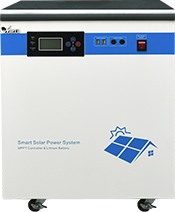


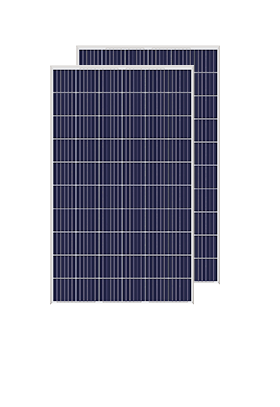


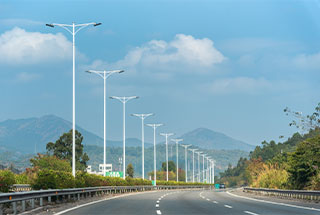
We have cooperated with more than 200 countries in solar energy projects and road lighting projects. We have exported products to many countries and participated in many important government projects around the world.




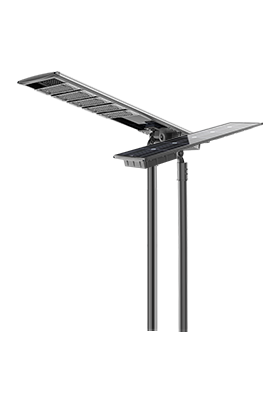


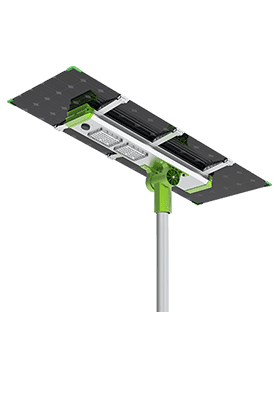
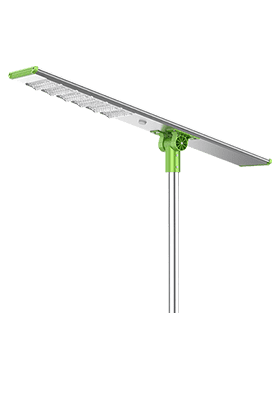
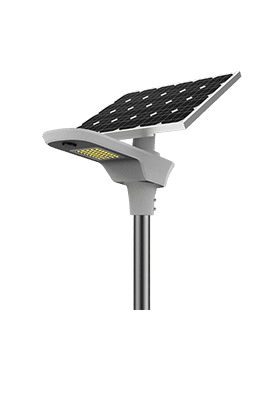


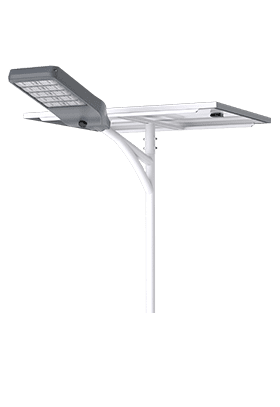
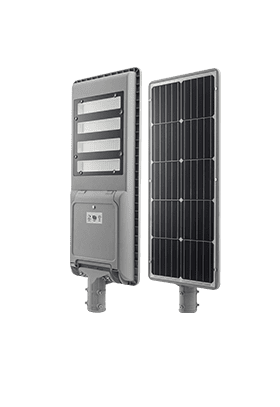
We have cooperated with more than 200 countries in solar energy projects and road lighting projects. We have exported products to many countries and participated in many important government projects around the world.

Anern has 17 years of experience in solar lighting and solar product manufacturing. Anern is headquartered in Guangzhou. With a production base of 30,000 square meters, our company has an R&D team of more than 100 people.
As a solar energy manufacturer with 17 years of experience, Anern works directly with professional installers, system integrators, and project developers. One of the most common engineering questions we hear is:
"Should I specify power optimizers or microinverters for my next residential or commercial PV project?"
Both technologies solve partial shading and module-level mismatch issues. However, they differ significantly in system architecture, cost structure, reliability, and long-term maintenance. This guide helps you make an informed, project-specific decision.
| Feature | Power Optimizer + String Inverter | Microinverter |
|---|---|---|
| Where MPPT happens | At each module (optimizer) | At each module (inverter) |
| DC-to-AC conversion | At a central string inverter | At each module |
| High voltage on roof | Yes (DC, up to 600–1500V) | No (AC, typically 240V) |
| System monitoring | Module-level | Module-level |
| Typical efficiency | 97–99% (optimizer) + 96–98% (inverter) | 95–97% (each) |
| Cost per watt | Medium | Higher |
| Best for | Large roofs, commercial systems, east/west facing | Complex roofs, small systems, rapid shutdown required |
| Manufacturers | SolarEdge, Tigo (Anern offers compatible systems) | Enphase, APsystems |
A power optimizer system consists of:
Module-level DC optimizers (one per solar panel)
A central string inverter (one per system or sub-array)
Communication gateway for monitoring
How it works:
Each optimizer performs Maximum Power Point Tracking (MPPT) at the individual module level, adjusting voltage and current to maximize harvest. The optimizers then feed regulated DC power to a central inverter, which converts DC to AC.
Key engineering characteristic:
The string inverter maintains a fixed high-voltage DC bus (typically 400V–1500V) from the optimizers. This allows long DC runs with minimal voltage drop.
A microinverter system consists of:
One small inverter per solar panel (or per 2–4 panels for some models)
AC combiner panel (aggregates microinverter outputs)
Communication gateway (integrated or external)
How it works:
Each microinverter performs MPPT and DC-to-AC conversion independently. The output is standard AC voltage (120V/240V) directly from the roof, which is then combined in parallel.
Key engineering characteristic:
No high-voltage DC on the roof. Each microinverter operates as an independent, grid-synchronous AC source..jpg "MPPT Solar Inverter")
| Aspect | Power Optimizer | Microinverter |
|---|---|---|
| Module-level MPPT | Yes | Yes |
| Mitigates shading across modules | Excellent | Excellent |
| Mitigates shading within a module (e.g., dirt, leaf) | Good | Good |
| Winner | Tie | Tie |
Both technologies effectively eliminate the "Christmas light effect" where one shaded panel drags down an entire string.
| Aspect | Power Optimizer | Microinverter |
|---|---|---|
| Conversion stages | 2 (DC regulate → DC to AC) | 1 (DC to AC directly) |
| Typical end-to-end efficiency | 93–96% | 94–96% |
| Efficiency at low light | Slightly lower due to optimizer wake-up threshold | Generally better |
| Efficiency at high power | Slightly higher (central inverter more efficient) | Good |
| Winner | Slight edge at full load | Slight edge at low light |
Engineering note:
Total system efficiency is similar in real-world conditions. The difference is usually within 1–2%.
| Aspect | Power Optimizer | Microinverter |
|---|---|---|
| Number of active electronic components | N modules + 1 inverter | N inverters |
| Estimated mean time between failures (MTBF) | Optimizer: higher, Inverter: very high | Microinverter: lower per unit |
| System impact of single component failure | Panel contributes 0%; rest of string works | Panel contributes 0%; others work |
| Replacement cost | Optimizer: low; Inverter: medium | Microinverter: medium |
| Winner | Power Optimizer | – |
Why power optimizers often win for professional installers:
A failed optimizer only loses one panel's production, but the central inverter is a single point of failure. However, quality central inverters have high reliability. Microinverters have many more potential failure points, but failure affects only one panel.
Best practice:
For large commercial systems ( > 50kW ), power optimizers + redundant string inverters are preferred because servicing a ground-level inverter is easier than roof-level microinverters.
| Aspect | Power Optimizer | Microinverter |
|---|---|---|
| Module-level data | Yes | Yes |
| Real-time voltage/current per panel | Yes | Yes |
| Remote firmware updates | Possible with gateway | Possible (often easier) |
| Troubleshooting failed unit | Need to access roof | Need to access roof |
| Winner | Tie | Tie |
Professional insight:
Both offer excellent visibility. The difference is in servicing. If a microinverter fails, you must send a technician to the roof. If a power optimizer fails, you also need roof access. If the central inverter fails (power optimizer system), servicing is at ground level—much safer and cheaper.
Regulatory context (NEC in North America):
Module-level rapid shutdown is required for rooftop solar systems.
| Aspect | Power Optimizer | Microinverter |
|---|---|---|
| Module-level rapid shutdown | Yes (optimizer drops output) | Yes (microinverter shuts off AC) |
| High DC voltage during normal operation | Yes (600–1500V) | No (AC only) |
| Arc fault risk | Higher (high-voltage DC) | Lower (no high-voltage DC) |
| Built-in arc fault detection | Requires inverter or external device | Typically not needed |
| Winner | – | Microinverter |
Safety advantage of microinverters:
No high-voltage DC on the roof means lower arc flash and fire risk during normal operation. For projects in jurisdictions with strict safety requirements, this is a strong selling point.
| Cost Component | Power Optimizer System | Microinverter System |
|---|---|---|
| Equipment cost per watt | $0.08–0.12 (optimizers) + $0.10–0.15 (inverter) | $0.20–0.35 |
| Installation labor | Less per module (central inverter) | More per module (multiple units) |
| Balance of system (wiring, combiner) | Less | More (AC combiner) |
| Typical total installed cost | $0.25–0.45/W | $0.35–0.55/W |
| Winner | Power Optimizer | – |
Cost conclusion for professionals:
For systems larger than 10kW, power optimizer solutions are typically 15–25% less expensive than microinverters for equivalent performance.
Use this table based on your specific project profile:
| Project Condition | Recommended Technology | Why |
|---|---|---|
| Large commercial roof (>50kW) | Power Optimizer | Lower cost, easier ground-level inverter service, high efficiency |
| Residential roof with complex geometry (multiple orientations) | Either – both work well | Microinverter may simplify AC design |
| Residential roof with heavy shading | Either – both solve shading | – |
| Rooftop where safety is the #1 concern (schools, hospitals) | Microinverter | No high-voltage DC on roof |
| System planned for future battery storage | Power Optimizer (DC-coupled) | Easier integration with DC batteries (e.g., Anern battery systems) |
| Project in region with very low labor costs (service is cheap) | Microinverter | Replacement labor is less concern |
| Project in region with high roof access costs (multi-story) | Power Optimizer | Lower failure rate per unit, less roof visits |
| System requiring rapid shutdown compliance | Either – both meet code | Microinverter has inherent safety advantage |
.jpg "MPPT_Solar_Inverter_(3).jpg")
As a complete solar manufacturer, Anern provides solutions for both approaches:
High-efficiency off-grid solar inverters and hybrid solar inverters (pure sine wave, 3–15kW+)
Compatible with industry-standard power optimizers (offering open communication protocols)
48V battery systems for DC-coupled storage
AC combiner panels and distribution boxes
Battery storage systems with AC coupling capability (retrofit or new install)
17 years of solar manufacturing experience
Fully certified products (CE, RoHS, TUV, ISO, FC)
OEM/ODM support for system integrators
Engineering support for system design and commissioning
| If your priority is... | Choose... | Reason |
|---|---|---|
| Lowest total system cost | Power Optimizer | 15–25% cheaper for >10kW systems |
| Simplest installation | Power Optimizer (string inverter at ground) | Only one inverter to mount and wire |
| Maximum safety (no high-voltage DC on roof) | Microinverter | Inherently safer during normal operation |
| Easiest future battery addition | Power Optimizer (DC coupling) | More efficient, fewer conversion steps |
| Lowest long-term maintenance cost for large systems | Power Optimizer | Ground-level central inverter service |
| Best for complex, small residential roofs | Microinverter | Eliminates DC string design constraints |
Bottom line for professional installers and system integrators:
Choose power optimizers for most medium-to-large residential solar system and commercial solar system where cost and serviceability matter most.
Choose microinverters for small, complex roofs, or projects where the absence of high-voltage DC is a specific client requirement or regulatory mandate.
Both technologies are mature and effective. Your decision should be based on project size, safety priorities, labor costs, and future storage plans.
Answer: In real-world conditions, end-to-end system efficiency is very similar, typically 94–96% for both. Power optimizers may have a slight edge at full load (due to a more efficient central inverter), while microinverters may perform slightly better at very low light levels. The difference is rarely more than 1–2%, so efficiency alone should not be the deciding factor.
Answer: Microinverters are inherently safer because they eliminate high-voltage DC on the roof. During normal operation, a microinverter system carries only standard AC voltage (120V/240V). Power optimizer systems still have high DC voltage (600–1500V) on the roof until rapid shutdown is activated. For projects with strict safety requirements (schools, hospitals, or jurisdictions with high safety standards), microinverters are preferred.
Answer: In both cases, only that single solar panel stops producing. The rest of the system continues to operate normally. However, replacement differs:
Power optimizer failure: You replace the optimizer (roof access required). The central inverter remains unaffected.
Microinverter failure: You replace the microinverter (roof access required).
For large systems, power optimizer systems often have lower annual failure rates because there are fewer active components (N optimizers + 1 inverter vs N microinverters).
Answer: Power optimizers paired with a hybrid string inverter are generally better for future battery storage. This creates a DC-coupled system where batteries share the same inverter as the solar panels. DC coupling is more efficient because it requires fewer conversions (DC solar → DC battery → DC to AC). Microinverter systems require AC coupling, which adds extra conversion steps (DC solar → AC → battery inverter → DC battery → AC), resulting in 5–8% lower round-trip efficiency.
Answer: A power optimizer + central string inverter system is typically 15–25% less expensive than a microinverter system for a 50kW project. Additionally, servicing a ground-mounted central inverter (power optimizer system) is much easier and cheaper than servicing 100+ roof-mounted microinverters over the system’s lifetime. For commercial projects over 10kW, Anern recommends power optimizer-based solutions unless there is a specific reason to choose microinverters (e.g., roof complexity or safety mandates).
Need help designing your next solar project? Contact Anern for solar inverter installation support, product specifications, and certified solar inverters.