EN
EN
 fr
fr  de
de  es
es  it
it  ru
ru  pt
pt  ar
ar  ms
ms  id
id 

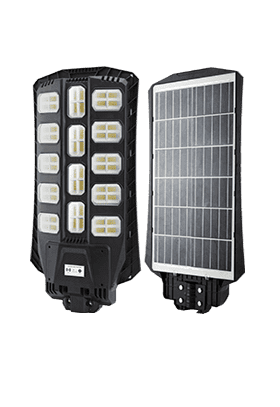
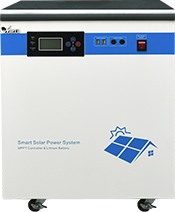





We have cooperated with more than 200 countries in solar energy projects and road lighting projects. We have exported products to many countries and participated in many important government projects around the world.




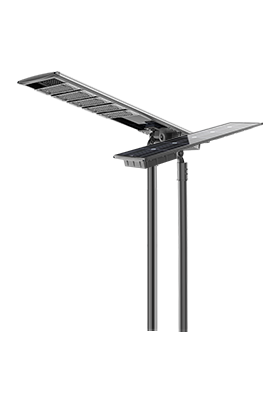


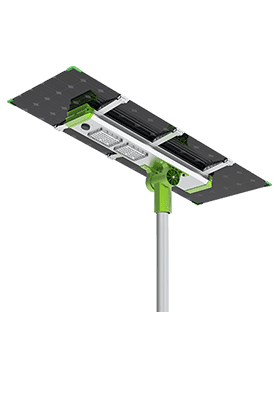
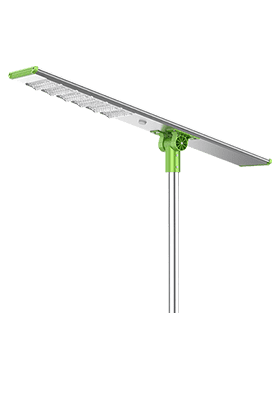
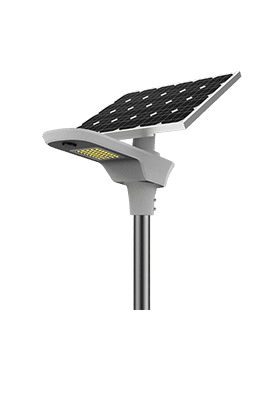


We have cooperated with more than 200 countries in solar energy projects and road lighting projects. We have exported products to many countries and participated in many important government projects around the world.

Anern has 17 years of experience in solar lighting and solar product manufacturing. Anern is headquartered in Guangzhou. With a production base of 30,000 square meters, our company has an R&D team of more than 100 people.
Solar power generation systems may have electromagnetic compatibility issues, which require meeting these three elements: electromagnetic interference sources, coupling pathways, and sensitive devices. When conducting electromagnetic compatibility testing, you need to start from the following elements. By solving one of them, you can solve the electromagnetic compatibility problem. Solar equipment's inverter electromagnetic interference source is a high-frequency changing power circuit, which is difficult to solve. The sensitive devices are external and will not be affected by the inverter control. Therefore, it is crucial to cut off thecoupling pathways. Interference transmission pathways include transmission and radiation sources, and the commonly used methods are grounding, filtering, and shielding.
No matter which method is used to suppress EMI interference sources, it ultimately needs to use grounding to release static electricity. Therefore, the solar energy equipment inverter's grounding is critical. Grounding includes grounding, signal grounding, etc. The design of the grounding body, the arrangement of the ground wire, and the impedance of the ground wire at different frequencies not only involve the coverage of the product or system but also relate to electromagnetic compatibility testing and measurement technology.
Both the input and output ports of the solar energy equipment inverter are designed with EMI filters to control EMI transmission interference, allowing only ideal low-pass DC and power frequency currents to be used. Also, it is a bi-directional filter that can prevent the inverter from emitting noise interference to the outside world and can prevent external interference from entering the system. The filter includes X and Y capacitors, and common-mode inductors. The common-mode inductor is composed of two windings with opposite winding directions and the same number of turns on the same magnetic ring, which superimposes the magnetic field generated by the current passing through the winding and exhibits greater impedance to the interference current. To suppress common-mode interference, the common-mode capacitor introduces common-mode current not used in the power grid into the ground.
By using various conductive materials to manufacture various types of shells and connecting them to the ground, the electromagnetic noise propagation paths formed by electrostatic coupling, induction coupling, or AC magnetic field coupling can be cut off. Shielding can reasonably suppress the interference source propagated in the space. The two factors for using shielding are to control the electromagnetic energy leakage of the radiation source inside the restricted area and to avoid the electromagnetic energy of the external radiation source from entering the control zone inside. The solar energy equipment inverter adopts metal enclosures made of aluminum or iron to achieve the purpose of shielding.
To reduce the interference caused by radiation sources on wires, a magnetic ring is usually added to the connection wires of high-current wires and input/output wires, such as the connection wires of filter inductors, to prevent signal interference from propagating outside. Isolation is mainly achieved by using components such as relays, isolation transformers, or optoelectronic isolation to disconnect the electromagnetic noise propagation. Its advantage is to separate the ground wire systems of the two parts of the circuit, and to prevent the possibility of coupling through the use of impedance.