EN
 fr
 de
 es
 it
 ru
 pt
 ar
 id
 ms
 uk







We have cooperated with more than 200 countries in solar energy projects and road lighting projects. We have exported products to many countries and participated in many important government projects around the world.








We have cooperated with more than 200 countries in solar energy projects and road lighting projects. We have exported products to many countries and participated in many important government projects around the world.

Anern has 17 years of experience in solar lighting and solar product manufacturing. Anern is headquartered in Guangzhou. With a production base of 30,000 square meters, our company has an R&D team of more than 100 people.
How many batteries do you need for a hybrid solar power inverter? The answer depends on your electricity consumption, required backup duration, battery capacity, and the inverter's technical requirements.
There is no fixed number of batteries for every hybrid inverter. Some compatible systems may operate with a single battery pack, while others require multiple batteries to meet their energy storage and power demands. Certain hybrid inverter models can also operate without batteries in supported configurations, although battery storage is necessary when stored energy is required for backup operation.
The key is to calculate your energy storage requirements and then select batteries that are compatible with the inverter.
This guide explains the main factors that determine battery quantity and shows how to estimate the number of battery packs needed for a hybrid solar power system.
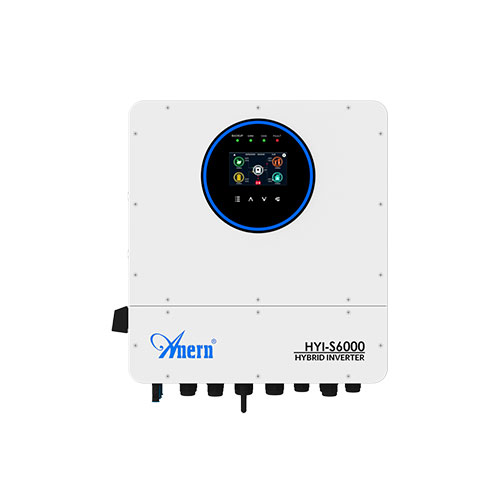
A hybrid solar inverter manages electricity from different sources, such as solar panels, battery storage, and the utility grid, according to its supported operating modes.
During periods of sufficient sunlight, solar electricity can supply connected loads and charge the battery when surplus energy is available. When solar generation is insufficient, stored battery energy may be used to support the loads.
Depending on the system configuration, the grid may provide additional electricity or charge the batteries.
For a detailed explanation of these operating modes, see our guide to the hybrid solar inverter working principle.
Battery quantity should therefore be determined by the actual storage and backup requirements rather than the inverter's rated power alone.
The rated output power of a hybrid inverter determines the maximum continuous AC power it can supply under specified operating conditions.
For example, a 6kW hybrid inverter is designed to supply loads up to its supported rated output. However, this does not mean that the system must use a 6kWh battery.
Inverter power (kW) and battery energy capacity (kWh) measure different things:
Inverter power (kW): The rate at which the inverter can supply electrical power.
Battery capacity (kWh): The amount of electrical energy stored in the battery.
Battery discharge capability (kW or A): The rate at which the battery can supply energy within its operating limits.
A 6kW inverter supplying only 1kW of essential loads will generally require less stored energy than the same inverter supplying a 5kW load for an equal period.
Before selecting a battery, check the inverter's supported battery voltage, charging current, maximum battery discharge current, and backup operating mode.
Explore Anern's IP65 hybrid solar inverter models to compare available inverter series and their technical specifications.
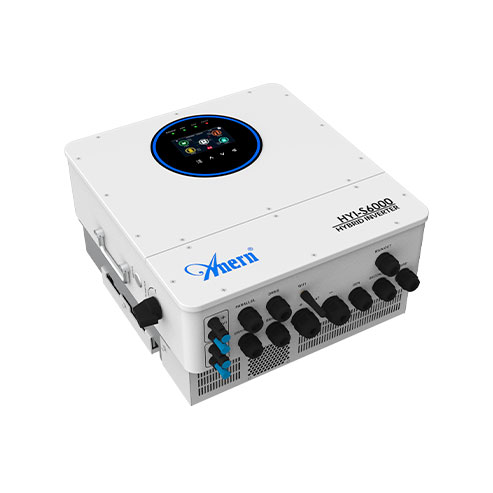
The required backup duration directly affects battery capacity.
If the system needs to supply essential appliances for several hours during a power outage, the battery must store enough usable energy to cover that demand.
The basic calculation is:
Required Backup Energy (kWh) = Average Load Power (kW) × Backup Duration (hours)
For example:
Average load: 1kW
Required backup duration: 6 hours
Required AC energy: 1 × 6 = 6kWh
In this example, the system must deliver approximately 6kWh of AC electricity during the backup period.
However, the nominal battery capacity must be higher because not all stored energy is usable. The calculation should account for the permitted depth of discharge (DoD), inverter losses, and other operating conditions.
To estimate storage requirements using actual appliances and operating hours, try Anern's solar battery capacity calculator.
The final battery quantity should also consider future load growth and the required number of backup hours or days.
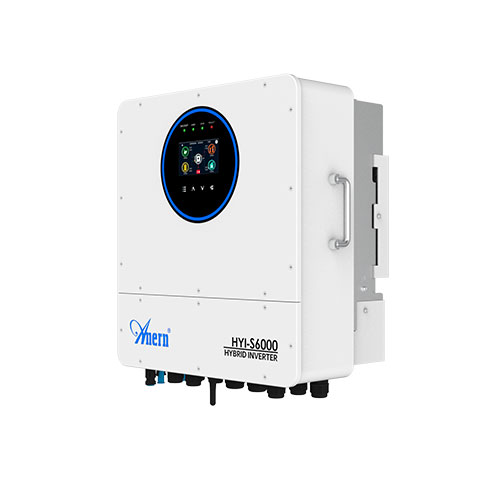
Different electrical loads have different power requirements.
Lighting, computers, refrigerators, water pumps, and air conditioners may have very different running and starting power demands.
For example, refrigerators and pumps with electric motors can require a higher starting current than their normal operating current.
When determining battery requirements, consider both:
Energy demand: How many kilowatt-hours the loads consume over the required operating period.
Power demand: How much continuous and short-duration power must be delivered at a particular moment.
A battery bank may have enough stored energy to operate the loads for several hours but still be unsuitable if its maximum discharge current is insufficient.
Therefore, battery selection should be coordinated with inverter sizing.
Use Anern's inverter size calculator to review the running and surge power requirements of your appliances.
The inverter and battery must both be capable of supporting the expected load conditions.
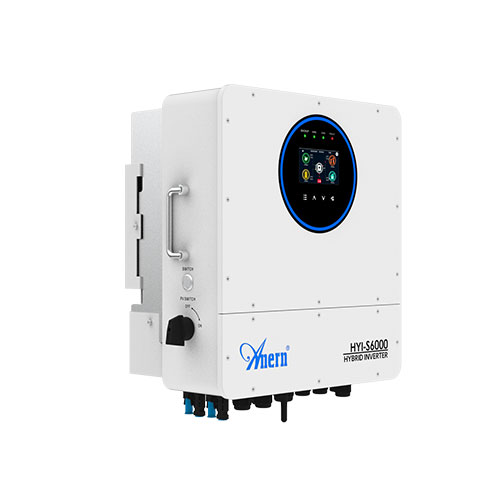
Battery voltage is another important factor in selecting a suitable energy storage configuration.
Solar battery systems are available in different voltage classes, including 12V, 24V, and 48V-class configurations. Some lithium iron phosphate battery packs, for example, have a nominal voltage of 51.2V.
A complete battery pack does not necessarily consist of a single 12V battery, and different battery systems cannot be connected interchangeably.
When selecting batteries for a hybrid inverter, verify:
The inverter's supported battery voltage range.
The battery's nominal and operating voltage.
Maximum charging and discharging currents.
The battery's BMS protection functions.
Communication interface and protocol compatibility.
Permitted series or parallel connection configurations.
For lithium battery systems, communication between the battery management system and inverter may be required for certain functions.
An RS485 or CAN communication interface does not automatically guarantee compatibility. The devices must also support the appropriate communication protocols and settings.
Read our battery-inverter BMS communication and compatibility guide for more information.
Once the load requirements, backup duration, and compatible battery type are known, the required battery quantity can be estimated.
First, determine the average power consumption of the loads and how long the battery must supply electricity.
Required Backup Energy (kWh) = Average Load Power (kW) × Backup Hours
For this example, assume:
Average backup load: 1kW
Backup duration: 6 hours
Solar contribution during backup: 0kWh
Required backup energy:
1kW × 6 hours = 6kWh
Battery capacity is usually expressed as nominal energy capacity, but the amount available to AC loads is lower because of operating limits and conversion losses.
A simplified calculation is:
Required Nominal Battery Capacity (kWh) = Required AC Energy (kWh) ÷ (Permitted DoD × Estimated Discharge-System Efficiency)
For illustration, assume:
Required AC energy: 6kWh
Permitted depth of discharge: 80% (0.80)
Estimated discharge-system efficiency: 90% (0.90)
Required nominal battery capacity:
6 ÷ (0.80 × 0.90) = 8.33kWh
Under these assumptions, the system needs at least approximately 8.33kWh of nominal battery capacity to supply the intended AC energy.
The 80% DoD and 90% efficiency figures are illustrative assumptions, not universal specifications for Anern batteries or inverters. The actual values must come from the selected equipment and operating conditions.
For example, Anern offers the AN-LPB-Nplus 51.2V 200Ah lithium battery.
Its nominal energy can be estimated from its voltage and capacity:
51.2V × 200Ah ÷ 1,000 = 10.24kWh
In the previous example, the calculated nominal storage requirement is 8.33kWh.
Based on nominal energy capacity alone, one 51.2V 200Ah battery pack could theoretically meet this requirement under the assumed conditions.
However, this does not mean the battery is automatically compatible with the selected hybrid inverter or suitable for every load.
Before confirming the configuration, check the inverter's supported voltage and BMS protocols, the battery's permitted discharge current, usable capacity, installation conditions, and any required reserve margin.
The estimated number of battery packs can be calculated using:
Estimated Number of Batteries = Required Nominal Battery Capacity (kWh) ÷ Nominal Capacity per Battery (kWh)
Round the result up to the next whole battery.
After calculating the quantity, verify that the battery manufacturer permits the proposed connection arrangement and that the inverter can operate correctly with the complete battery bank.
If greater capacity is required, multiple compatible battery units may be used where the manufacturer supports parallel operation.
Compare Anern's 200Ah lithium battery options to review different voltage classes, installation formats, and battery configurations.
The following checklist can help evaluate a proposed battery configuration.
| Selection Factor | What to Verify |
| Inverter Rated Power | Maximum continuous and surge output |
| Energy Consumption | Total kWh required during backup |
| Backup Duration | Number of hours the batteries must supply the loads |
| Battery Nominal Capacity | Voltage, Ah rating, and total stored energy |
| Usable Capacity | Permitted DoD and operating conditions |
| Battery Discharge Capability | Maximum continuous and peak discharge limits |
| Inverter Compatibility | Voltage, charging settings, and BMS communication |
| Battery Expansion | Manufacturer-approved series or parallel configuration |
| Installation Conditions | Temperature range, installation space, and protection requirements |
These checks are important because selecting more batteries does not automatically improve system performance if the inverter or battery bank has other operating limitations.
Not necessarily.
A 6kW inverter rating describes its power output capability, while a 6kWh battery rating describes stored energy.
Battery requirements depend on the loads, backup duration, usable battery capacity, and compatibility requirements. A 6kW inverter may be paired with different battery capacities when supported by its specifications.
Some hybrid inverters support batteryless operation in certain configurations, while others require battery storage for particular operating modes.
Whether a battery is necessary depends on the inverter model, grid availability, and intended backup functions.
Always check the manufacturer's instructions before designing a batteryless system.
Multiple batteries can be connected where the battery manufacturer and inverter support the proposed configuration.
The batteries must meet the applicable voltage, BMS, wiring, current, and connection requirements.
Do not assume that different battery models or capacities can be connected together without manufacturer approval.
The number of batteries required for a hybrid solar power inverter depends on the energy consumption of the connected loads, required backup duration, usable battery capacity, and the technical specifications of the selected inverter.
Inverter rated power alone cannot determine battery quantity.
A reliable selection process starts by calculating energy demand, accounting for battery operating limits and system losses, and then confirming the compatibility of the complete battery-inverter configuration.
By comparing actual product specifications and backup requirements, users can select a battery system that better matches their energy storage needs.
Explore the Anern lithium battery range to review available battery types and configurations for solar energy storage applications.