EN
EN
 fr
fr  de
de  es
es  it
it  ru
ru  pt
pt  ar
ar  ms
ms  id
id 



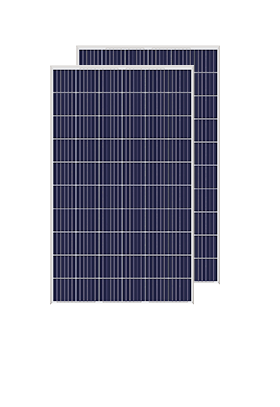



We have cooperated with more than 200 countries in solar energy projects and road lighting projects. We have exported products to many countries and participated in many important government projects around the world.




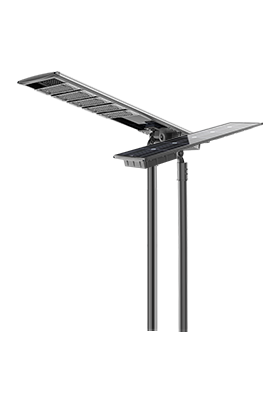


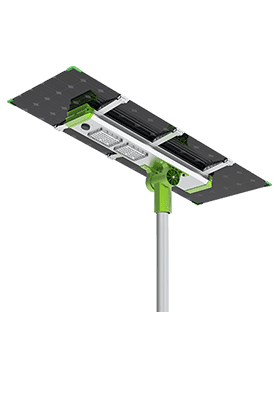
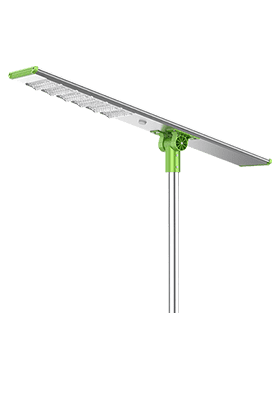
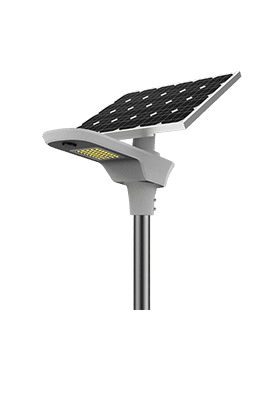


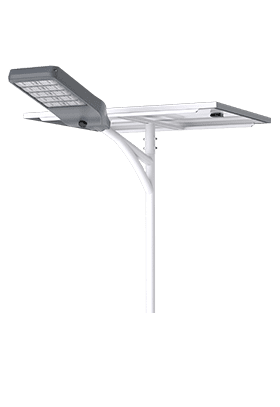
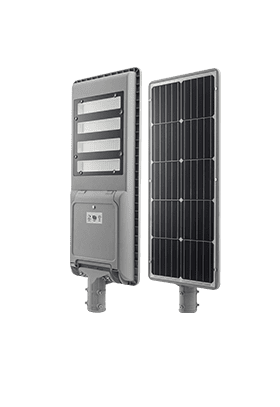
We have cooperated with more than 200 countries in solar energy projects and road lighting projects. We have exported products to many countries and participated in many important government projects around the world.

Anern has 17 years of experience in solar lighting and solar product manufacturing. Anern is headquartered in Guangzhou. With a production base of 30,000 square meters, our company has an R&D team of more than 100 people.
The rapid growth of solar power is pushing inverter technology toward higher efficiency, greater power density, and better thermal performance. As photovoltaic systems become more powerful and energy storage becomes increasingly integrated, conventional silicon power devices are facing new design challenges.
This is driving interest in wide-bandgap semiconductor technologies, particularly silicon carbide (SiC) and gallium nitride (GaN). These power devices can operate at higher switching frequencies, withstand higher temperatures, and reduce certain switching and conduction losses compared with conventional silicon technologies.
For China solar inverter manufacturers, the adoption of SiC and GaN represents an important technology trend. It can help inverter manufacturers develop more compact and efficient power conversion platforms for residential, commercial, industrial, and energy-storage applications.
A solar inverter continuously converts DC electricity from photovoltaic modules or batteries into AC electricity for loads or the grid. During this process, semiconductor switches turn current on and off at high speed.
Every switching operation produces some energy loss. There are also conduction losses when current flows through the semiconductor device. As inverter power increases, these losses become increasingly important because they directly affect efficiency and heat generation.
A modern inverter therefore needs power devices that can switch quickly while keeping electrical losses and thermal stress under control.
Traditional silicon MOSFETs and IGBTs remain widely used because of their mature manufacturing processes and competitive cost. However, wide-bandgap materials such as SiC and GaN offer different physical characteristics that can provide advantages in high-performance power conversion.
SiC and GaN are both wide-bandgap semiconductor materials, but they are suited to somewhat different inverter applications.
SiC devices are particularly attractive for higher-voltage and higher-power conversion. They can offer low switching losses, high-temperature capability, and strong voltage-blocking performance. These characteristics make SiC MOSFETs attractive for high-power solar inverters, battery energy-storage converters, and other demanding power-electronics systems.
GaN devices can operate at very high switching frequencies with low switching losses. Their characteristics make them particularly interesting for compact, high-frequency power-conversion stages and applications where reducing the size of magnetic components is important.
The choice between SiC and GaN is therefore not simply a matter of choosing the newest semiconductor. Engineers must consider voltage level, switching frequency, current, thermal design, cost, and system architecture.
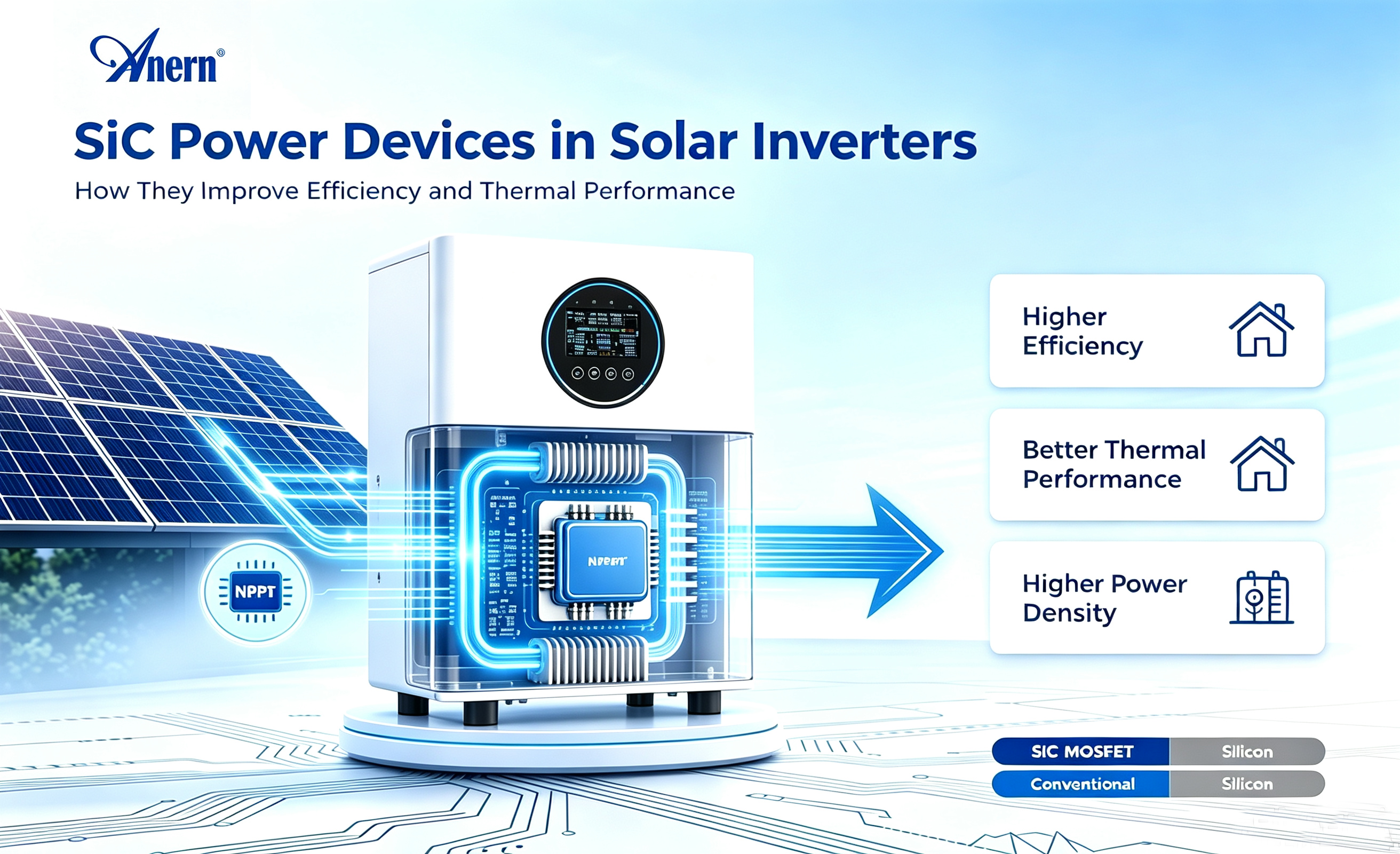
One of the most important advantages of SiC power devices is their ability to reduce power losses during high-frequency switching.
When a conventional semiconductor switches between its conducting and blocking states, the transition is not instantaneous. During this short period, voltage and current overlap, generating switching energy loss. At high switching frequencies, these losses can become significant.
SiC MOSFETs can switch faster and generally have lower switching losses than comparable silicon devices in suitable applications. This allows inverter designers to increase switching frequency without creating an equivalent increase in switching losses.
Higher efficiency means a greater proportion of the electricity generated by the PV system can reach the load, battery, or grid. Even a relatively small improvement in conversion efficiency can become significant when an inverter operates continuously over thousands of hours.
For a solar inverter supplier, this efficiency advantage can become an important differentiating factor when serving projects where energy yield and operating costs are major considerations.
Electrical efficiency and thermal management are closely connected.
When an inverter loses energy as heat, that heat must be removed through heat sinks, fans, cooling channels, or other thermal-management structures. Excessive temperature can increase component stress and potentially reduce long-term reliability.
SiC devices can operate effectively at higher junction temperatures than many traditional silicon devices. More importantly, their lower switching losses can reduce the amount of heat that needs to be dissipated.
This creates an opportunity to reduce the physical size of cooling systems while maintaining appropriate operating temperatures.
For inverter designers, the result can be higher power density: more conversion capacity within a smaller enclosure.
This is especially valuable for modern hybrid systems, where the inverter may need to integrate PV conversion, battery charging and discharging, grid interaction, and backup functions within one platform.
Switching frequency is another important area where SiC and GaN can influence inverter architecture.
Increasing switching frequency can allow magnetic components such as inductors and transformers to become smaller for a given power-conversion requirement. Smaller passive components can contribute to a more compact inverter design.
GaN is particularly interesting for high-frequency applications because of its fast switching characteristics. SiC, meanwhile, provides strong advantages in higher-power switching stages where voltage and thermal requirements are more demanding.
The practical objective is not simply to maximize switching frequency. Engineers must find an optimized operating point where semiconductor losses, magnetic losses, electromagnetic interference, thermal performance, and system cost remain balanced.
The growth of battery energy storage is creating new opportunities for wide-bandgap power devices.
A hybrid inverter on off grid system may need to manage energy from solar panels, batteries, utility power, and backup loads. The power conversion stage can therefore experience rapidly changing operating conditions.
Higher-efficiency switching devices can help reduce conversion losses during these repeated energy-transfer cycles.
Anern's current portfolio includes hybrid, off-grid, split-phase, MPPT, pure sine wave, and low-frequency solar inverter solutions, as well as lithium battery systems. Its product range includes the AN-HYI-E hybrid series and other inverter platforms designed for different solar applications.
As energy-storage systems continue moving toward higher power density, semiconductor selection will become increasingly important to overall inverter architecture.
The development of SiC and GaN does not mean that every inverter should immediately move to a high-frequency architecture.
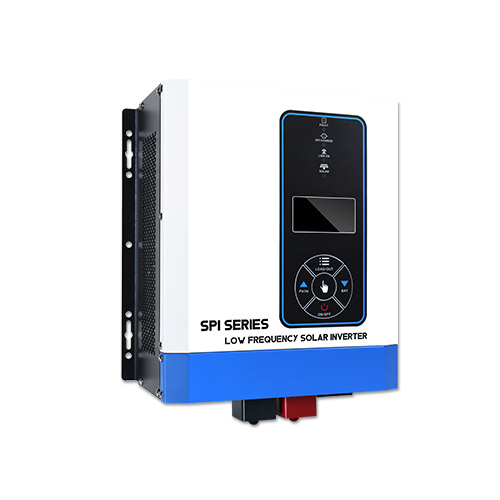
Low-frequency designs remain useful for applications where surge capability, robust operation, and compatibility with demanding loads are important. Anern, for example, offers low-frequency solar inverter solutions, including models with UPS functionality and hybrid configurations.
This illustrates an important engineering principle: semiconductor technology should be selected according to the complete system requirement.
A low-frequency inverter can still be the appropriate solution for certain applications, while SiC or GaN may provide greater advantages in high-frequency, high-density, or high-efficiency architectures.
Despite their technical advantages, SiC and GaN devices are not automatically the best choice for every inverter.
The first challenge is cost. Wide-bandgap semiconductor devices and their associated gate-drive and protection circuits can increase the initial bill of materials.
The second challenge is design complexity. Faster switching creates greater demands on PCB layout, electromagnetic compatibility, gate-drive design, insulation, and protection.
Thermal management also remains important. Although SiC and GaN can improve the thermal characteristics of the power stage, the entire inverter still needs an appropriate cooling architecture.
Manufacturers must therefore evaluate the complete system rather than comparing semiconductor specifications alone.
For an inverter manufacturer, SiC and GaN are more than component upgrades. They can influence the architecture of the entire inverter.
Future designs are likely to combine advanced semiconductor devices with intelligent MPPT algorithms, digital control, improved thermal management, higher-density packaging, and advanced monitoring.
Anern's technology portfolio already covers multiple inverter architectures, including pure sine wave, MPPT, hybrid, commercial, split-phase, and low-frequency solutions. The company's technology page also lists a range of inverter platforms and highlights its R&D and manufacturing capabilities.
For buyers evaluating a hybrid inverter manufacturer, it is therefore increasingly useful to look beyond rated power and conversion efficiency. Semiconductor technology, switching architecture, thermal design, component quality, control strategy, and manufacturing capability all contribute to real-world performance.
SiC and GaN are helping redefine what is possible in power conversion. SiC is especially promising for high-voltage and high-power applications where efficiency, switching performance, and thermal robustness are critical. GaN offers strong potential for high-frequency, compact power-conversion architectures.
Neither technology will completely replace silicon in the short term. Instead, the solar inverter market is likely to develop toward a mixed semiconductor landscape in which silicon, SiC, and GaN are selected according to voltage, power, frequency, cost, and application requirements.
For distributors looking for a solar inverter supplier, and for system integrators comparing an inverter manufacturer, this technology transition is worth monitoring closely. The next generation of solar inverters will not be defined only by higher rated power. Increasingly, performance will depend on how effectively advanced power devices, digital controls, thermal systems, and energy-storage technologies work together.
Anern's broad inverter portfolio provides a foundation for serving different system requirements today, while the continued development of wide-bandgap semiconductors points toward a future of more efficient, compact, and thermally optimized solar power conversion.