EN
EN
 fr
fr  de
de  es
es  it
it  ru
ru  pt
pt  ar
ar  ms
ms  id
id 

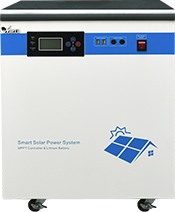


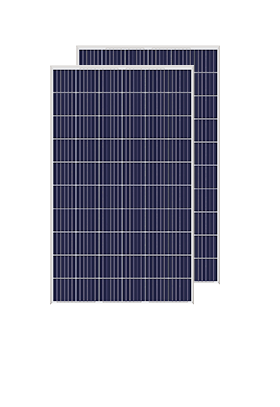



We have cooperated with more than 200 countries in solar energy projects and road lighting projects. We have exported products to many countries and participated in many important government projects around the world.




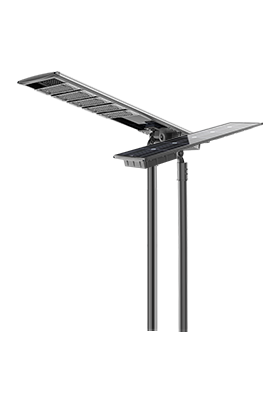


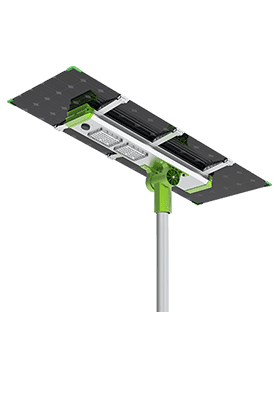
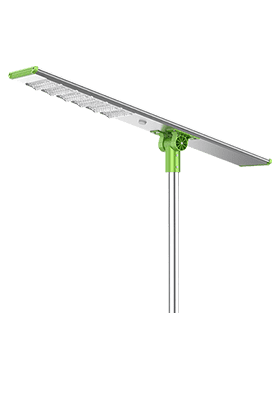
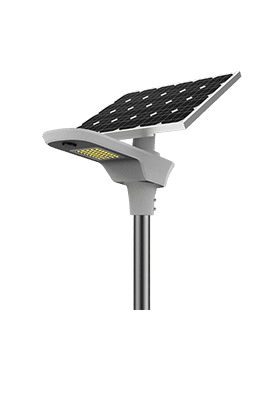


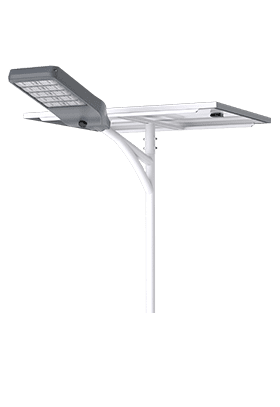
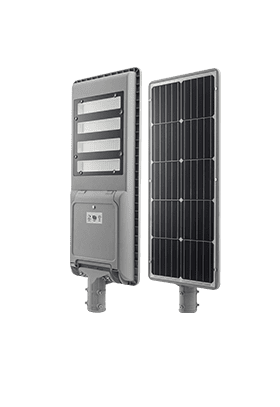
We have cooperated with more than 200 countries in solar energy projects and road lighting projects. We have exported products to many countries and participated in many important government projects around the world.

Anern has 17 years of experience in solar lighting and solar product manufacturing. Anern is headquartered in Guangzhou. With a production base of 30,000 square meters, our company has an R&D team of more than 100 people.
A solar inverter converts the DC electricity produced by a PV array (and, in many systems, a battery) into usable AC power for loads and/or the utility grid. In modern PV projects, the inverter is also the control center that optimizes solar harvest (MPPT), manages safety protections, supports monitoring, and—on hybrid/off-grid models—coordinates batteries and generator/grid input.
A solar inverter primarily converts PV DC power to AC power. Most modern units also maximize PV output using MPPT, synchronize with the grid, protect the system from abnormal conditions, and provide monitoring. Hybrid/off-grid solar inverters additionally charge/discharge batteries and may support backup (EPS) output and generator coordination.
| Function | Applies to (typical) | Why it matters in projects |
|---|---|---|
| DC → AC conversion | All solar inverters | Powers AC loads and/or exports to grid |
| MPPT (Maximum Power Point Tracking) | Most modern PV inverters | Higher real-world kWh yield under varying irradiance/temperature |
| Grid synchronization & export control | Grid-tied / hybrid | Compliance, stable operation, export limiting/zero export (model dependent) |
| Battery charge/discharge control | Hybrid / off-grid | Self-consumption, backup power, weak-grid stability |
| Generator/grid input coordination | Hybrid / off-grid (model dependent) | Extends runtime, reduces fuel use, improves uptime |
| Protection & safety logic | All | Prevents damage, reduces nuisance trips, supports safe shutdown |
Monitoring & communications | Most | Faster commissioning, remote O&M, fault diagnosis |
PV modules and batteries output DC. Most buildings and appliances use AC, and the grid is AC—so the inverter's first job is to perform DC–AC conversion with controlled voltage and frequency.
Motor loads (pumps, compressors) demand stable voltage and strong surge handling.
Sensitive electronics (IT, medical devices, LED drivers) need stable waveform quality.
If your project includes sensitive or inductive loads, waveform quality matters. Many engineering buyers specify pure sine wave output to reduce heating, noise, and compatibility issues.
Most modern solar inverters include MPPT (Maximum Power Point Tracking). MPPT continuously adjusts PV operating voltage/current so the array stays close to its maximum power point as sunlight and temperature change.
In procurement terms, MPPT affects:
daily kWh yield, especially in variable weather
performance under partial shading
PV array design flexibility (string voltage vs MPPT range)
Multi-MPPT designs (dual/multiple MPPT) are often the most practical upgrade for rooftops with east–west orientations or mixed shading conditions.
.jpg "MPPT Solar Inverter")
In grid-tied systems, the inverter must:
synchronize AC output to the grid (voltage, frequency, phase)
comply with anti-islanding requirements (shutdown during grid outage for safety)
manage export behavior (depending on regulations and project requirements)
For EPC projects in weak-grid regions, stable operation depends on properly matching inverter settings to local grid conditions and ensuring the unit supports the required grid standard.
In hybrid and off-grid architectures, the inverter also acts as a battery inverter/charger:
charges batteries from PV (and sometimes from grid/generator input)
discharges batteries to supply loads when PV is insufficient
applies SOC-based control and power-source priority logic (solar → battery → grid/generator)
This function is central to:
self-consumption optimization (reduce utility usage)
backup power for critical loads
stable operation in unstable grids (voltage dips, frequent outages)
Engineering note: battery compatibility is not generic. Verify battery voltage class, supported chemistry (often LiFePO₄), and BMS communication requirements (CAN/RS485) where applicable.
A solar inverter continuously monitors system conditions and enforces protective shutdown or derating. Typical protections include:
PV over/under-voltage
overcurrent/short-circuit protection
overtemperature derating/shutdown
ground/insulation related protections (model dependent)
anti-islanding for grid-tied systems
For distributors, protection quality influences return rates and field troubleshooting workload. For EPCs, it influences commissioning success and long-term uptime.
Modern inverters provide monitoring via WiFi/Ethernet/4G/RS485 (model dependent). Monitoring impacts:
commissioning speed (string/MPPT checks, error codes)
remote fault diagnostics (reduce site visits)
performance reporting for end users and asset owners
For multi-site deployments (telecom, chain stores), monitoring can be as important as efficiency because it controls O&M cost.
.png "anern solar inverter")
In procurement discussions, "solar inverter", “MPPT controller", and "battery inverter" are often mixed up. The difference matters because it changes system wiring, capabilities, and responsibility boundaries.
| Device | What it does | Used in | Common buyer confusion |
|---|---|---|---|
| Solar inverter | Converts PV DC (and sometimes battery DC) to AC; may include MPPT | Grid-tied, hybrid, off-grid | Assuming all inverters can charge batteries or provide backup |
| Solar charge controller (MPPT/PWM) | Regulates PV charging into a battery (DC–DC), no AC output by itself | Off-grid DC systems, some hybrid designs | Thinking a charge controller can replace an inverter |
| Battery inverter | Converts battery DC to AC; may support grid interaction | Storage retrofits, AC-coupled systems | Assuming it can connect directly to PV without a PV inverter/MPPT stage |
| Hybrid inverter | Solar inverter + battery inverter/charger + energy management | Hybrid/off-grid | Assuming hybrid automatically means whole-house backup |
If your project uses an inverter with built-in MPPT, the MPPT charging control is integrated into the inverter platform—often simplifying BOM and commissioning for off-grid/hybrid sites..png "anern solar inverter")
In a string inverter architecture, the inverter:
tracks one or multiple strings through MPPT channels
performs centralized DC–AC conversion
provides system-level protections and monitoring
This approach is typically preferred for cost-effective residential solar system and commecial solar system. The key engineering decision is usually MPPT allocation (separate MPPTs for different orientations/shading).
With microinverters, the inverter function is distributed to the module level:
each module (or module pair) performs MPPT and DC–AC conversion
AC is combined on the roof and delivered to the distribution panel
This improves tolerance to module mismatch and shading and enables module-level monitoring, but it changes service strategy (more rooftop electronics).
In optimizer-based designs:
the optimizer performs module-level DC optimization (DC–DC)
the string inverter still does the final DC–AC conversion and grid interaction
This can be a practical middle option when shading/mismatch exists but the project still prefers centralized inverter replacement.
In hybrid/off-grid projects, what the solar inverter does expands significantly:
manages PV harvest and battery charging (MPPT + charging logic)
forms or supports the AC output (standalone or grid-synchronized)
prioritizes energy sources based on SOC, time-of-use, grid stability, and load demand
may coordinate generator input to protect batteries and extend runtime
These are the systems most relevant to weak-grid markets, telecom sites, and backup-centric residential/C&I applications.
.png "anern solar inverter")
A solar inverter's capability is determined by its technical specifications, especially in hybrid and off-grid projects.
Key parameters to verify:
Rated AC output power (continuous)
Surge/overload capability (motors/pumps)
Max PV voltage (cold Voc check)
MPPT voltage range + start voltage
Number of MPPTs and string input limits (current)
Waveform quality (pure sine recommended for demanding loads)
IP rating and thermal derating curve
Battery compatibility (voltage class, max charge/discharge, BMS comms)
Monitoring interfaces (RS485/WiFi/Ethernet/4G; Modbus, etc.)
Most solar inverter issues in the field are caused by PV string design errors, incorrect commissioning settings, poor installation conditions, or battery/grid compatibility—not by the inverter hardware itself. The checklist below covers the most frequent problems EPC teams see and the prevention steps that reduce downtime and warranty claims.
Symptoms: lower-than-expected yield, unstable tracking, MPPT/input warnings.
Prevention: design strings so Vmp stays inside the MPPT operating window across the site temperature range; keep different roof orientations or shaded strings on separate MPPT inputs.
Symptoms: DC overvoltage faults, inverter fails to start, repeated shutdowns.
Prevention: calculate Voc at minimum ambient temperature and keep adequate margin below the inverter’s max PV voltage. Verify string count before installation.
Symptoms: reduced output during hot hours, thermal alarms, shorter service life.
Prevention: follow clearance and ventilation requirements, avoid direct sun exposure when possible, and check the inverter derating curve for high-ambient sites.
Symptoms: battery not charging/discharging, SOC reading errors, BMS/communication alarms.
Prevention: confirm battery voltage class and the supported BMS protocol (CAN/RS485), use the approved battery list when available, and lock correct battery parameters during commissioning.
Symptoms: repeated disconnect/reconnect, grid over/under-voltage or frequency faults.
Prevention: ensure the inverter matches the local grid code, set the correct regional profile, and select models with suitable operating windows for weak-grid environments.
A solar inverter does far more than convert DC to AC. It affects how much energy the PV system can harvest through MPPT, how safely the system operates through protection and grid compliance, and how efficiently the site can be commissioned and maintained through monitoring and communications. In hybrid and off-grid systems, the inverter also manages batteries and coordinates with the grid or a generator to keep critical loads running. For EPC contractors and distributors, choosing the right inverter type and confirming key specifications early is the most direct way to achieve smooth commissioning and reliable long-term performance.
A PV-only inverter requires sunlight. However, a hybrid/off-grid solar inverter can supply power at night from the battery, if the system includes storage.
Standard grid-tied inverters shut down during outages (anti-islanding). Backup power requires a hybrid/off-grid inverter with a correctly designed EPS/backup output and wiring for critical loads.
Single MPPT can be sufficient for uniform arrays. For mixed orientations (east–west), partial shading, or different string lengths, dual/multi-MPPT typically improves yield and reduces mismatch losses.
Not always. Microinverters can outperform in complex/shaded roofs and provide module-level monitoring, while string inverters often win on cost per watt and centralized maintenance.
Optimizers can be a good fit when you want module-level optimization for shading/mismatch but still prefer centralized DC–AC conversion and inverter replacement.