EN
 fr
 de
 es
 it
 ru
 pt
 ar
 id
 ms
 uk




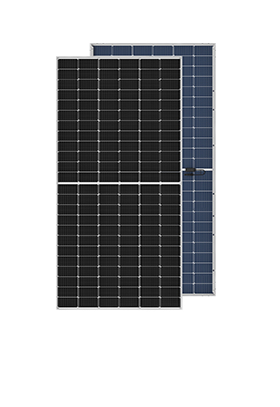
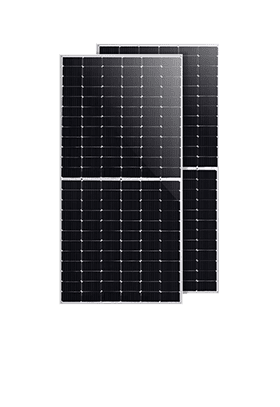
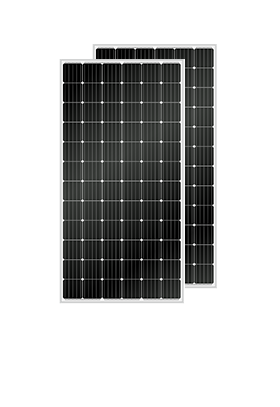
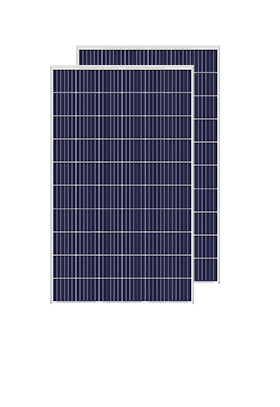


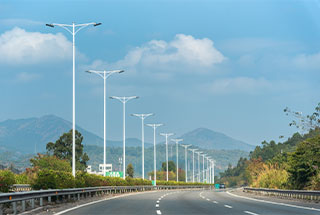
We have cooperated with more than 200 countries in solar energy projects and road lighting projects. We have exported products to many countries and participated in many important government projects around the world.




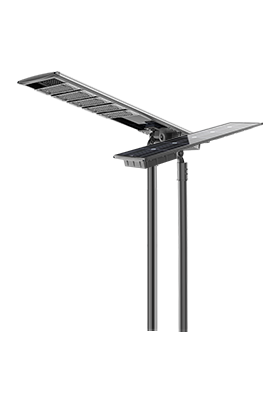


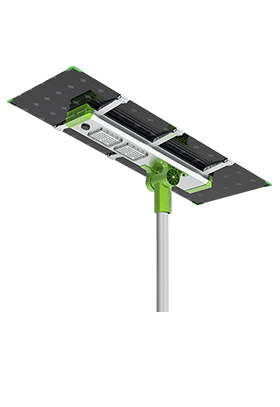
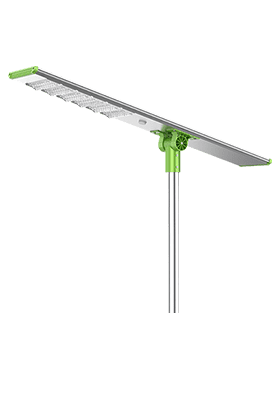
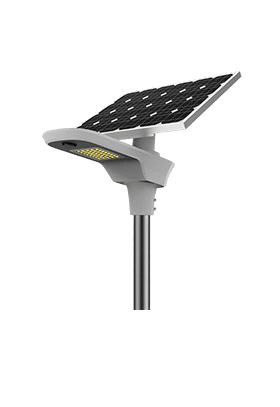


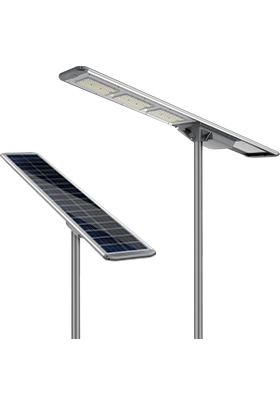
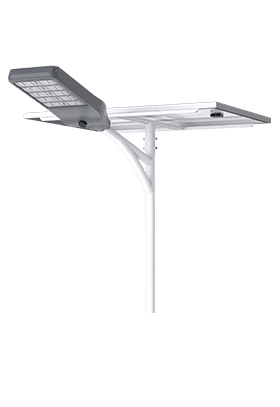
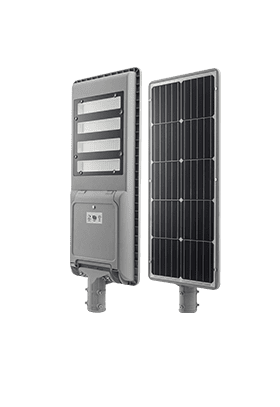
We have cooperated with more than 200 countries in solar energy projects and road lighting projects. We have exported products to many countries and participated in many important government projects around the world.

Anern has 17 years of experience in solar lighting and solar product manufacturing. Anern is headquartered in Guangzhou. With a production base of 30,000 square meters, our company has an R&D team of more than 100 people.
A low frequency inverter can consume battery energy even when every connected appliance is off. Its controls, transformer, switching circuitry, and auxiliary functions still need power while the AC output remains available. The overnight energy cost depends on the actual operating mode and the number of hours in that mode, not simply the inverter's rated output or advertised peak efficiency.
For a system supporting small night loads, this overhead can materially affect backup time. The useful comparison is battery energy consumed over a representative night while all required equipment continues to work correctly. A low published standby figure is only useful if its test conditions match that requirement.
In transformer-based designs, energizing the magnetic core creates losses even when little useful power reaches the output. Control electronics and the power stage also remain active. Displays, monitoring devices, relays, and cooling fans can add consumption, although their contribution varies by design and operating conditions.
Do not confuse magnetizing current with an equal amount of real energy loss. Some transformer current is reactive; battery energy is consumed through real losses and auxiliary demand. The most useful field measurement is therefore input power or accumulated energy at the DC boundary, not an assumption based on transformer size or AC current alone.
When comparing a low frequency inverter, request measured no-load input power at the relevant battery voltage and mode. A larger rating does not establish a particular idle draw. Two devices with similar surge capability may use different control strategies and have different losses during quiet overnight operation.
Product literature does not always use these terms consistently. No-load consumption commonly refers to an energized AC output with no external load. Standby may instead describe sleep, search mode, output disabled, or readiness for a transfer event. Those states provide different services and cannot be compared as though they were interchangeable.
Ask whether AC output remains continuous, whether the transformer stays energized, and whether communications or charging functions remain active. Also confirm which input supplies the electronics. A unit connected to utility power may draw some overhead from AC, making battery-only consumption appear lower than it would be during an outage.
Published term | Condition to clarify |
No-load power | Is the AC output energized at rated voltage? |
Standby power | Is the output available continuously or disabled? |
Search or saving mode | How often does the inverter check for a load? |
Battery idle current | At what DC voltage and operating mode was it measured? |
Night consumption | Does the figure include monitoring, fans, BMS, or other auxiliaries? |
An inverter may have low specified sleep-mode consumption but be unable to use that mode while continuously powering a router or monitoring gateway. Evaluate the state the system will actually occupy, including any periods when utility power is unavailable.
For approximately constant no-load input power, multiply watts by operating hours. A hypothetical 40 W draw for 12 hours uses 480 Wh, or 0.48 kWh. If another device uses 15 W in the same continuous-output condition, it consumes 180 Wh over that period. The difference is 300 Wh per night. These figures illustrate the calculation and are not Anern product ratings.
If the instrument reports DC current instead, estimate power as battery voltage multiplied by current. At an assumed 51.2 V and 0.8 A, input power is about 41 W. Battery voltage changes during discharge, so a logging meter or shunt that integrates energy provides a better result than multiplying one current reading by the full night.
Compare that consumption with usable battery energy, not only the capacity printed on the enclosure. For example, 480 Wh represents 12% of an assumed 4 kWh usable energy allowance. The usable allowance should already reflect the chosen reserve and relevant operating limits; avoid deducting those factors twice.
For a lithium battery system, decide whether the measurement covers the inverter alone or the complete bank. A common battery shunt includes only current flowing through its measurement path. It may capture external DC loads while excluding consumption inside the battery, such as the BMS. Keep the boundary consistent when comparing models. Battery measurements and temporary isolation of charging sources should follow an approved procedure handled by qualified personnel.
Peak efficiency describes a favorable operating point. It does not tell you how much battery energy an inverter needs to deliver a very small load for many hours. Fixed overhead becomes a larger fraction of input power as useful output falls, so nighttime performance can differ substantially from a headline efficiency value.
Consider a simplified illustration with a 20 W AC load, 40 W fixed overhead, and 90% efficiency for the load-dependent conversion portion. Estimated battery input is 40 + 20 ÷ 0.90, or about 62 W. Effective efficiency is then roughly 32%. This calculation explains the effect of overhead; it is not a prediction for a particular inverter.
If a measured efficiency curve already includes all inverter losses, use that curve directly. Adding the published no-load power again would double-count part of the loss. Ask how the data were measured and whether the curve includes the small load range that matters to your site. A low frequency power inverter should be compared at the same DC voltage, temperature, output mode, and load.
Sometimes, but it must be tested with the actual equipment. Search modes may periodically energize or sample the output and switch to continuous operation only when they detect sufficient demand. A small electronic power supply may fall below that threshold, fail to trigger reliably, or repeatedly restart.
Routers, security devices, appliance clocks, control boards, and low-power medical or communication equipment can have different continuity requirements. A refrigerator also deserves attention because its compressor may be off while an electronic controller still requires power. Successful operation with a resistive test load does not prove that all these devices will behave correctly.
Record the search threshold, sensing interval, recovery time, and whether the settings are adjustable. Test normal operation, load startup, and recovery after a power interruption. Where continuous supply is essential, select a supported operating arrangement that maintains it. Do not add a permanent dummy load merely to keep the inverter awake without calculating the energy penalty and confirming electrical suitability.
Build a simple overnight load profile before comparing equipment. Separate continuously powered devices from intermittent loads and motor-start events. Specify the longest required night, battery reserve, and whether the system must maintain AC continuously. A smaller inverter may reduce overhead, but it still needs adequate continuous capacity and verified surge capability for the real load.
Ask for no-load watts, low-load efficiency, power-saving mode behavior, and test conditions. Then compare total battery-side watt-hours over the same representative schedule. Include thermal behavior and the energy used by any additional devices that are required to make one configuration work.
Daily replenishment matters too. A solar panel array must replace overnight load energy and system losses within the available charging conditions. Adding panels may improve replenishment, but it does not reduce the inverter's overnight draw or guarantee adequate backup during consecutive cloudy days.
For an existing installation, obtain a baseline night with stable conditions and compare it with a controlled change in settings or equipment. Use the same loads, similar battery state, and consistent measurement boundaries. If the result changes unexpectedly, inspect charging activity, hidden DC loads, fan operation, and monitoring accuracy before attributing the entire difference to the inverter.
No. Appliances, battery electronics, and external DC loads can consume energy overnight. Charging or transfer events can also change the measured net energy flow. Identify what is connected behind the measuring point before assigning the whole energy total to the inverter.
Not as a universal rule. Transformer and control design, rating, enabled functions, and operating mode all matter. Compare measured data under equivalent conditions rather than judging only by topology.
Only for a no-load estimate. Actual runtime requires usable battery energy and the complete time-varying input demand, including appliances and losses. The battery's voltage, current, and temperature limits can also end operation before a simple energy calculation predicts.
No. It removes or reduces the inverter's demand according to its shutdown design, but the battery BMS and other connected devices may remain active. Switching off also removes AC service, so it is suitable only when the connected loads allow it.
Evaluate a low frequency inverter by its measured overnight energy use in the mode your loads require. Distinguish continuous-output no-load power from sleep figures, account for all connected loads, and avoid double-counting losses. The best comparison combines reliable load operation with battery-side watt-hours and the charging capacity needed to replenish them.
· Sandia National Laboratories PVPMC — CEC Inverter Test Protocol. How inverter efficiency changes with load and DC voltage.
· California Energy Commission / Sandia National Laboratories — Performance Test Protocol for Evaluating Inverters Used in Grid-Connected Photovoltaic Systems. Historical test definitions for conversion efficiency and operating-state losses.
· National Laboratory of the Rockies, System Advisor Model — Battery Storage: Behind the Meter. Battery and inverter loss modeling and energy-accounting boundaries.