EN
 fr
 de
 es
 it
 ru
 pt
 ar
 id
 ms
 uk




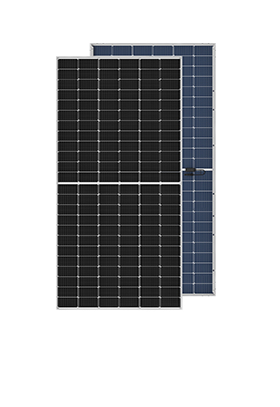
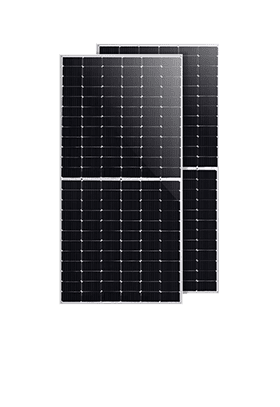
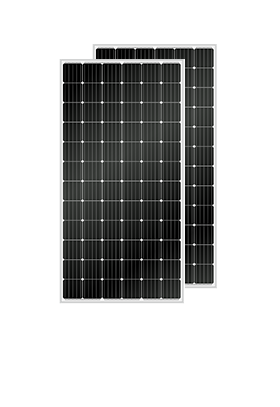
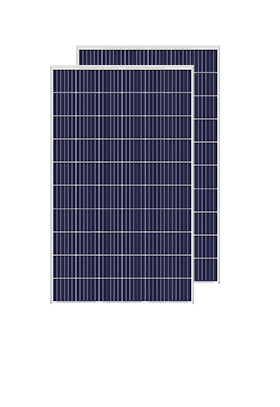



We have cooperated with more than 200 countries in solar energy projects and road lighting projects. We have exported products to many countries and participated in many important government projects around the world.




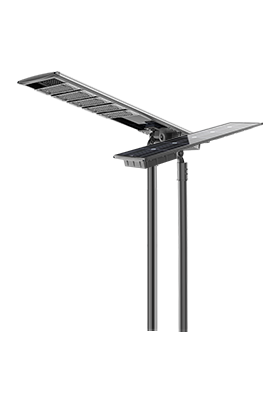


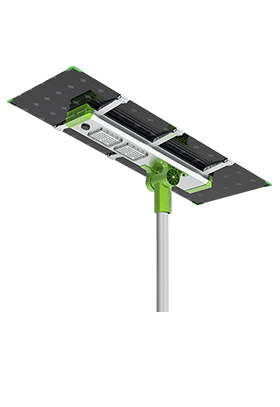
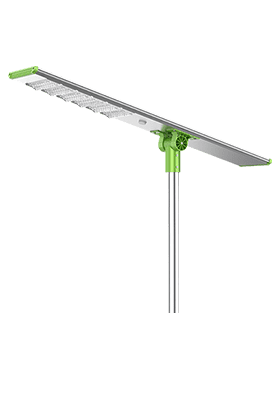
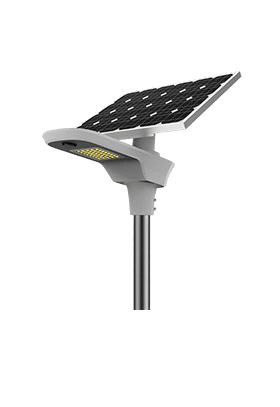


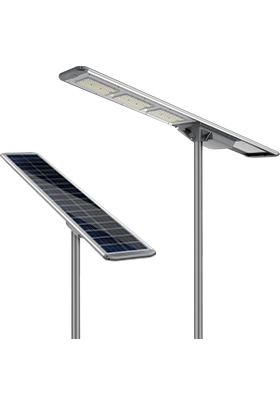
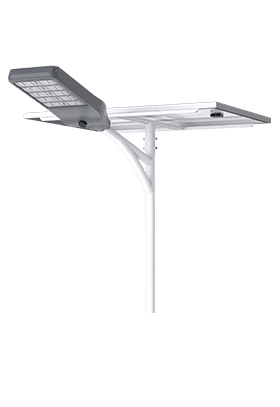
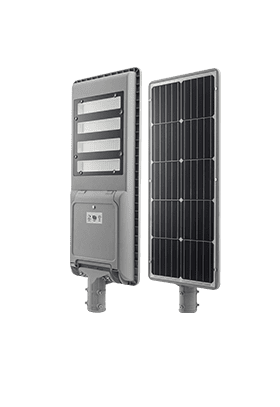
We have cooperated with more than 200 countries in solar energy projects and road lighting projects. We have exported products to many countries and participated in many important government projects around the world.

Anern has 17 years of experience in solar lighting and solar product manufacturing. Anern is headquartered in Guangzhou. With a production base of 30,000 square meters, our company has an R&D team of more than 100 people.
The number of panels an MPPT inverter can accept depends on voltage, current, tracker arrangement, and permitted PV power together. Series-connected panels raise string voltage; parallel strings raise input current. A panel count based only on the inverter's kilowatt rating can exceed an electrical limit or leave the array outside its useful tracking range.
Start with the exact inverter manual and module datasheet, then apply the site's design temperatures and required electrical corrections. The calculations below explain the checks and include a hypothetical example. They do not replace model-specific limits or the final design review by a qualified PV installer.
Distinguish the absolute maximum PV input voltage from the MPPT operating range. The maximum voltage is a limit that the array must not exceed, including under cold open-circuit conditions. The tracking range describes where the controller can seek the maximum power point. Startup voltage and any narrower full-power range may impose additional constraints.
Next, identify maximum operating input current and maximum permitted short-circuit current for each tracker and, where specified, each connector. These are different limits. The maximum solar charging current on the battery side is also different from the PV input current and cannot be substituted for it.
Finally, confirm the number of independent trackers, connectors per tracker, total permitted PV power, and any limits on power distribution. Two pairs of PV connectors may feed one tracker. A hybrid MPPT solar inverter may have separate limits for PV conversion, battery charging, and AC output; these values describe different parts of the system.
Open-circuit voltage, Voc, normally rises as a silicon PV module becomes colder. The string's cold-condition Voc must remain below the inverter's absolute maximum input voltage and other applicable equipment ratings. Standard test condition voltage alone is therefore insufficient for selecting the maximum series count.
For an initial linear calculation when the datasheet provides a relative Voc temperature coefficient, use: cold module Voc = Voc at 25°C × [1 + coefficient × (design temperature − 25°C)]. Express the coefficient as a decimal per degree. A value of −0.28%/°C becomes −0.0028/°C. Both the negative coefficient and a temperature below 25°C make the voltage increase.
Apply module tolerances, required design margins, and the temperature-selection method required for the project. Do not use an average winter temperature. The correct design condition should represent the relevant cold extreme. A solar panel datasheet must provide the actual Voc and coefficient for the selected module; another panel with the same wattage may have different electrical values.
Never rely on MPPT clipping to protect against excessive open-circuit voltage. Clipping can limit harvested power in an approved design, but it does not remove voltage from the inverter terminals when the array is open-circuit.
Maximum-power voltage, Vmp, generally decreases as cell temperature rises. A string that looks adequate at standard test conditions may fall below the inverter's MPPT lower boundary when its modules are hot. Check the hottest credible operating cell temperature, accounting for mounting and ventilation. Cell temperature can be substantially above ambient air temperature.
Use the module's Vmp temperature behavior or an appropriate module model. Do not substitute the maximum-power temperature coefficient directly for the Vmp coefficient: power and voltage are different quantities. If the needed voltage data are absent, obtain suitable manufacturer data before finalizing a borderline string.
Check the upper MPPT boundary at relevant cold operating conditions as well as the lower boundary when hot. Startup voltage requires its own check under the conditions in which the inverter must begin operating. These checks prevent a design from satisfying the absolute voltage limit while still performing poorly during normal operation.
For identical strings operating together, their currents add at the common input. Compare the combined operating current with the tracker limit, and compare the appropriately corrected combined short-circuit current with the specified short-circuit limit. The required corrections can include irradiance, temperature, bifacial contribution where applicable, and the project's electrical rules.
The available number of connectors does not automatically establish the allowable number of strings. Check connector ratings, internal tracker allocation, wiring, and any combiner or string protection requirements. External Y connectors do not create another independent MPPT or increase the inverter's input rating.
Strings on one tracker should have compatible electrical characteristics and normally the same series count. Different orientations or shading conditions require a design review; separate MPPTs may offer a better arrangement. Do not combine unequal strings solely to use every available roof position.
The same array wattage can be arranged as a long, high-voltage string or several shorter, higher-current strings. One arrangement may fit an inverter while the other exceeds a voltage or current limit. Panel wattage therefore cannot establish compatibility without the series and parallel layout.
Permitted DC oversizing is another separate issue. Some designs allow array nameplate power above the inverter's AC rating, with power clipped under certain conditions. That permission does not authorize excessive voltage, short-circuit current, or connector loading. Use the manufacturer's stated oversizing conditions and the relevant full-power MPPT range.
Check the electrical specifications before comparing MPPT inverter prices. A lower-cost unit may need a different panel arrangement, while an oversized inverter may still be unsuitable for a short string. If a separate MPPT solar charge controller is part of the design, evaluate its own input limits independently; it does not automatically expand the inverter's PV inputs.
For this illustrative calculation, assume a module rated at 400 W, with Voc of 41.0 V, Vmp of 34.0 V, Imp of approximately 11.76 A, and Isc of 12.5 A. Assume relative voltage coefficients of −0.28%/°C for Voc and −0.35%/°C for Vmp. The assumed inverter has one tracker, a 500 V absolute maximum, a 120–450 V MPPT range, a 150 V startup threshold, 26 A operating-current and 32 A short-circuit-current limits, and a 6.4 kW PV power limit.
Use a cold design temperature of −10°C and a hot operating cell temperature of 70°C for this illustration. Cold module Voc is 41 × [1 + 0.0028 × 35] = 45.02 V. Hot module Vmp is 34 × [1 − 0.0035 × 45] = 28.65 V. Consider two parallel strings of eight modules each, abbreviated 8S2P.
Check for the hypothetical 8S2P array | Calculation and preliminary result |
Cold open-circuit voltage | 8 × 45.02 = 360.1 V, below 500 V |
Hot operating voltage | 8 × 28.65 = 229.2 V, above 120 V |
Cold operating voltage, using the assumed Vmp coefficient | 8 × 38.165 = 305.3 V, below 450 V |
Operating current at stated conditions | 2 × 11.76 = 23.52 A, below 26 A |
Short-circuit current with an illustrative 1.25 factor | 2 × 12.5 × 1.25 = 31.25 A, below 32 A |
Array nameplate power | 16 × 400 = 6,400 W, equal to the stated PV limit |
These results make 8S2P a preliminary candidate, not an installation approval. The 1.25 factor is illustrative, not a universal rule. The short-circuit-current margin is small, and the calculation must be repeated with applicable tolerances and corrections. Startup behavior, any full-power range, connectors, protection, and permitted oversizing still need verification.
Only after recalculating cold Voc, operating voltage, and total PV power. An additional series panel raises voltage even if the inverter's AC rating appears to have spare capacity.
Do not assume this is acceptable. Parallel strings share an operating voltage, and unequal string lengths have different preferred operating points. Use an approved arrangement or separate trackers where appropriate.
No. MPPT conversion changes voltage and current between the PV side and battery side. Use the datasheet's PV input ratings for string checks and the battery charging rating for charging checks.
Not automatically. Two inverters with the same AC power rating can have different PV voltage limits, current limits, and tracker arrangements. Recalculate the string layout using the selected inverter manual, module datasheet, and site conditions.
Size an MPPT inverter array by checking cold Voc, hot and cold operating voltage, startup requirements, current limits, and permitted PV power together. Document the series count, parallel count, tracker allocation, and environmental assumptions. The allowable panel count must satisfy all of these limits, not just the array wattage.
· Sandia National Laboratories PVPMC — Sandia PV Array Performance Model. Temperature-dependent module voltage and current characteristics.
· Sandia National Laboratories PVPMC — Mismatch Losses. Electrical constraints and mismatch in series and parallel PV arrays.
· Sandia National Laboratories PVPMC — Array Utilization. How MPPT follows changes in irradiance and cell temperature.