EN
EN
 fr
fr  de
de  es
es  it
it  ru
ru  pt
pt  ar
ar  id
id  ms
ms  uk
uk 





We have cooperated with more than 200 countries in solar energy projects and road lighting projects. We have exported products to many countries and participated in many important government projects around the world.






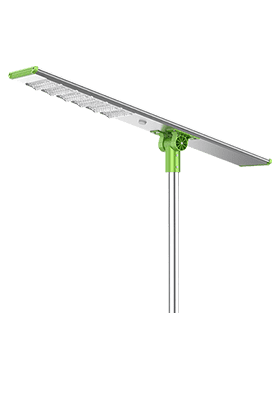
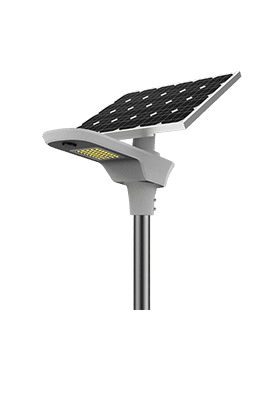


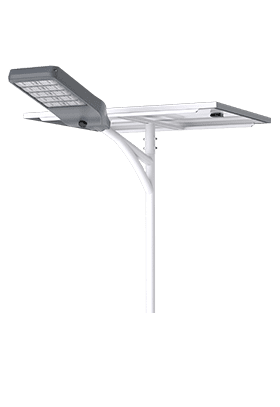
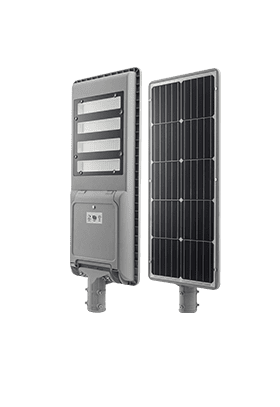
We have cooperated with more than 200 countries in solar energy projects and road lighting projects. We have exported products to many countries and participated in many important government projects around the world.

Anern has 17 years of experience in solar lighting and solar product manufacturing. Anern is headquartered in Guangzhou. With a production base of 30,000 square meters, our company has an R&D team of more than 100 people.
For factory owners, park operators, and commercial building managers, rising electricity bills and grid instability are daily realities. When evaluating solutions, many first think of diesel generators for backup power, or simply accept utility charges as a fixed cost. However, a generator can keep lights on during an outage, but it does nothing to reduce your daily electricity expense—instead, it adds fuel costs, maintenance burdens, and noise complaints.
A properly designed commercial energy storage system (CESS) does something fundamentally different. It doesn't just wait for an emergency. It works every single day—shifting energy from low-cost periods to peak hours, cutting demand charges, and improving power quality. It is not a backup device but a financial asset that pays for itself over time. This guide explains what commercial energy storage systems are, how they generate savings, and—most importantly—how to select the right configuration for your specific site conditions.
A commercial energy storage system stores electrical energy—typically in lithium batteries—and releases it when needed. Unlike a generator that burns fuel to create power, a storage system simply moves energy across time: charging when electricity is cheap or abundant (from the grid or solar PV), and discharging when electricity is expensive or when the grid fails.
In practice, a CESS is an intelligent energy management tool. It monitors real-time load, grid pricing signals, and battery status. Then it automatically decides when to charge, when to discharge, and how much power to deliver.
For an EPC contractor, distributor, or facility manager, the core value is simple: reduce electricity bills while improving supply reliability, without the fuel logistics and engine maintenance of a generator.
All commercial storage systems operate on the same basic principle: charge, store, discharge, repeat. But the intelligence lies in the control strategy. A typical system includes four main components working together:
Battery bank – Stores DC energy (lithium iron phosphate cells are the industry standard for safety and cycle life).
Battery Management System (BMS) – Monitors voltage, temperature, and state of charge; protects against over-charge, over-discharge, and thermal runaway.
Inverter/PCS (Power Conversion System) – Converts DC from the battery to AC for facility loads, and AC from the grid or generator to DC for charging.
Energy Management System (EMS) – The brain. It reads utility rate tariffs, predicts load peaks, and executes the charge/discharge schedule.
In a typical daily cycle:
Night / early morning (low-rate period) – The system charges from the grid at the lowest tariff.
Daytime peak hours (high-rate period) – The system discharges to power facility loads, avoiding expensive grid electricity.
When grid fails – The system island's critical loads within milliseconds (much faster than a generator start).
If solar PV is present – The EMS prioritizes solar charging first, then grid charging only when needed.
The result is lower bills, higher resilience, and full automation—no fuel, no engine noise, no daily maintenance.
Benefit | What It Means for Your Facility |
Peak shaving | Reduces demand charges by discharging during the 15-30 minute interval when facility load is highest |
Load shifting (arbitrage) | Charges at night when electricity is cheap (e.g., |
Backup power | Provides seamless transition to battery power within 20-40ms during grid outage—fast enough for most industrial controls and IT equipment |
PV self-consumption increase | Stores excess solar energy that would otherwise be exported at low feed-in tariffs, and uses it during evening peaks |
Grid services revenue | In some markets, utilities pay for fast frequency response or demand response capacity from battery systems |
For most commercial and industrial (C&I) users, peak shaving and load shifting deliver 70-90% of total savings. Backup power is an additional value layer, not the primary function.
While several technologies exist, lithium battery storage dominates the C&I market for good reason.
Technology | Typical Efficiency | Cycle Life | Best For |
Lithium-ion battery (LFP) | 6,000-10,000 cycles | Daily charge/discharge, high power applications | |
Thermal storage | 70-80% | 10-15 years | HVAC cooling load shifting only |
Compressed air (CAES) | 50-70% | 20+ years | Very large (10MW+) utility-scale projects |
Practical reality for C&I projects: Thermal storage is too specialized. Compressed air is too large and inefficient for a 500kW factory. Lithium battery systems—specifically LFP chemistry—are the proven, bankable standard for 30kW to 1MW+ applications.
Depending on your facility's power level, space constraints, and thermal environment, two different system architectures make sense. Below are two proven platforms designed for commercial and industrial deployment.
System A: 30–100kW Modular Lithium Battery Commercial Storage
This platform is designed for flexibility and scalability. It consists of a 30/50/100kW inverter paired with lithium battery cabinets. The key characteristics:
Wide power range – Choose 30kW, 50kW, or 100kW to match your peak load profile.
Modular architecture – Multiple units can be paralleled for larger capacity. Start with one, add more as load grows.
Proven LFP battery cells – Stable chemistry with high cycle life for daily deep cycling.
Integrated BMS and EMS – Pre-configured control logic for peak shaving, load shifting, and backup.
Fast deployment – Standardized design means shorter engineering time compared to fully custom builds.
Ideal for: Medium-sized factories, office buildings, schools, small industrial parks, and retail centers where load is between 30kW and 100kW and space is available for modular expansion.

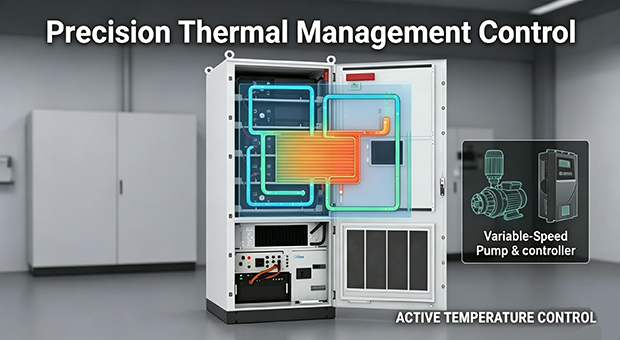
System B: 105kW/125kW Liquid-Cooled Integrated Energy Storage Cabinet
This platform addresses high power density and challenging environments. Everything is integrated into a single cabinet: battery bank, BMS, PCS, thermal management, and fire suppression. The differentiators:
Liquid cooling – Maintains tighter battery temperature uniformity (±2°C vs ±5-8°C for air cooling). This extends cycle life and allows operation in higher ambient temperatures.
High power in small footprint – 105kW or 125kW output from a single enclosure. Less floor space, fewer external connections.
Integrated design – One cabinet, one electrical interface, one commissioning process. Lower installation labor cost.
Lower noise – Liquid cooling pumps are quieter than multiple high-speed fans. Important for noise-sensitive sites.
IP-rated protection – Suitable for outdoor installation or dusty indoor environments.
Ideal for: Larger factories, EV charging hubs, data centers, commercial complexes, and any site where space is limited, ambient temperatures are high, or a clean aesthetic matters.
Depending on your facility's power level, space constraints, and thermal environment, two distinct Commercial Solar Battery Storage architectures make sense for real-world deployment. System A is the 30 to 100 kilowatt modular lithium battery platform, which offers a wide power range from 30 to 100 kilowatts, a modular and expandable architecture, proven LFP cells, integrated BMS and EMS, and fast deployment—making it ideal for medium-sized factories, office buildings, schools, small industrial parks, and retail centers where load is between 30 and 100 kilowatts and space is available for expansion. System B is the 105 to 125 kilowatt liquid-cooled integrated energy storage cabinet, which differentiates itself with liquid cooling for tighter battery temperature uniformity, high power output in a small footprint, a fully integrated all-in-one design, lower noise, and IP-rated protection for outdoor or dusty environments—making it ideal for larger factories, EV charging hubs, data centers, commercial complexes, and any site where space is limited, ambient temperatures are high, or a clean aesthetic matters.
Understanding each component helps you specify the right system and compare vendor proposals.
Component | Function | What to Check in Specifications |
Battery (LFP cells) | Stores DC energy | Cycle life at 80% DoD, calendar life, thermal stability |
BMS | Protects battery; balances cells | Communication protocol (CAN, RS485), fault logging depth |
Inverter/PCS | Converts DC↔AC; manages power flow | Surge rating (for motor starts), efficiency curve, islanding capability |
EMS | Executes savings strategy | Tariff table flexibility, remote monitoring interface, data logging resolution |
Procurement note: A common mistake is focusing only on the battery's price per kWh. The real cost of ownership includes inverter efficiency (a 2% difference in round-trip efficiency can cost thousands per year), EMS capability (can it handle complex peak shaving algorithms?), and local support availability.
No single system fits every site. Use this three-step process.
Step 1: Analyze your load profile and tariff
Get 12 months of 15-minute interval meter data. Answer:
What is your peak demand (kW) and when does it occur?
Does your utility have time-of-use (TOU) rates with peak/off-peak spread >$0.10/kWh?
Do you have demand charges ($/kW per month)?
If your peak demand is below 100kW and you have space for modular expansion → Consider the 30–100kW modular platform.
If your peak demand is 100–150kW and space is tight or outdoor installation is needed → Consider the 105/125kW liquid-cooled integrated cabinet.
Step 2: Decide on core application
Primary Goal | Recommended Focus |
Reduce demand charges | Need high C-rate battery (1C or higher) and fast EMS response (seconds) |
Arbitrage (TOU shifting) | Need sufficient energy capacity (kWh) to cover 2-4 hours of peak load |
Backup for critical loads | Need automatic transfer switch and islanding capability |
PV self-consumption | Need DC coupling or AC coupling with EMS that prioritizes solar |
Step 3: Compare lifecycle cost, not just upfront price
Cost Factor | Modular System (30-100kW) | Integrated Liquid-Cooled Cabinet (105-125kW) |
Typical upfront cost per kW | Lower (standardized modules) | Higher (dense integration, liquid cooling) |
Installation cost | Moderate (multiple cabinets, field wiring) | Lower (single cabinet, factory-pre-wired) |
Cooling energy consumption | Higher (fan power) | Lower (liquid pumps more efficient) |
Battery cycle life (thermal uniformity) | Good (±5°C typical) | Better (±2°C, extends life 10-20%) |
Best application | Indoor, moderate temps, future expansion | Outdoor, high temps, space-constrained |
Practical rule:
If you expect to expand capacity over time, start with the modular platform.
If you need maximum density in one installation and operate in high ambient temperatures, the premium for liquid cooling pays back through longer battery life and lower cooling energy.
Commercial energy storage systems are not generators. They do not burn fuel but instead shift energy across time, charging when electricity is cheap and discharging when it is expensive to cut electricity bills by fifteen to forty percent for most C&I facilities. The two proven platforms are the 30 to 100 kilowatt modular lithium battery system, which is flexible and cost-effective for medium loads, and the 105 to 125 kilowatt liquid-cooled integrated cabinet, which offers high power density and thermal stability for space-constrained or outdoor sites. Both platforms use LFP battery cells with integrated BMS, PCS, and EMS, and they support peak shaving, load shifting, and backup power. The right choice depends on your load profile, space, ambient temperature, and expansion plans. For most EPCs, distributors, and facility managers, the winning strategy is simple: start with a battery system sized for daily savings, keep a generator only for extended grid outages, and thereby cut fuel cost, noise, and maintenance while improving power quality.
Can commercial storage completely replace a generator?
Not always, but often yes. A battery system can replace a generator for outages up to 2-4 hours. For longer outages (multiple days of grid failure), you may still need a generator—but it will run far less often, burning 80-90% less fuel.
How long do these commercial storage systems last?
LFP battery systems typically deliver 6,000-10,000 cycles at 80% depth of discharge. For daily cycling (one full cycle per day), this equals 16-27 years of service life. Calendar life is typically 10-15 years regardless of cycles.
Can the liquid-cooled cabinet be installed outdoors?
Yes. The integrated liquid-cooled cabinet is designed with IP-rated protection for outdoor installation, even in dusty or high-humidity environments. Always confirm the specific IP rating for your model.
Do these systems work with existing solar PV?
Yes. Both platforms support AC coupling (battery connects on the AC side of the PV inverter) and, in many configurations, DC coupling (battery connects between PV and inverter). The EMS prioritizes solar charging automatically.
What maintenance is required?
Unlike a generator, there is no fuel, oil, or filter to change. Routine maintenance includes: quarterly visual inspection, cleaning cooling system intakes, checking cable connections, and verifying EMS communications. Annual thermal imaging of battery connections is recommended.
How do I size a system for my factory?
Start with your peak demand (kW). A typical rule: size inverter power to cover 80% of your peak 15-minute demand. Size battery energy (kWh) to deliver that power for 2-4 hours. Then confirm with a detailed load study. Many vendors, including ANERN, provide free preliminary sizing based on 12 months of utility data.