EN
EN
 fr
fr  de
de  es
es  it
it  ru
ru  pt
pt  ar
ar  ms
ms  id
id 

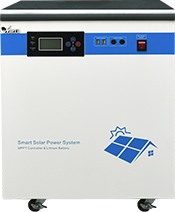


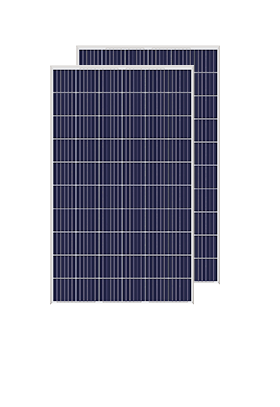



We have cooperated with more than 200 countries in solar energy projects and road lighting projects. We have exported products to many countries and participated in many important government projects around the world.




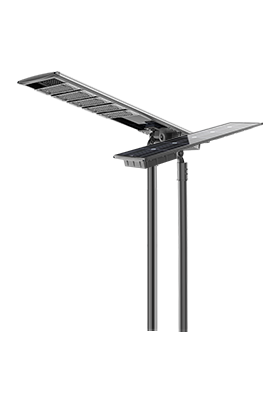


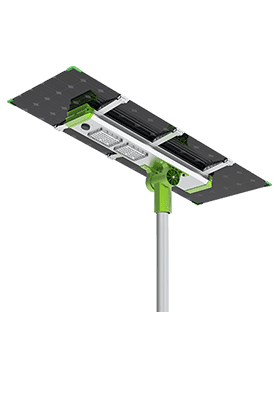
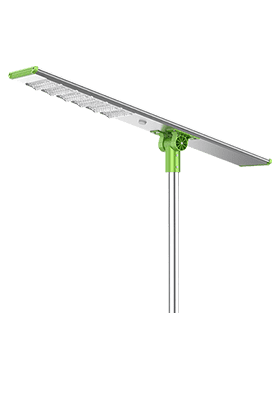
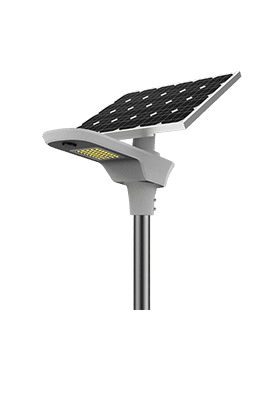


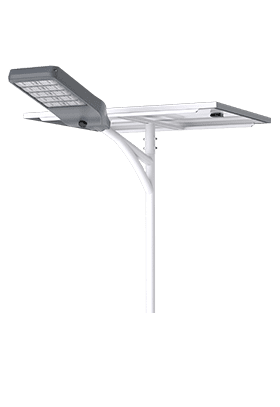
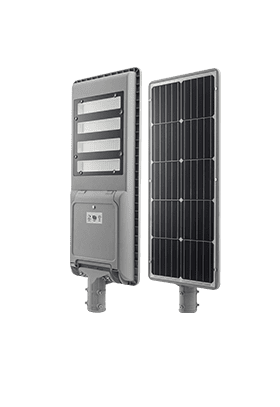
We have cooperated with more than 200 countries in solar energy projects and road lighting projects. We have exported products to many countries and participated in many important government projects around the world.

Anern has 17 years of experience in solar lighting and solar product manufacturing. Anern is headquartered in Guangzhou. With a production base of 30,000 square meters, our company has an R&D team of more than 100 people.
In power electronics and renewable-energy systems, the terms inverter and converter are frequently mixed up. Some engineers use converter as an umbrella term for any power-conversion stage, while many solar practitioners use inverter as shorthand for the PV grid-interface device. So the question “Which is better?” cannot be answered in the abstract: they address different tasks, occupy different system positions, and are evaluated with different metrics. Using Sungrow and Fox ESS product positioning as industry examples, plus general power-electronics references, this article explains the concepts and offers a practical selection method.
An inverter is a power-electronic device that converts direct current (DC) into alternating current (AC) and actively shapes the AC output so it matches the requirements of a load or the utility grid—voltage magnitude, frequency, phase alignment, and waveform quality. In other words, it is not just a DC-to-AC box, but a controlled interface that connects DC energy sources (PV modules, batteries, or a DC bus) to the AC side (building loads, microgrids, or the public grid).
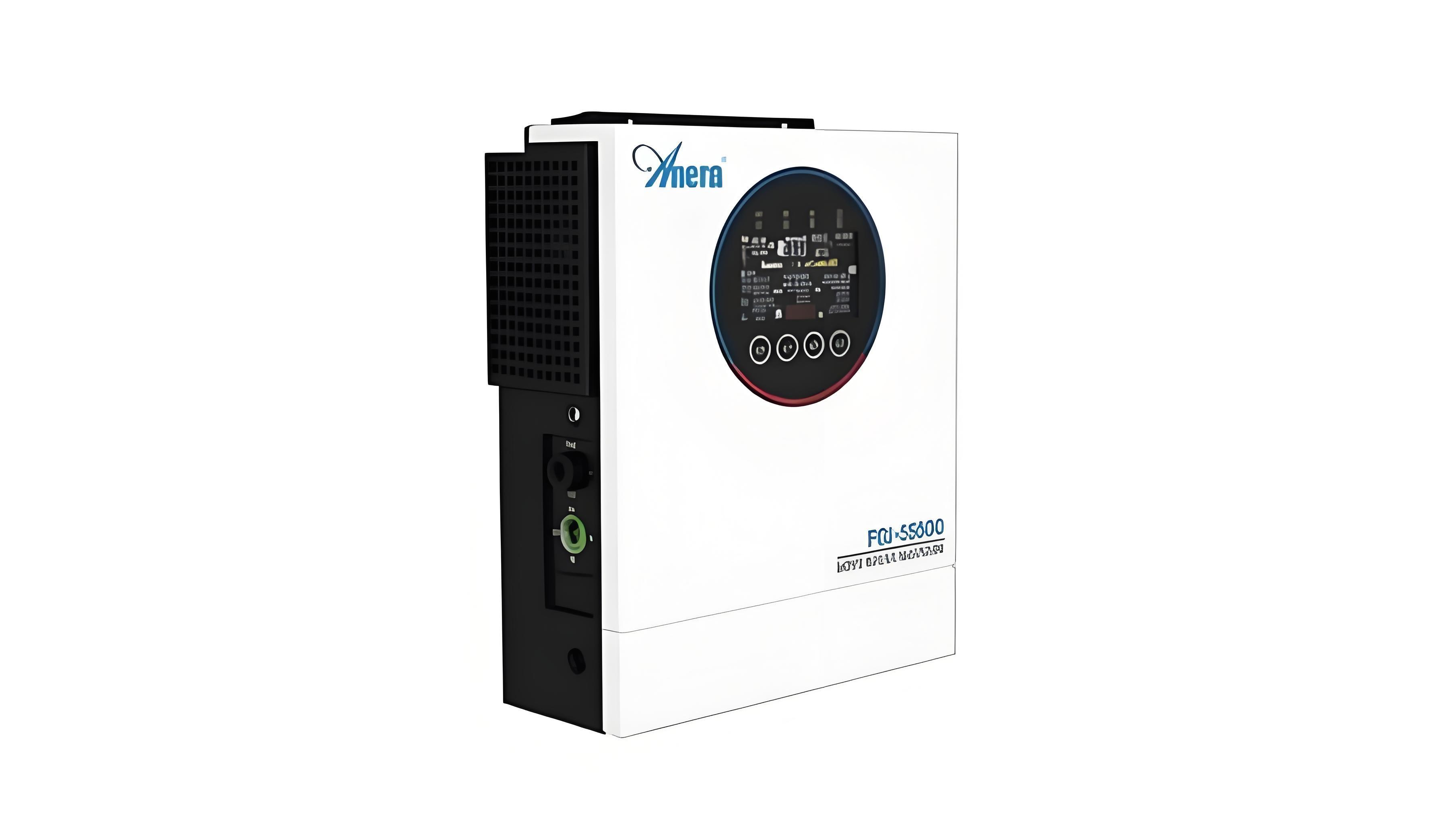
In grid-tied PV systems, the inverter typically combines DC→AC conversion with MPPT (Maximum Power Point Tracking), grid synchronization (often via PLL-based control), compliance with low frequency power inverter and grid-code requirements, and safety functions such as anti-islanding. In off-grid, backup, and UPS applications, the focus shifts toward delivering stable AC under rapid load changes and coordinating protection and operating limits with the battery/BMS. Ultimately, an inverter is important not only because it converts DC to AC, but because it determines whether DC energy can be delivered to AC loads or the grid safely, reliably, efficiently, and compliantly.
A converter is a broader term in power electronics than an inverter. It refers to equipment whose main purpose is to transform electrical energy from one form to another, or to re-condition key electrical parameters—such as voltage level, current level, frequency, waveform quality, galvanic isolation, and power factor—so that an upstream source can interface correctly and efficiently with a downstream load, grid, or intermediate DC bus.
In practice, converters cover a wide range of power stages. Common examples include AC-to-DC rectifiers used in chargers and power supplies, DC-to-DC converters that step voltage up or down (sometimes with galvanic isolation) between PV strings, DC buses, and batteries, and AC-to-AC converters such as variable-frequency drives that control motor speed by adjusting output frequency and voltage.
Because an inverter is specifically a DC-to-AC stage, it can be treated as a special case within the broader converter family. However, in renewable-energy projects the word converter is often used in a narrower, system-oriented sense to describe bidirectional power-conversion equipment (for example, a storage PCS) that can operate as both a rectifier and an inverter—supporting controlled energy flow from grid to battery (charging) and from battery to grid/load (discharging) under coordinated BMS/EMS control.
When comparing inverter vs converter, the confusion often comes from mixing different levels of abstraction. From a taxonomy viewpoint, converter is the broader family that includes AC↔DC, DC↔DC, and AC↔AC conversion, while inverter usually refers specifically to DC to AC. But in real systems, conversion direction alone is not enough: grid-tied inverters are judged heavily on waveform quality, synchrnization behavior, and protection logic. The table below clarifies the boundary by comparing conversion direction and the typical waveform/control priorities.
Dimension | Inverter | Converter (broad term) |
Typical direction | DC → AC (core function) | AC↔DC, DC↔DC, AC↔AC, DC→AC depending on type |
Output waveform focus | Strong focus on AC waveform quality (THD, frequency, phase, synchronization) | Topology-dependent: DC ripple & transient response (DC-DC), harmonics & PFC (AC-DC), frequency/voltage control (AC-AC), etc. |
Control focus | Grid synchronization, anti-islanding, reactive power support, MPPT (PV) | Depends on application: bidirectional control, PFC, isolation control, motor-control loops, etc. |
Common misunderstanding | An inverter only converts power. | Converter = inverter, ignoring the broader scope. |
The key takeaway is not that one is more advanced, but that the terms are scoped differently and evaluated differently. If your problem is convert DC to grid-quality AC, you naturally focus on inverter-specific requirements such as synchronization, THD, and grid protection (including anti-islanding). If your problem is the system also needs voltage matching, isolation, PFC, or bidirectional battery operation, then you are dealing with the broader converter/PCS world.
In renewable-energy projects, naming often follows the application: in pure PV grid-tie projects, PV inverter is the common label; in storage projects—where bidirectional flow and dispatch control are central—people often say PCS or power converter. The table below therefore compares inverter vs converter from a system-role viewpoint.
System | Key power device | Main job | Typical product positioning (examples) |
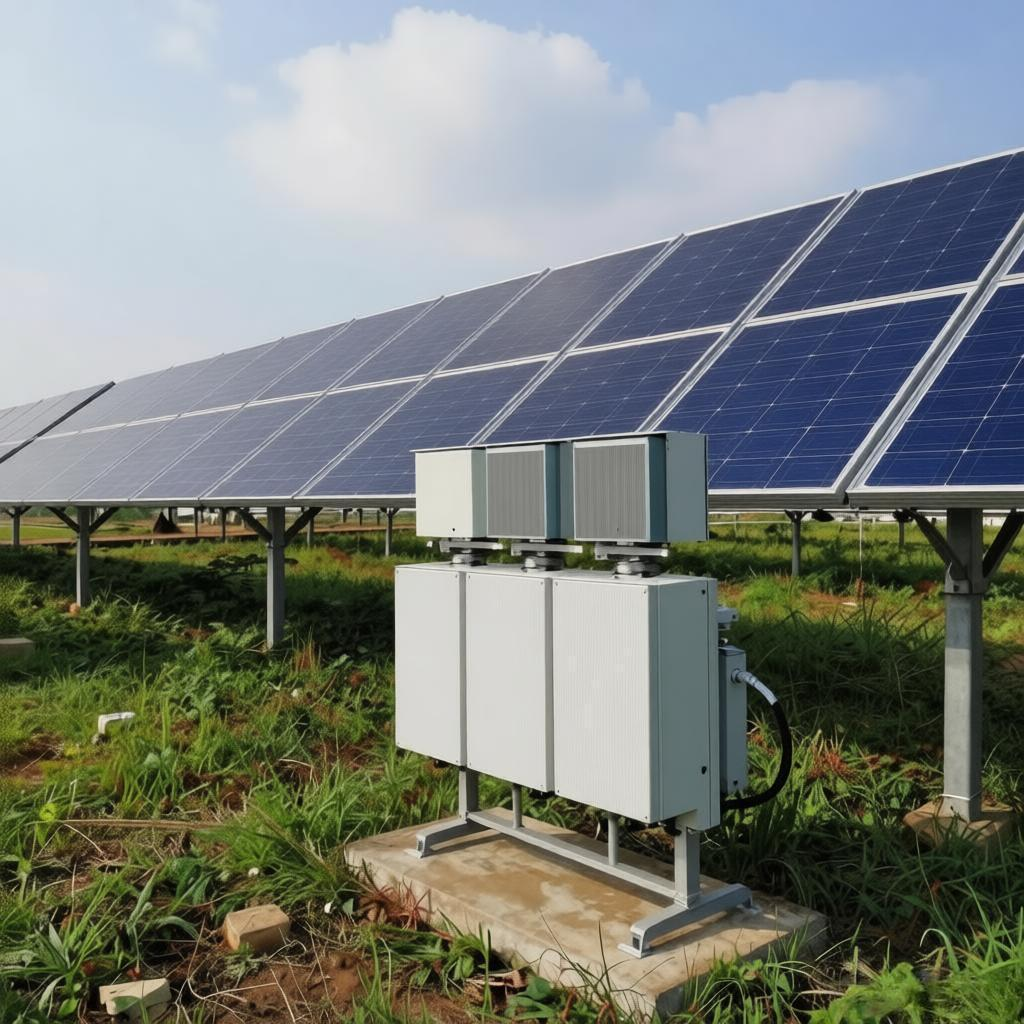
Grid-tied PV (no battery) | PV inverter | DC→AC, MPPT, grid sync, anti-islanding, grid support | Sungrow offers PV inverter lines across residential, C&I, and utility PV. |
PV + Storage (home/C&I) | Hybrid inverter and/or PCS | PV utilization + battery charge/discharge; often backup/EPS support | Fox ESS markets hybrid inverters emphasizing storage integration and backup/EPS features (model-dependent). |
Pure storage (C&I/utility) | PCS / power converter | Bidirectional AC↔DC; grid services (peak shaving, frequency response, VAR support) | Typical PCS approach: coordinate with EMS/BMS; focus on bidirectional performance and grid compliance. |
Motor drive / industrial | AC-AC converter (VFD) | Variable frequency/voltage control for motors | Converter category aimed at motor control (not PV grid-tie). |
From this system view, when it comes to how converter works and how solar hybrid inverter works, inverter and converter are often not mutually exclusive. A PV-plus-storage system may include a PV inverter function (grid-quality AC interface and PV-side MPPT) and additional converter stages (DC-DC for voltage matching, or a bidirectional PCS function for battery charge/discharge). So selection should be guided less by the label and more by whether you need bidirectional energy flow, backup operation, and dispatch control.
First, cost is often the most visible tradeoff at the project-planning stage. A single-purpose, grid-tied PV inverter is usually the most cost-efficient choice when the project goal is straightforward DC-to-AC conversion plus PV harvesting (MPPT) and grid compliance. Once you add bidirectional battery operation, backup/EPS capability, and deeper system coordination (BMS/EMS communications, transfer logic, additional sensing), the hardware bill of materials and validation effort typically increase, so hybrid inverters/PCS-based architectures often cost more upfront, but they can unlock additional value streams such as self-consumption optimization, TOU arbitrage, peak shaving, and resilience.
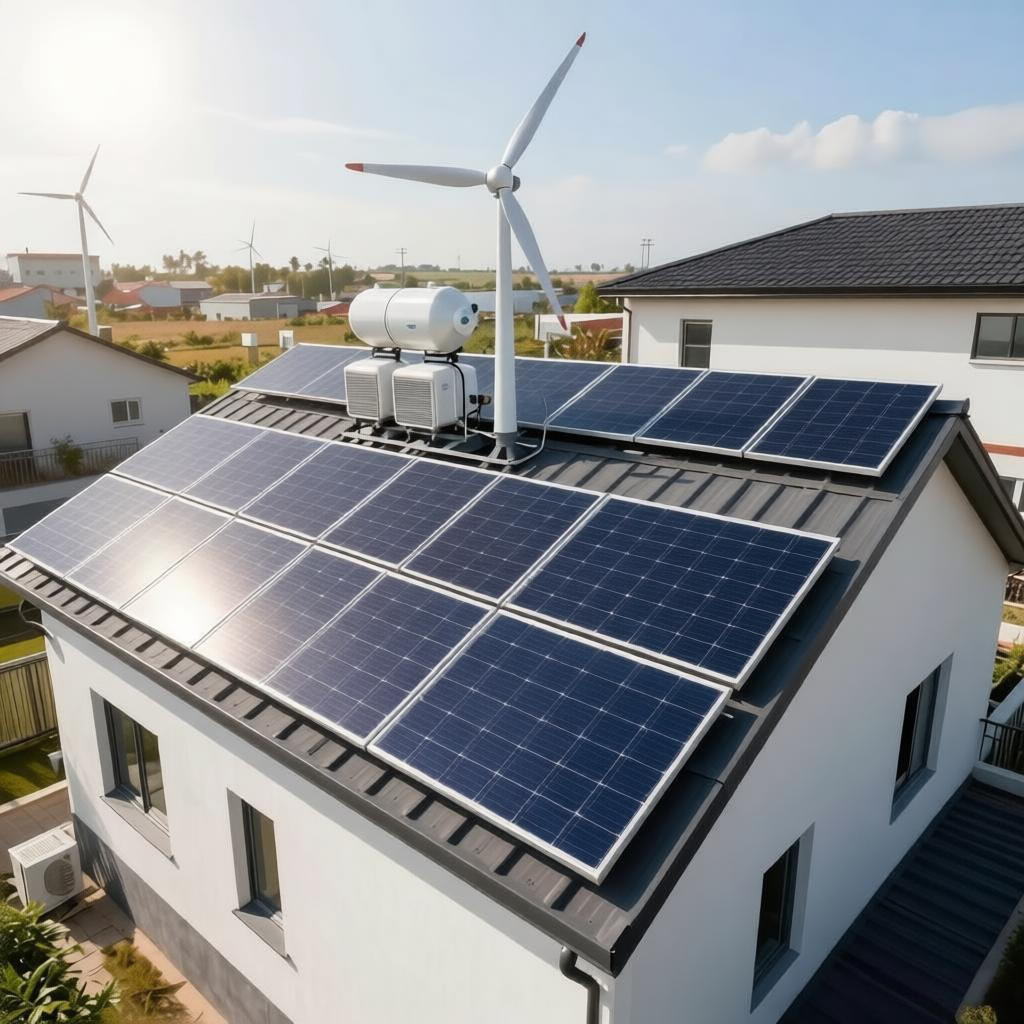
Second, efficiency should be judged by how the system actually operates rather than by a single peak number. Comparing efficiency is only meaningful if you compare the right thing: not just peak efficiency, but the efficiency curve across the operating range you will actually run at (partial-load behavior, common irradiance levels, and charge/discharge regimes). Dedicated PV inverters can be extremely efficient in their designed region, while storage-heavy or multi-stage solutions may add extra conversion steps (e.g., DC-DC plus DC-AC, or AC-DC-AC in some operating modes). However, good topology selection, modern semiconductor devices, and strong thermal design can keep losses low—so the best practice is to validate with datasheets and, ideally, field-tested performance data for the exact model and configuration.
Third, control complexity and grid compliance requirements often drive design risk and integration effort. Grid-tied PV inverters are strongly constrained by interconnection rules and power-quality requirements: they must synchronize to the grid, keep harmonic distortion within limits, and implement protective behavior such as anti-islanding. Storage PCS or hybrid inverters inherit all of those grid-interface requirements and then add battery-side constraints (SOC limits, temperature limits, C-rate limits), plus higher-level operational strategies (charge/discharge scheduling, export limiting, demand management). As a result, the control stack and verification workload for storage-capable systems is typically broader, and integration quality (communications, firmware maturity, and protection coordination) becomes a major differentiator.
Finally, maintenance and day-to-day operations determine whether lifecycle performance matches the business case. From an O&M perspective, a PV-only inverter deployment is often managed around availability, alarms, remote monitoring, firmware updates, and fast fault localization—so reliability, diagnostics, and service response dominate. When batteries are introduced, the maintenance surface expands to include battery health, BMS alarms, thermal management, cycling strategy, and communications stability; troubleshooting also becomes more system-level because issues may originate from the battery, wiring, sensors, or EMS policy rather than the power stage alone. The tradeoff is that storage-enabled architectures provide much greater operational flexibility and resilience, which can justify the added O&M complexity when the application truly benefits from controllable energy flows.
The most practical way to choose between an high efficiency solar inverter and a converter/PCS-focused solution is to start from the use case, not the device name. If your goal is mainly grid-tied PV generation (export and/or simple self-consumption) with minimal complexity, a dedicated PV inverter is typically the most straightforward option. If your goal includes energy shifting, backup power, or maximizing self-consumption with a battery, you are no longer selecting only an inverter——you are selecting a storage-capable architecture (hybrid inverter and/or PCS plus battery), where bidirectional conversion and system coordination become central.
Next, translate the use case into a system architecture and interface checklist. Confirm whether you need bidirectional power flow (charge and discharge), whether you require backup/EPS and what transfer behavior your critical loads can tolerate, and whether your site is single-phase or three-phase. At this step you should also lock down grid-facing expectations—such as reactive power needs, weak-grid behavior, export limiting, and, most importantly, the interconnection and certification requirements applicable in your region—because these constraints can eliminate otherwise attractive options early.
Finally, make the decision with parameters and operating profiles, not marketing labels. Compare efficiency where it matters (efficiency curves at your typical load/irradiance points, not just peak numbers), PV-side capabilities such as MPPT count and input current limits, monitoring/O&M functions (alarms, remote updates, diagnostics), and warranty/service coverage that matches your project risk. In practice, the “better” choice is the one whose electrical interfaces, compliance status, and lifecycle support align with how the system will actually be used and maintained.
An inverter usually refers to a device that converts DC to AC, commonly used in solar PV systems to produce grid-compatible AC power. A converter is a broader power-electronics term covering DC-DC, AC-DC, DC-AC (inverters), and AC-AC conversion; in energy storage, it often implies bidirectional power conversion for battery charge and discharge.
In system design, select based on the role you need. For PV-only grid-tied projects, a dedicated PV inverter is typically simpler and more cost-effective. For PV + battery applications (backup/EPS, export limiting, TOU shifting, peak shaving), you generally need hybrid inverter/PCS-type capabilities, where bidirectional control and coordination with BMS/EMS are key.
Q1: Is an inverter a type of converter?
Yes. An inverter (DC→AC) is a specific type of power converter.
Q2: When should I use a standard PV inverter?
When the project is primarily solar-to-load/grid and does not require battery charge/discharge control.
Q3: When is a converter/PCS or hybrid inverter more suitable?
When you need bidirectional battery operation, backup/EPS, peak shaving, TOU arbitrage, or export control.
Q4: What should I compare besides kW rating?
Efficiency across operating range, MPPT/input limits, grid-support/protection functions, required certifications, monitoring/diagnostics, and service/warranty.
Q5: Do extra conversion stages always reduce efficiency?
They can, especially at partial load or when power flows through multiple stages, so check performance under your real operating modes.