EN
EN
 fr
fr  de
de  es
es  it
it  ru
ru  pt
pt  ar
ar  id
id  ms
ms  uk
uk 

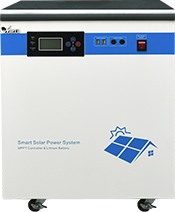


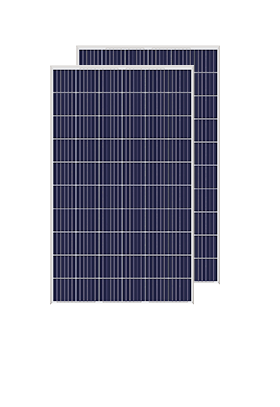



We have cooperated with more than 200 countries in solar energy projects and road lighting projects. We have exported products to many countries and participated in many important government projects around the world.




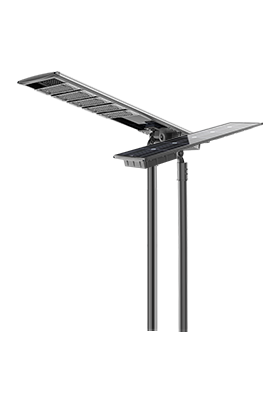


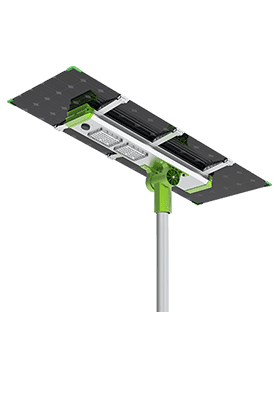
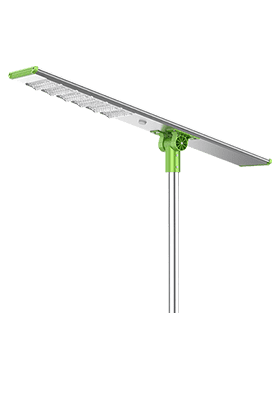
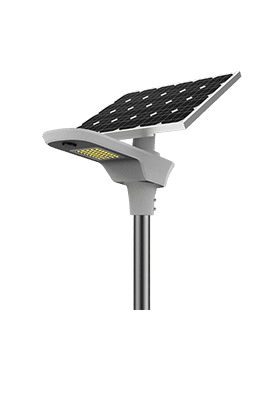


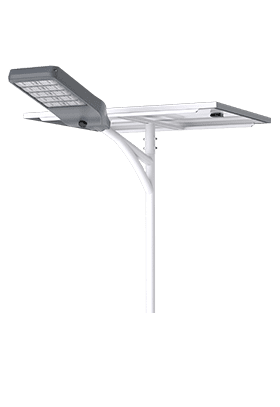
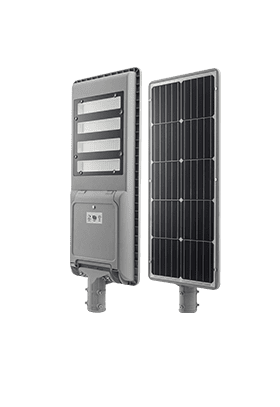
We have cooperated with more than 200 countries in solar energy projects and road lighting projects. We have exported products to many countries and participated in many important government projects around the world.

Anern has 17 years of experience in solar lighting and solar product manufacturing. Anern is headquartered in Guangzhou. With a production base of 30,000 square meters, our company has an R&D team of more than 100 people.
A smart solar inverter does more than convert the direct current produced by solar panels into usable alternating current. It can monitor energy production, optimize photovoltaic output through MPPT, coordinate charging with a solar battery, respond to grid conditions and provide operating data through an app or cloud platform.
However, not every Wi-Fi-enabled inverter is a true smart grid inverter. Buyers must evaluate the complete control architecture, including MPPT performance, smart-meter integration, battery communication, export control, grid-code settings, backup logic and system monitoring.
A smart solar inverter is a power-conversion device that combines DC-to-AC conversion with digital monitoring, programmable operating logic and communication capabilities.
Depending on the inverter type and system design, it may perform several functions:
Convert photovoltaic DC power into AC electricity
Track the maximum available power from the solar array
Monitor PV production, household loads and grid exchange
Manage battery charging and discharging
Communicate with a lithium battery BMS
Adjust output according to grid voltage or frequency
Limit or prevent electricity export
Record operating events and fault alarms
Provide remote access through an app or cloud platform
Coordinate solar, battery, utility and generator inputs
The U.S. Department of Energy describes advanced or smart inverters as equipment capable of communication and grid-support functions in addition to basic power conversion. These functions are becoming more important as larger amounts of distributed solar and battery storage are connected to electrical networks.
The term should therefore be understood as a combination of measurement, communication and control, rather than as a label for any inverter equipped with a Wi-Fi module.
A conventional solar inverter is primarily designed to convert electrical power. It receives DC electricity from solar panels and produces AC electricity with the voltage, frequency and waveform required by the connected loads or utility grid.
A smart inverter adds a digital control layer.
| Capability | Conventional inverter | Smart solar inverter |
|---|---|---|
| DC-to-AC conversion | Yes | Yes |
| MPPT optimization | Model-dependent | Normally integrated |
| Local display | Common | Common |
| Mobile or cloud monitoring | Limited or unavailable | Common |
| Battery coordination | Limited | Available in hybrid models |
| Smart-meter communication | Limited | Often supported |
| Export limitation | Model-dependent | Frequently configurable |
| Remote parameter setting | Limited | May be supported |
| Grid-support functions | Basic protection | Advanced functions possible |
| Event and fault logging | Basic | More detailed |
The exact capabilities still depend on the inverter model, firmware, certification and regional configuration. A product described as a solar smart power inverter should not automatically be assumed to support every grid service or every battery protocol.
Buyers should request the technical datasheet, user manual, supported communication list and applicable certification documents before specifying the inverter for a project.
Monitoring turns the inverter into an operating data source for the complete solar power system.
A compatible monitoring platform may display:
Current PV power
Daily, monthly and lifetime energy generation
AC output voltage and frequency
PV string voltage and current
Battery voltage
Battery state of charge
Charging and discharging power
Household or facility consumption
Grid import and export
Inverter temperature
Warning and fault codes
Historical operating curves
Anern’s solar inverter monitoring solutions allow compatible inverters and energy storage systems to connect to mobile apps or cloud platforms through Wi-Fi and communication modules. Depending on the supported inverter series, users can review power generation, battery information, operating status and fault alarms remotely.
Monitoring itself does not increase solar-panel output. Its value comes from making problems visible and enabling better operating decisions.
For example, monitoring data can help identify:
A PV string producing less power than expected
Repeated overvoltage or undervoltage events
Battery charging that stops prematurely
Abnormal nighttime consumption
Excessive inverter temperature
Frequent overload conditions
Grid export occurring when zero-export operation is required
A system that remains in utility-priority mode instead of solar-priority mode
For residential users, monitoring improves visibility. For EPC contractors, distributors and commercial operators, it also supports commissioning, remote troubleshooting and portfolio management.
Monitoring data should still be interpreted together with site conditions. A lower production curve may be caused by shading, panel contamination, elevated module temperature, an incorrect string configuration or utility-grid restrictions rather than an inverter defect.
Maximum Power Point Tracking, or MPPT, is one of the most important control functions in a modern smart inverter for solar panel systems.
The voltage and current at which a photovoltaic module produces maximum power change throughout the day. Irradiance, module temperature, cloud movement, shading and array orientation can all shift the optimal operating point.
An MPPT controller continuously adjusts the electrical operating point of the PV array so that the inverter can extract more of the available solar power.
Anern’s detailed MPPT inverter guide explains how MPPT combines intelligent PV power tracking with DC-to-AC conversion and, in hybrid systems, battery charging, discharging and grid interaction.
Buyers should compare more than the number of MPPT trackers. Important specifications include:
MPPT operating-voltage range
Maximum PV open-circuit voltage
Starting voltage
Maximum PV input current
Maximum short-circuit current
Number of independent MPPT channels
Maximum number of strings per MPPT
Permitted PV oversizing ratio
MPPT tracking efficiency
Maximum inverter conversion efficiency
The PV array must remain inside the permitted inverter voltage range under both high-temperature and low-temperature conditions.
If the array voltage is too low, the inverter may start late or stop operating early. If the cold-weather open-circuit voltage is too high, the inverter input can be exposed to an unsafe overvoltage condition.
Multiple MPPT channels are especially valuable when the system has different roof orientations, uneven shading or PV strings with different operating conditions. However, additional MPPT channels cannot correct fundamentally incompatible string designs.
The phrase grid tie inverter smart meter can refer to two different devices, so buyers should distinguish them clearly.
The utility smart meter is installed for electricity measurement and billing. Depending on local regulations and meter configuration, it may record electricity imported from and exported to the utility grid.
Export-meter readings are used in some electricity markets to calculate compensation for solar electricity delivered to the grid.
A smart grid-tie inverter may also use a dedicated energy meter or current transformer at the grid connection point.
This device provides real-time power-flow data to the inverter. The inverter can then determine whether the building is:
Importing electricity
Exporting electricity
Consuming all available solar production
Charging or discharging a battery
Approaching an export limit
The meter data can support functions such as self-consumption control, zero-export operation, export limitation and load monitoring.
In a zero-export configuration, the control system adjusts inverter output so that PV generation follows the site load instead of sending excess electricity to the external grid.
Incorrect smart-meter installation is a common commissioning problem.
The installer must confirm:
Correct installation at the point of common coupling
Correct phase sequence
Correct current-transformer direction
Correct meter-to-inverter communication wiring
Correct meter address and baud rate
Correct single-phase or three-phase configuration
Correct import and export sign convention
If a current transformer is installed in the reverse direction, the inverter may interpret grid import as export. This can cause unstable power limiting, unintended battery charging or incorrect data on the monitoring platform.
A smart meter should therefore be treated as part of the inverter control system rather than as a simple display accessory.
A smart grid inverter is designed to operate according to specified grid-interconnection requirements.
Depending on the country, utility, product certification and activated settings, advanced functions may include:
The inverter remains connected during certain temporary voltage deviations instead of disconnecting immediately.
The inverter continues operating through defined frequency disturbances for the permitted duration.
The inverter adjusts reactive power in response to local voltage conditions.
The inverter reduces active power when voltage exceeds a configured threshold.
The inverter changes active-power output according to grid-frequency conditions.
The inverter limits how quickly output power increases or decreases.
The inverter operates at a configured power factor instead of always operating at unity power factor.
The revised IEEE 1547 framework expanded requirements involving interoperability, abnormal grid conditions and voltage-regulation capability for distributed energy resources. The applicable functions and settings still have to be approved and configured according to the local grid operator’s rules.
A product may be technically capable of these functions without being approved for every market. Consequently, buyers evaluating a smart grid tie inverter should verify both hardware capability and market-specific compliance.
A smart grid-tie inverter and a smart hybrid inverter are related but not identical.
A grid-tie inverter is mainly designed to convert solar power and operate in parallel with the utility grid.
Its priorities may include:
Maximum solar generation
Grid synchronization
Export control
Power-factor adjustment
Remote monitoring
Grid-support functions
A standard grid-tie inverter normally shuts down during a utility outage unless it is part of a specifically designed backup or microgrid system.
A smart hybrid solar inverter manages multiple energy sources and destinations:
Solar panels
Lithium or lead-acid battery storage
Utility grid
Backup loads
General household or commercial loads
Generator input, where supported
A hybrid inverter can decide whether solar energy should supply loads, charge batteries or be exported. It can also determine when the battery should discharge and when grid electricity should be used.
For a more detailed explanation of this architecture, see Anern’s guide to hybrid solar inverter working principles and benefits. Anern describes the hybrid inverter as the control point between solar generation, battery storage and the utility grid.
A complete smart hybrid solar inverter system is more than an inverter connected to a random battery. The inverter, solar battery, PV array, protection equipment, meter and load circuits must be engineered as a coordinated system.
A typical energy-management sequence may be:
Solar power first supplies active loads.
Surplus solar energy charges the battery.
Additional surplus is exported or limited according to project settings.
The battery supplies loads when solar production falls.
The utility grid supports loads when the battery reaches its reserve state of charge.
During an outage, designated backup circuits are supplied if backup operation is supported.
A generator may start or provide charging support in compatible systems.
The actual priority order can be adjusted for different objectives.
Solar and battery energy are used to minimize electricity imported from the grid.
The battery is charged and discharged according to electricity-price periods.
A larger battery reserve is maintained for utility outages.
The inverter balances solar generation, battery energy and loads without relying on a stable utility grid.
PV output or battery discharge is controlled to remain below a permitted export limit.
For a smart home inverter, these modes can coordinate household solar production with lighting, refrigeration, communication equipment, pumps, air conditioners and other selected circuits. Nevertheless, backup-load selection must remain within the inverter’s continuous output and surge capacity.
A smart hybrid system needs both electrical compatibility and communication compatibility.
Important electrical parameters include:
Nominal battery voltage
Charging-voltage range
Maximum charging current
Continuous discharge current
Peak discharge current
Low-voltage cut-off
Permitted depth of discharge
Battery capacity
Inverter surge demand
For lithium batteries, the battery management system protects cells against abnormal voltage, current and temperature conditions.
In a closed-loop system, the battery and inverter exchange information such as:
State of charge
Battery voltage
Charging-current limit
Discharging-current limit
Temperature
Warning status
Protection status
CAN and RS485 are commonly used, but identical physical ports do not guarantee protocol compatibility. The communication protocol, cable pinout, software version, battery address and inverter configuration must all match. Anern’s Li-ion inverter and lithium battery compatibility guide explains these requirements in more detail.
This is why selecting a solar inverter and battery from coordinated product lines can simplify system design, commissioning and technical support.
A smart home inverter can help homeowners understand solar generation, household consumption, battery state of charge and grid exchange.
Common objectives include:
Increasing solar self-consumption
Providing backup for essential circuits
Reducing peak-period grid consumption
Scheduling battery operation
Preventing unauthorized grid export
Identifying abnormal system performance
Commercial users require more detailed energy control because loads may change according to production schedules, working shifts and demand charges.
Relevant functions include:
Three-phase load monitoring
Peak-demand management
Multi-inverter monitoring
Generator coordination
Export limitation
Remote alarm management
Energy storage scheduling
Portfolio-level data reporting
In areas with frequent voltage fluctuations or utility interruptions, buyers should compare:
Input-voltage tolerance
Grid charging range
Transfer time
Generator compatibility
Battery reserve logic
Automatic restart behavior
Surge capacity
Protection settings
Smart monitoring is helpful in these environments, but robust power-stage design remains essential.
For pumps, compressors, refrigeration and other high-surge equipment, buyers may also need to compare transformer-based designs. Anern’s overview of low-frequency power inverters provides additional information for applications where load stability and surge handling are major selection factors.
The smart solar inverter price cannot be evaluated from rated wattage alone.
The final cost may be influenced by:
Rated AC output
Single-phase, split-phase or three-phase design
Grid-tied, off-grid or hybrid architecture
Number of MPPT channels
PV input-voltage range
Battery voltage
Battery charging current
Backup-output capacity
Parallel-operation capability
Smart meter or CT inclusion
Wi-Fi, Ethernet, 4G or other communication modules
App and cloud-monitoring support
Ingress-protection rating
Grid-code certifications
BMS communication protocols
Warranty and after-sales support
Installation accessories
Order quantity and customization requirements
A lower initial purchase price may not produce the lowest system cost if the inverter requires separate controllers, meters, communication devices or battery converters.
For B2B purchasing, the comparison should include:
Inverter price
Required accessories
Battery compatibility
Installation cost
Commissioning time
Monitoring-platform availability
Warranty workflow
Spare-parts availability
Expected maintenance requirements
Buyers can review Anern’s solar inverter catalog and product datasheets to compare grid-tied, hybrid, off-grid and low-frequency inverter configurations.
Before purchasing a solar smart power inverter, confirm the following items.
Is the PV array inside the MPPT operating range?
Is the cold-weather open-circuit voltage below the maximum input limit?
Does the inverter support the required string current?
Are sufficient independent MPPT channels available?
Does rated output cover the continuous load?
Can the inverter support motor-starting or compressor surge?
Is the output voltage suitable for the destination market?
Is single-phase, split-phase or three-phase output required?
Is the inverter approved for the local grid code?
Does it support the required ride-through and power-control functions?
Is a compatible smart meter available?
Can the system provide zero-export or limited-export control?
Does the inverter support the required battery voltage?
Are charging parameters adjustable?
Is the BMS protocol confirmed?
Are CAN or RS485 cables and pinouts documented?
Can the battery supply the inverter’s peak current?
Is monitoring local, cloud-based or both?
Is Wi-Fi included or optional?
Can installers manage multiple systems?
Are fault records downloadable?
Can operating parameters be changed remotely?
Who owns and controls the system data?
Is the environmental protection rating suitable?
Are installation clearances documented?
Are manuals, wiring diagrams and commissioning instructions available?
Are spare parts and technical support available in the target market?
When comparing Chinese solar energy companies, distributors and EPC contractors should evaluate complete system-integration capability rather than comparing only inverter wattage and unit price. The ability to supply matched solar inverters, lithium batteries and solar power systems can reduce compatibility risks across a project.
Advanced software cannot compensate for poor installation.
The inverter should be installed in a suitable environment with adequate ventilation, correct grounding, properly sized cables and correctly selected AC and DC protection devices.
Anern’s solar inverter installation guide covers initial inspection, mounting, ventilation, electrical connections and grounding requirements.
After commissioning, operators should regularly inspect:
AC and DC terminals
Grounding conductors
Protective devices
Cooling fans
Ventilation openings
Fault logs
Communication status
Battery alarms
Smart-meter readings
Firmware and parameter records
The solar inverter maintenance guide also recommends checking connections for looseness or overheating, reviewing monitoring alarms and keeping ventilation areas free from obstruction.
Installers can obtain model-specific settings and wiring information from Anern’s solar inverter user manual center. The resource center includes manuals, parameter documents, monitoring instructions and parallel wiring materials for multiple inverter series.
Practical product demonstrations are also available in the Anern solar product video center, covering solar inverters, lithium batteries, panels and complete solar systems.
Anern supplies multiple solar energy product lines, including:
Solar inverters
Wall-mounted and rack-mounted lithium batteries
Commercial battery storage
Solar panels
Residential solar systems
Off-grid solar systems
Commercial energy storage systems
Using coordinated inverter, battery and system configurations helps project buyers reduce uncertainty involving battery voltage, communication protocols, charging parameters, backup loads and system monitoring.
Anern’s solar power system project portfolio includes inverter, lithium battery and complete solar system applications across residential, hotel, commercial and off-grid projects. Published examples include systems deployed in Chad, Zambia, Indonesia, Saudi Arabia, Peru, Australia and other markets.
These project references help distributors, EPC contractors and project developers evaluate the difference between a standalone equipment supplier and a manufacturer capable of supporting integrated solar inverter, solar battery and solar system configurations.
The next stage of smart inverter development is not simply adding more data to an app.
The technology is moving toward more coordinated control between:
Solar generation
Battery storage
Smart meters
Building loads
Electric vehicle charging
Utility signals
Microgrids
Distributed energy management platforms
Three trends are especially important.
Inverters will increasingly respond to voltage and frequency conditions through approved local control curves, even when external communication is temporarily unavailable.
Smart hybrid inverters will operate more like local energy managers, deciding when to generate, store, consume, export or reserve electricity.
Most conventional grid-connected solar inverters are grid-following devices: they synchronize with an existing electrical waveform. Grid-forming inverter technology is being developed to establish voltage and frequency references and support inverter-dominant grids, storage plants and microgrids. The U.S. Department of Energy identifies grid-forming control as an emerging technology for systems that may need to operate or restart without depending entirely on conventional generation.
For most current residential and commercial buyers, the immediate priorities remain reliable MPPT, accurate metering, battery compatibility, grid-code compliance, monitoring and service support. Grid-forming capability should not be assumed unless it is explicitly documented for the selected product and application.
No. Wi-Fi provides a communication channel, but a true smart inverter may also include advanced monitoring, programmable energy management, smart-meter integration, battery coordination and grid-support functions. Buyers should compare actual specifications rather than relying on the word “smart.”
The core conversion, protection and local control functions should not normally depend on a continuous internet connection. Cloud monitoring and remote access may become unavailable when the connection is lost. The exact behavior should be verified in the product manual.
Not necessarily. A conventional grid-tie inverter normally disconnects during an outage. Backup power requires a hybrid inverter or another system specifically designed with battery storage, backup output, transfer equipment and anti-islanding protection.
A smart meter measures electrical energy or power flow at a defined connection point. An inverter monitor collects and displays inverter and system data. In some installations, the inverter monitoring platform receives smart-meter data and combines it with PV and battery information.
The meter measures power flow, while the inverter or energy-management controller changes output. In a correctly configured zero-export system, meter data tells the inverter when export is occurring so that inverter output can be reduced.
It can be, provided the inverter voltage, charging profile, current limits and communication protocol are compatible with the lithium battery and BMS. The presence of an RS485 or CAN port alone does not confirm compatibility.
MPPT availability depends on system conditions and the inverter’s operating mode. If loads are low, the battery is full and export is restricted, the inverter may reduce PV production because there is nowhere for the additional energy to go.
Compare the complete system configuration, including MPPT capacity, smart meter, communication module, battery compatibility, backup output, certifications, warranty, installation accessories and after-sales support—not only price per kilowatt.
A smart solar inverter should be evaluated as the control center of a solar energy system.
Monitoring provides visibility. MPPT improves the use of available PV power. Smart-meter integration measures the direction and quantity of grid exchange. Battery communication coordinates charging and protection. Grid-support settings help the inverter operate according to local interconnection requirements.
The best configuration depends on the application. A smart grid-tie inverter may be suitable for maximizing solar generation and managing export, while a smart hybrid inverter is more appropriate when battery storage, backup power and energy scheduling are required.
For distributors, EPC contractors and renewable energy project developers, the most reliable approach is to evaluate the inverter, solar battery, metering equipment, monitoring platform and complete solar system as one coordinated solution rather than as separate products.