EN
EN
 fr
fr  de
de  es
es  it
it  ru
ru  pt
pt  ar
ar  ms
ms  id
id 





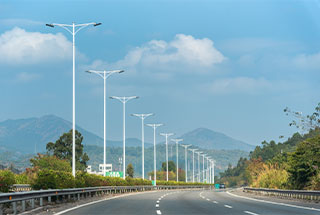
We have cooperated with more than 200 countries in solar energy projects and road lighting projects. We have exported products to many countries and participated in many important government projects around the world.




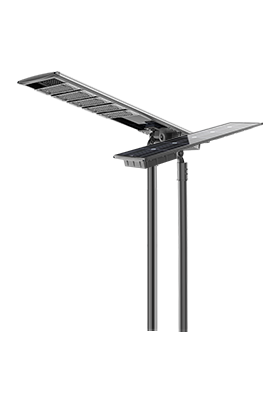


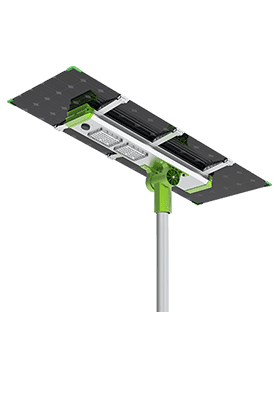
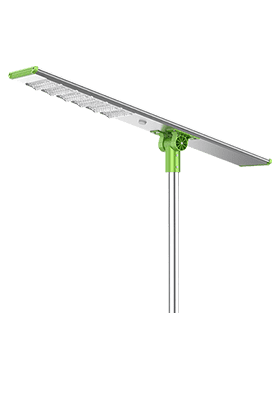
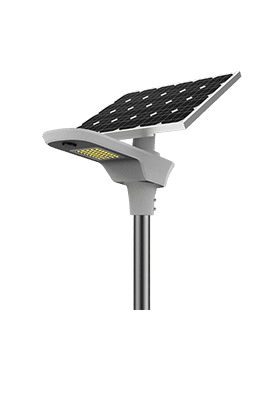


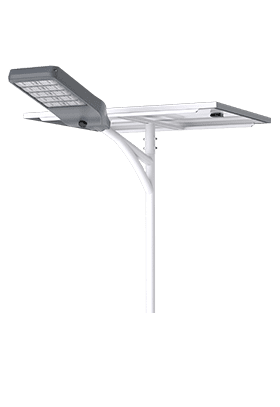
We have cooperated with more than 200 countries in solar energy projects and road lighting projects. We have exported products to many countries and participated in many important government projects around the world.

Anern has 17 years of experience in solar lighting and solar product manufacturing. Anern is headquartered in Guangzhou. With a production base of 30,000 square meters, our company has an R&D team of more than 100 people.
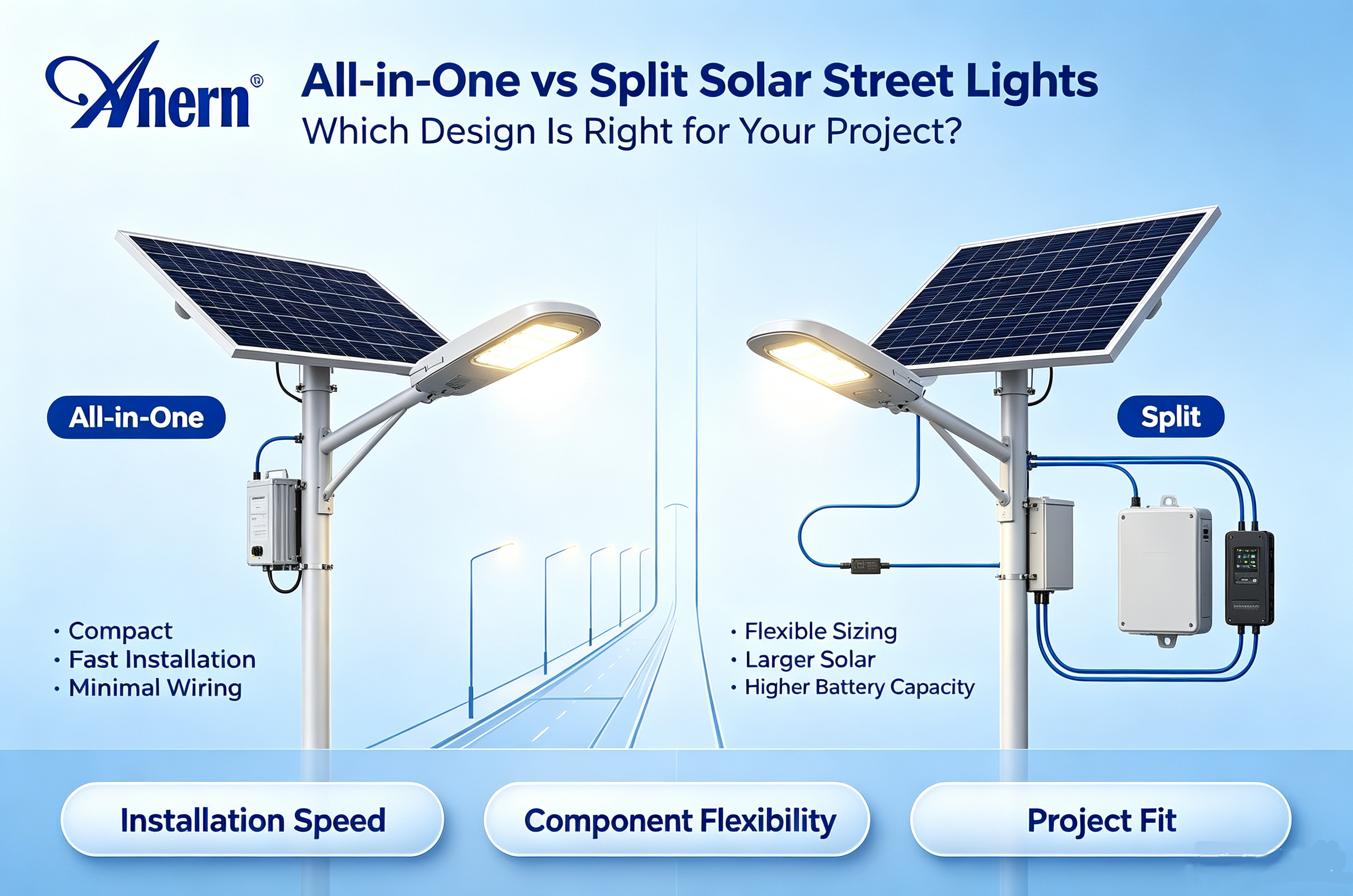
Choosing the right solar street light design can directly affect installation, lighting performance, maintenance, and long-term project costs. For distributors, contractors, municipalities, and developers comparing a solar street light supplier, two configurations are especially common: all-in-one solar street lights and split solar street lights.
Both designs combine solar power generation, battery storage, intelligent control, and LED lighting, but their component arrangement is different. Anern offers both configurations, allowing project buyers to select equipment according to road conditions, climate, installation requirements, and lighting capacity.
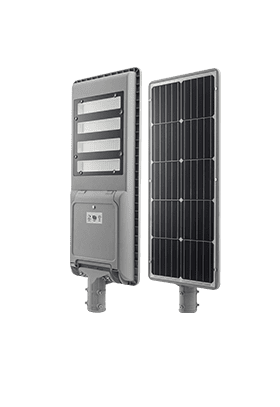
An all-in-one solar street light integrates the LED light source, solar panel, battery, and controller into one compact lighting unit. Instead of installing several separate components, the complete solar lighting system is mounted on the pole as a single integrated product.
This design significantly simplifies installation. There is no need for complicated cable connections between a separate solar panel, battery enclosure, and lamp body. Anern's all-in-one models include solutions such as the SLZ, SLV, SLZ2, SLB, and ISSL-C series. The company also offers adjustable designs and models using LiFePO4 batteries.
For distributors looking for wholesale LED solar street light products, the integrated structure can also simplify transportation, inventory management, and installation.
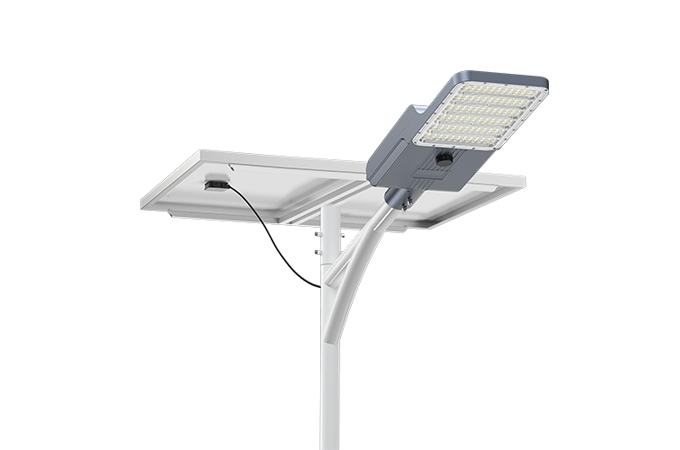
A split solar street light separates some major components from the lamp body. Depending on the design, the solar panel and battery can be installed independently, giving the system greater flexibility in component sizing and positioning.
A typical split system includes an LED lamp, solar panel, battery, controller, pole, and connecting cables. The independent components can be selected according to the project's energy requirements rather than being restricted by the physical size of the lamp housing.
Anern's AN-SSL-I is one example of a split-type LiFePO4 battery solar street light. Its configurations range from 60W to 200W, with larger solar panels and high-capacity battery configurations available for demanding applications.
This makes the split design particularly useful when a project requires higher solar generation or larger energy storage.
The most important difference between the two designs is system integration versus configuration flexibility.
Factor | All-in-One Solar Street Light | Split Solar Street Light |
Component design | Integrated into one housing | Components installed separately |
Installation | Faster and simpler | Requires more installation work |
Wiring | Minimal | More cable connections |
Space requirements | Compact | Requires additional component space |
Solar panel flexibility | More limited by integrated design | Larger panels can be selected |
Battery capacity | Generally integrated into the lamp | Greater flexibility for larger capacity |
Maintenance | Convenient for routine replacement | Individual components can be serviced separately |
Best suited for | Standard road and public lighting | High-capacity or demanding projects |
Anern notes that split solar street lights can be advantageous in high-latitude regions because the independent solar panel and battery arrangement allows larger components to be selected when required.
Therefore, there is no universally superior design. The right choice depends on the project's solar resource, lighting requirements, installation environment, and expected operating conditions.
All-in-one models are particularly suitable for projects where fast deployment, compact design, and straightforward installation are priorities.
They work well for:
Rural roads and community roads
Residential streets
Parks and pedestrian areas
Courtyards and public spaces
Small and medium road-lighting projects
Remote areas without grid electricity
Large-scale projects requiring standardized installation
For contractors and distributors purchasing wholesale solar lights, the integrated structure can reduce installation complexity and labor requirements.
Anern's project portfolio demonstrates the practicality of this configuration. Its all-in-one solar street lights have been deployed in Tanzania, Malaysia, Myanmar, Libya, Indonesia, Venezuela, and other markets.
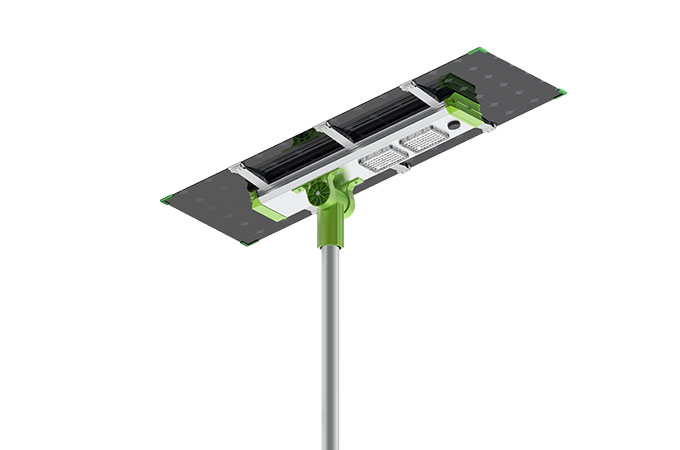
Split systems are more appropriate when the project needs greater control over solar generation and battery capacity.
They can be considered for:
High-latitude regions
Roads with demanding lighting requirements
Areas with limited sunlight
Large roads requiring higher power
Projects requiring oversized solar panels
Applications where battery capacity must be increased
Installations where component positioning can be optimized independently
For example, Anern's AN-SSL-I split model offers configurations up to 200W and uses separate solar panel and lighting arrangements, providing greater system flexibility.
Initial purchase price should not be the only factor when comparing all-in-one and split solar street lights. Buyers should consider the total project cost, including transportation, installation labor, wiring, maintenance, and replacement.
All-in-one systems can reduce installation labor because the main components are already integrated. They also require fewer external connections, which can simplify deployment across hundreds or thousands of poles.
Split systems may require more installation time and additional wiring, but their modular structure can provide advantages when a project needs larger batteries or solar panels.
Maintenance requirements also differ. With an integrated system, technicians generally work with one compact lighting assembly. With a split system, individual components can be accessed and replaced separately.
For a solar street light OEM or project supplier, therefore, product selection should be based on the complete lifecycle cost rather than simply comparing the unit quotation.
A practical decision can be made by considering five questions:
1. How much solar energy is available?
If sunlight is sufficient and the required capacity is moderate, an all-in-one design can be an efficient choice. If solar generation needs to be maximized, a split configuration may provide more flexibility.
2. What is the required lighting power?
Anern's solar street light range covers approximately 20W to 250W, allowing different configurations to be matched with road size and lighting requirements.
3. How difficult is installation?
For remote or large-scale projects where installation speed matters, all-in-one units can reduce installation complexity.
4. Is battery capacity a major concern?
Projects requiring extended autonomy or larger energy storage may benefit from a split design.
5. What are the local environmental conditions?
Temperature, wind, rainfall, dust, solar radiation, and road width should all be considered before selecting a configuration.
In short, choose all in one LED street light when simplicity, compactness, and fast installation are priorities. Choose split when component flexibility, larger solar generation, or higher energy-storage capacity is more important.
As a professional solar street light supplier, Anern provides both integrated and split configurations rather than forcing every project into one product structure.
Its product range includes all-in-one LiFePO4 models such as SLZ and SLZ2, high-efficiency integrated models such as ISSL-C, and split-type solutions such as AN-SSL-I. This allows buyers to compare different configurations within one product portfolio.
Anern also provides project-oriented services, including product selection, customized solutions, ODM/OEM support, and technical assistance. Its website states that the company has cooperated on solar energy and road-lighting projects in more than 200 countries.
For distributors searching for solar street lamp suppliers, contractors requiring project-specific configurations, or buyers sourcing directly from solar street lamps manufacturers, this combination of product variety and project experience can simplify procurement.
Real-world projects provide a useful reference when evaluating a solar street light manufacturer.
Anern's project portfolio includes a Tanzania project using 100 sets of SLZ 100W all-in-one LiFePO4 solar street lights. The company has also supplied 921 sets of SLZ 60W and 120W all-in-one units for a Malaysia project and 700 sets of SLZ2 80W adjustable all-in-one LiFePO4 solar street lights for a Myanmar project.
In Indonesia, Anern supplied SLV 100W all-in-one units, while another project used ISSL-C 150W all-in-one solar street lights on 8-meter poles. Its portfolio also includes split-type and high-power applications, demonstrating that different configurations can be adapted to different project requirements.
For buyers comparing a solar light factory, these completed deployments offer a more practical basis for evaluation than product specifications alone.
Ultimately, the choice between all-in-one and split solar street lights should start with the project—not the product. Evaluate solar resources, road dimensions, lighting targets, battery autonomy, installation conditions, and maintenance requirements first. Then select the configuration that provides the best balance of performance, installation efficiency, and lifecycle value.