EN
EN
 fr
fr  de
de  es
es  it
it  ru
ru  pt
pt  ar
ar  ms
ms  id
id 

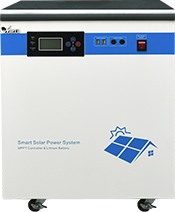





We have cooperated with more than 200 countries in solar energy projects and road lighting projects. We have exported products to many countries and participated in many important government projects around the world.








We have cooperated with more than 200 countries in solar energy projects and road lighting projects. We have exported products to many countries and participated in many important government projects around the world.

Anern has 17 years of experience in solar lighting and solar product manufacturing. Anern is headquartered in Guangzhou. With a production base of 30,000 square meters, our company has an R&D team of more than 100 people.
In solar system sizing, one common dilemma is whether to save upfront costs with a modified sine wave inverter or invest in the superior performance of a pure sine wave inverter. On the surface, modified sine wave models can cut initial expenses by 30–50%. However, when you factor in long-term risks – such as motor overheating, display flickering, up to 30% higher energy loss, and premature failure of sensitive electronics – the cheaper option often becomes the more expensive one. With 17 years of experience in solar manufacturing, Anern breaks down the real technical and financial differences between the two waveforms, helping you make the right choice for system reliability and total cost of ownership.
A pure sine wave inverter produces a smooth AC waveform that closely matches utility grid power, which typically means low distortion and very high compatibility across modern appliances. In real-world use, pure sine wave output helps many motor-driven loads (refrigerators, pumps, fans, compressors) run cooler and quieter, reduces buzzing or hum in audio/video equipment, and is generally the safest choice for sensitive electronics and medical devices. When people compare pure sine wave inverter vs modified sine wave inverter, pure sine wave is usually the closest to the grid option and therefore the most predictable for mixed or mission-critical loads.
A modified sine wave inverter (often called quasi-sine wave) outputs a stepped approximation of AC rather than a smooth sine curve, which makes it simpler and usually cheaper than pure sine models. It can power many basic loads—especially resistive ones like simple heaters or incandescent lighting—but the higher harmonic content can cause practical downsides with certain appliances, including extra heat in motors/transformers, audible buzzing in some chargers or microwaves, reduced efficiency, and occasional incompatibility with modern picky electronics.
That's why the modified vs pure sine wave inverter decision is less about the watt number on the label and more about how your specific devices behave on that waveform.
Power quality is where the two types separate fastest. Pure sine wave output is smooth and grid-like, while modified sine wave output is stepped and introduces more harmonics, or electrical noise. Those harmonics do not always cause immediate failure, but they often appear as subtle day-to-day issues: motors and transformer-based loads may run hotter, some chargers and appliances may buzz, certain devices may operate less efficiently and drain batteries faster, and a few modern appliances may behave unpredictably or refuse to run.
In practical terms, the stepped waveform forces some equipment to draw current in a less ideal way, which can increase RMS current, create extra heat in windings or power components, and make electromagnetic noise more noticeable in speakers or radios. This is also why some devices feel weaker on modified sine wave even when the inverter watt rating looks sufficient, since the appliance may not convert that non-smooth AC into useful work as effectively as it does on utility-like power. For solar and battery systems, that loss matters because every extra watt of waste becomes extra battery drain and additional heat that must be dissipated inside both the device and the inverter.
Feature | Pure Sine Wave Inverter | Modified Sine Wave Inverter |
Output waveform | Smooth, utility-like sine wave | Stepped / approximated waveform |
Power quality | Cleaner, low distortion | Higher distortion / harmonics |
Heat & noise in many loads | Lower | Often higher |
Efficiency with motors/transformers | Typically better | Often reduced |
Compatibility | Highest | Mixed; depends on device |
Typical cost | Higher | Lower |
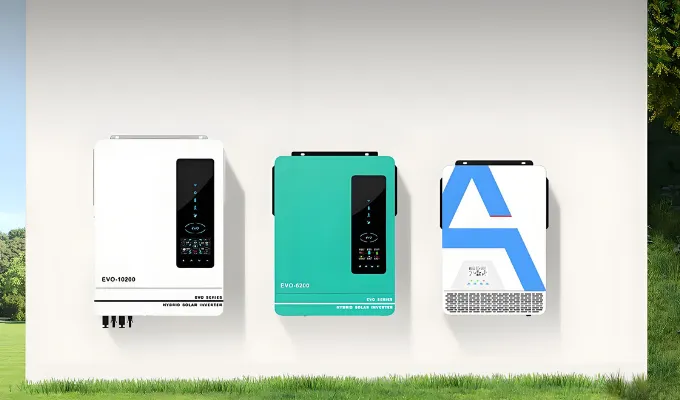
Compatibility is usually the deciding factor because turns on is not the same as runs correctly. Even if wattage is sufficient, waveform quality can change operating temperature, noise, efficiency, and reliability, especially for motor and compressor loads, medical equipment, and modern electronics. Motor-driven appliances such as refrigerators and pumps are often the most revealing test because they rely on electromagnetic fields that perform best with smooth sinusoidal voltage. On a modified waveform, they may start less confidently, run with more vibration, or draw more current than expected.
With many modern electronics, the concern is different. Switch-mode power supplies may still operate, but they can run hotter or produce audible whine, and some devices with active power-factor correction or strict input monitoring may shut down or throw faults. Microwaves are another common surprise because they often run on modified sine wave, yet users may notice louder transformer hum and less effective heating per watt. Ultimately, if you are powering a mixed household load or you cannot afford downtime for work equipment, networking, or medical needs, pure sine wave output usually reduces the risk that one picky device becomes the weak link in your system.
Appliance / Load Type | Pure Sine Wave Inverter | Modified Sine Wave Inverter |
Phone/laptop chargers | Excellent | Often OK; can run hotter or buzz |
LED lighting | Excellent | Usually OK; occasional flicker/noise |
Refrigerator/freezer (compressor) | Recommended | May run hotter; starting can be harder |
Microwave oven | Works normally | Often noisier; heating can be less effective |
Induction cooktop | Often compatible | Often incompatible/error codes |
CPAP/medical devices | Strongly recommended | Risky unless manufacturer-approved |
Audio equipment | Clean | Hum/buzz possible |
Variable-speed/brushless tools | Recommended | Can be unpredictable |
While modified sine wave models often win on upfront price, total value depends on how the system performs over time. If a modified waveform causes certain loads to run less efficiently, you may lose runtime and effectively need more battery capacity, which can be a significant added cost in off-grid or RV builds. If it also creates extra heat or noise in motors, transformers, or power supplies, it can shorten appliance lifespan or simply make the system less comfortable to live with, especially at night when buzzing and fan noise are more noticeable.
There is also a risk premium tied to uncertainty. One incompatible appliance, such as an induction cooktop, a variable-speed compressor, a specific medical device, or a picky charger, can force an inverter upgrade later and turn an inexpensive purchase into a temporary stopgap. Pure sine wave inverters cost more initially, but they typically reduce troubleshooting and increase the likelihood that both current and future appliances will operate properly. As a result, in many solar, RV, and daily-use backup scenarios, the pure vs modified sine wave inverter decision becomes a long-term reliability and performance choice rather than a simple budget choice.
.jpg "MPPT_Solar_Inverter_(2).jpg")
Selecting a pure sine wave inverter for a solar system is not just about matching wattage. For engineering buyers, integrators, and project developers, the following six parameters determine long-term system reliability, efficiency, and ROI.
Below is a professional-grade selection framework used by Anern's technical team when supporting commercial, off-grid, and hybrid solar projects.
Common mistake:
Choosing an inverter based only on rated continuous power (e.g., 5kW).
Correct engineering approach:
Motor-based loads (water pumps, compressors, refrigerators, air conditioners) require 3–7× rated power during startup (lasting from milliseconds to several seconds).
| Load Type | Surge Multiplier (Typical) | Example Calculation |
|---|---|---|
| Resistive (lights, heaters) | 1× | 1kW load → 1kW surge |
| Inductive (motors, pumps) | 3–7× | 1.5kW pump → 5–10kW surge |
| Capacitive (switch-mode PSU, computers) | 1.5–2× | 2kW server → 3–4kW surge |
Rule for professional systems:
Inverter surge rating (peak power) must exceed the sum of all motor starting surges that may occur simultaneously.
If two 2kW pumps start together, each with 6× surge → require >24kW surge capacity, even if continuous load is only 4kW.
Inverter input voltage directly affects cable cost, system efficiency, and expandability.
| System DC Voltage | Max Practical Power | Cable Cost | Efficiency | Best For |
|---|---|---|---|---|
| 12V | ≤ 2kW | High | Low | Small mobile systems |
| 24V | ≤ 4kW | Medium | Medium | Small homes, telecom backup |
| 48V | ≤ 15kW | Low | High | Standard for >3kW off-grid / commercial |
| Higher (e.g., 96V, 192V) | >15kW | Very low | Highest | Large industrial solar + storage |
Engineering guideline (Anern internal standard):
< 3kW system → 24V is acceptable
3kW – 15kW system → 48V is mandatory for cost-effective wiring
> 15kW system → use 48V with parallel inverters or higher voltage battery bus
Practical impact:
At 5kW load, a 12V system draws over 400A DC → requires thick, expensive copper cables and generates significant heat.
The same load at 48V draws only ~104A, enabling standard cables and lower losses.
Professional solar projects require functional clarity on how the inverter interacts with grid, generator, and battery.
| Inverter Type | Grid Connection | Battery Required | Backup Mode | Typical Application |
|---|---|---|---|---|
| Off-Grid | No | Yes | Full | Remote areas, cabins, telecom towers |
| Hybrid (Grid-Interactive) | Yes | Yes | Partial/Full | Homes, businesses with battery backup + solar self-consumption |
| Split-Phase (L1/L2/N) | Yes/No | Optional | Yes | North American 120/240V systems, well pumps, workshops |
Selection decision tree (for engineers):
Is grid available?
No → Off-grid inverter
Yes → Hybrid or Split-phase
Does the site require backup during grid failure?
No → Grid-tie only (not discussed here)
Yes → Hybrid inverter with seamless switching (e.g., Anern IP65 Hybrid)
Does the load need 120/240V split-phase?
Yes → Split-phase inverter (e.g., Anern Split-Phase Series)
No → Standard single-phase
Any pure sine wave inverter used in a commercial or engineering project must include the following protections, ideally with configurable thresholds:
| Protection | Why It Matters for Engineering Clients |
|---|---|
| Overload protection | Prevents inverter shutdown during temporary surges |
| Over-temperature shutdown | Essential for high ambient temperature sites (e.g., outdoor, desert) |
| Short circuit protection | Prevents fire and equipment damage |
| Low battery cutoff | Protects expensive battery bank (Li-ion or lead-acid) |
| Reverse polarity protection | Prevents installation errors from destroying the inverter |
| Anti-islanding (for hybrid/grid-tie) | Required for grid connection safety (UL1741, IEC 62116) |
Professional requirement:
Protection thresholds should be adjustable via display or software to match specific battery types and site conditions.
Most solar systems operate below rated power 80% of the time. Therefore, partial load efficiency is more important than peak efficiency.
| Load Level | Typical Pure Sine Wave Efficiency | Typical Modified Sine Wave Efficiency |
|---|---|---|
| 100% load | 92–95% | 80–85% |
| 30% load | 88–92% | 60–70% |
| 10% load | 80–85% | <50% |
Engineering implication:
A modified sine wave inverter at 30% load wastes 30–40% of battery energy as heat.
A quality pure sine wave inverter (like Anern) maintains >88% efficiency down to 20–30% load.
For large-scale or publicly funded projects, inverters must meet international standards. Missing certifications can disqualify a bid.
| Certification | Region / Requirement |
|---|---|
| CE | Europe – mandatory for electrical safety |
| RoHS | Europe – restriction of hazardous substances |
| TUV | Germany – safety and quality mark |
| ISO 9001 | International – quality management system |
| FC / FCC | USA – electromagnetic interference compliance |
All Anern pure sine wave solar inverters carry CE, RoHS, TUV, ISO, and FC certifications, making them acceptable for professional tenders and engineering procurement.
Use the following checklist when specifying an inverter for a professional solar system:
Total continuous AC load calculated (with diversity factor)
Worst-case starting surge identified and matched to inverter surge rating
DC input voltage selected (48V for >3kW)
Inverter type defined: off-grid / hybrid / split-phase
Protection features verified against site hazards
Partial load efficiency confirmed (>85% at 30% load)
Certifications meet project legal requirements
Manufacturer support available for integration and commissioning
For any serious solar installation—residential, commercial, telecom, or agricultural—pure sine wave inverters are the only responsible choice. They ensure appliance safety, system efficiency, and long-term reliability. Modified sine wave inverters may save money on day one, but they increase operational costs, energy waste, and equipment failure risks.
Choose a trusted solar inverter manufacturer like Anern to build solar systems that perform, last, and satisfy your customers.
Off-grid pure sine wave inverters – reliable backup for rural and remote areas
Off-grid parallel inverters – support PV input up to 150V DC
IP65 hybrid inverters – outdoor-rated for harsh environments
Split-phase inverters – suitable for grid-tied, off-grid switching, and emergency backup
Yes. Modified sine wave inverters produce high harmonic distortion (25–40% THD), which can cause motors to overheat, power supplies to fail, and screens to flicker. Over time, this reduces appliance lifespan.
Absolutely. While the upfront cost is 30–50% higher, pure sine wave inverters offer better efficiency, wider appliance compatibility, and lower long-term maintenance costs. For professional systems, the total cost of ownership (TCO) is lower with pure sine wave.
Not reliably. Induction motors in refrigerators and AC units require a smooth sine wave. Modified sine wave causes overheating, higher current draw, and potential motor damage. Use a pure sine wave inverter for any motor-driven appliance.
Pure sine wave inverter: 90–95% efficiency
Modified sine wave inverter: 70–85% efficiency
The lower efficiency of modified sine wave means more energy is lost as heat, requiring larger battery banks or solar arrays to achieve the same usable output.
For most off-grid homes or small businesses, the Anern off-grid pure sine wave inverter or off-grid parallel inverter (up to 150V DC PV input) is ideal. For outdoor installations, choose the IP65 hybrid inverter. Anern also offers split-phase inverters for grid/off-grid switching applications.