EN
EN
 fr
fr  de
de  es
es  it
it  ru
ru  pt
pt  ar
ar  ms
ms  id
id 

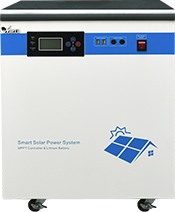


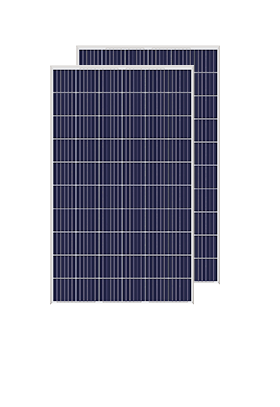



We have cooperated with more than 200 countries in solar energy projects and road lighting projects. We have exported products to many countries and participated in many important government projects around the world.




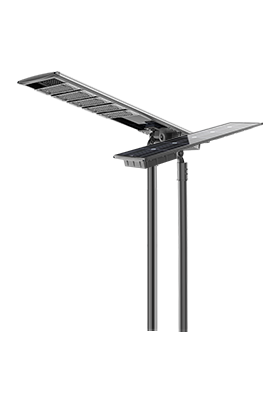


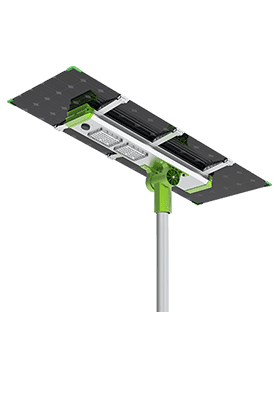
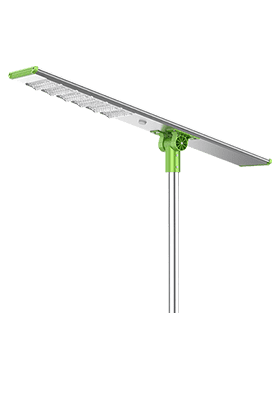
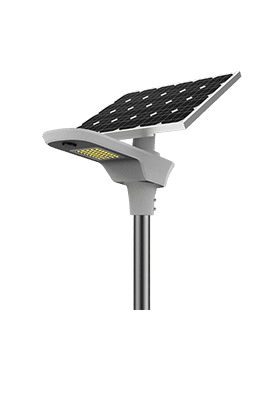


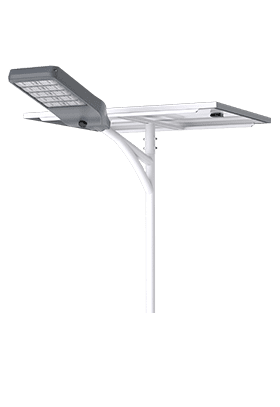
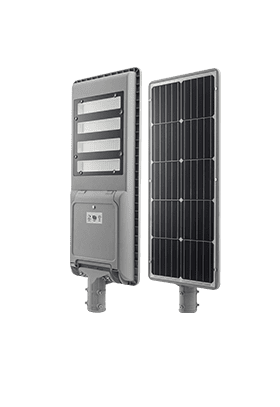
We have cooperated with more than 200 countries in solar energy projects and road lighting projects. We have exported products to many countries and participated in many important government projects around the world.

Anern has 17 years of experience in solar lighting and solar product manufacturing. Anern is headquartered in Guangzhou. With a production base of 30,000 square meters, our company has an R&D team of more than 100 people.
A practical testing checklist for distributors, EPC contractors and project buyers validating solar inverter samples before placing bulk orders.
Before placing a bulk order, solar inverter buyers should test sample units under real project conditions. Key tests include MPPT performance, surge capacity, battery communication, generator input, parallel operation, operating temperature, noise and cooling, protection functions, wiring diagram accuracy and real-load performance. Sample testing helps reduce installation failures, warranty claims and after-sales disputes.
Solar inverter specifications on a datasheet are important, but they do not always show how the inverter will perform in real projects.
For distributors, wholesalers and EPC contractors, sample testing is one of the most effective ways to verify whether a solar inverter is suitable for the target market before ordering a container shipment.
A good sample test should answer practical questions:
· Can the inverter work with the intended PV array?
· Can it communicate correctly with the selected battery?
· Can it start motor loads such as pumps, compressors or tools?
· Can installers understand the wiring diagram and user manual?
· Can the inverter operate in the target climate and installation environment?
· Can the supplier provide technical support if problems appear?
Sample testing is not only a product quality check. It is also a supplier evaluation process.
Sample testing is recommended before:
· onfirming a new solar inverter supplier
· Importing a new inverter model
· Promoting a new inverter series in a local market
· Matching an inverter with lithium batteries
· Using the inverter for EPC projects
· Placing a container order
· Applying the inverter in weak-grid or off-grid markets
· Selling to customers with motor loads, pumps or commercial equipment
For distributors, the best time to identify compatibility issues is before shipment, not after installation.
Before powering on the sample unit, buyers should first check whether the supplier provides complete model-specific documents.
Check | Item | What to Verify |
☐ | Product datasheet | Confirm rated power, surge capacity, MPPT range, battery voltage and output phase |
☐ | User manual | Confirm it matches the exact inverter model |
☐ | Wiring diagram | Review PV, battery, AC input, AC output and communication wiring |
☐ | Battery compatibility information | Check supported communication interface and battery guidance |
☐ | Certificate documents | Request model-specific certificates where applicable |
☐ | Warranty policy | Confirm warranty scope, process and exclusions |
☐ | Troubleshooting guide | Review error codes, alarm handling and service procedure |
Procurement advice:
Do not begin testing with incomplete documents. Missing documents before sample testing often become bigger problems after bulk shipment.
A basic visual inspection helps confirm whether the sample matches the quotation and technical documents.
Check | Item | What to Verify |
☐ | Model number | Confirm the model matches the order and datasheet |
☐ | Rated power label | Check rated output and voltage information |
☐ | Input/output terminals | Confirm terminal layout matches the wiring diagram |
☐ | Battery terminal | Confirm battery voltage and connection method |
☐ | Communication port | Check RS485, RS232 or other communication port where applicable |
☐ | Packaging | Review protection, labels and shipping condition |
☐ | Accessories | Confirm cables, connectors, manuals and required accessories |
MPPT performance affects solar charging efficiency and system matching.
Check | Test Item | What to Validate |
☐ | MPPT voltage range | Confirm PV input operates within the specified voltage range |
☐ | Maximum PV voltage | Ensure PV open-circuit voltage does not exceed inverter limit |
☐ | PV charging behavior | Verify stable solar charging under normal input conditions |
☐ | PV input current | Check current limit against PV array design |
☐ | Dual MPPT operation | Test both MPPT channels where applicable |
☐ | Weak sunlight behavior | Observe charging response under lower PV input conditions |
☐ | PV protection | Check response to abnormal PV input where safe and applicable |
Procurement advice:
Do not select an inverter only by rated output power. PV input design and MPPT range must match the real solar panel configuration.
Battery compatibility is one of the most common risks in hybrid solar inverter projects.
Matching battery voltage is not enough. Buyers should also verify communication interface, cable wiring, BMS settings and protocol compatibility.
Check | Test Item | What to Validate |
☐ | Battery voltage | Confirm charging and discharging voltage range |
☐ | Battery type setting | Select lithium, lead-acid or other correct battery mode |
☐ | Communication interface | Verify RS485 or RS232 connection where applicable |
☐ | Communication cable | Test the actual cable and connector definition |
☐ | BMS communication | Confirm the inverter can read battery data |
☐ | SOC display | Check whether state of charge is displayed correctly |
☐ | Charging limit | Confirm inverter follows battery charging limits |
☐ | Alarm response | Check battery warning or protection response |
☐ | Restart recovery | Confirm communication restores after restart |
☐ | Third-party battery | Verify model-specific compatibility before shipment |
Important note:
RS485 or RS232 is only a communication interface. It does not automatically guarantee compatibility. The inverter model, battery model, communication cable, BMS settings and protocol must be verified together.
Many real projects include motor-driven loads. These loads require higher startup current than normal operating current.
Check | Test Item | What to Validate |
☐ | Resistive load test | Verify stable output under basic loads |
☐ | Motor load test | Test pumps, compressors, tools or similar loads |
☐ | Surge capacity | Confirm startup performance under temporary high load |
☐ | Overload response | Check alarm, shutdown or protection behavior |
☐ | Recovery after overload | Confirm system recovers correctly after protection |
☐ | Load switching | Test response when loads start or stop suddenly |
☐ | Continuous operation | Run under practical load for an extended period |
Technical note:
Selected Anern inverter specifications indicate surge capability of approximately two times rated output power for five seconds. Buyers should verify the exact surge performance according to the specific inverter model and application.
For off-grid, weak-grid or backup systems, generator input may be required.
Check | Test Item | What to Validate |
☐ | Generator compatibility | Confirm the inverter accepts generator input where required |
☐ | Charging behavior | Test battery charging from generator input |
☐ | Input voltage range | Confirm operation under expected generator voltage |
☐ | Transfer behavior | Test switching between PV, battery, grid or generator input |
☐ | Load support | Check system behavior under backup operation |
☐ | Alarm response | Review alarms during unstable generator input |
If the project requires higher capacity or three-phase output, buyers should validate synchronization before bulk purchase.
Check | Test Item | What to Validate |
☐ | Parallel function | Confirm the model supports parallel operation |
☐ | Parallel wiring | Review wiring diagram and communication cable |
☐ | Synchronization | Verify stable operation between parallel units |
☐ | Load sharing | Check whether load is shared correctly |
☐ | Three-phase setting | Validate three-phase configuration where applicable |
☐ | Fault behavior | Check response if one unit alarms or disconnects |
Installation environment affects long-term reliability.
Check | Test Item | What to Validate |
☐ | Operating temperature | Confirm operation under target-market conditions |
☐ | Cooling fan | Check fan startup, airflow and noise behavior |
☐ | Ventilation | Review installation space and cooling requirements |
☐ | Noise level | Observe noise under different load levels |
☐ | Dust and humidity risk | Review installation environment guidance |
☐ | Storage condition | Confirm storage temperature and packaging requirements |
Technical note:
Selected Anern technical information includes operating temperature from -10°C to +50°C and storage temperature from -15°C to +60°C. Buyers should verify the latest specifications for the exact inverter model.
Protection testing helps buyers understand how the inverter responds to abnormal conditions.
Check | Protection Item | What to Validate |
☐ | Overload protection | Confirm alarm or shutdown behavior |
☐ | Short-circuit protection | Review safe response according to manual guidance |
☐ | Battery low-voltage protection | Confirm system response when battery voltage is low |
☐ | Battery over-voltage protection | Confirm charging protection behavior |
☐ | Over-temperature protection | Review alarm or derating behavior |
☐ | PV input abnormality | Check response to abnormal PV input where safe |
☐ | Error code display | Confirm alarms match the troubleshooting guide |
Sample testing should also evaluate how easy the product is for local installers to install and maintain.
Check | Item | What to Review |
☐ | Manual clarity | Can installers understand setup steps? |
☐ | Wiring diagram clarity | Are PV, battery, AC and communication connections clear? |
☐ | Parameter settings | Are battery type, charging priority and output settings clear? |
☐ | Error code explanation | Can technicians identify common faults quickly? |
☐ | Maintenance guidance | Are ventilation, cleaning and inspection steps explained? |
☐ | Training needs | Does the distributor need installer training before sales? |
Procurement advice:
A solar inverter with unclear documentation can increase installer mistakes, commissioning delays and support requests.
Distributors and EPC buyers can use the following template to record sample test results.
Test Category | Result | Notes |
Datasheet verified | ☐ Pass ☐ Fail | |
User manual verified | ☐ Pass ☐ Fail | |
Wiring diagram verified | ☐ Pass ☐ Fail | |
MPPT test | ☐ Pass ☐ Fail | |
Battery voltage test | ☐ Pass ☐ Fail | |
BMS communication test | ☐ Pass ☐ Fail | |
RS485/RS232 cable test | ☐ Pass ☐ Fail | |
Surge capacity test | ☐ Pass ☐ Fail | |
Motor-load test | ☐ Pass ☐ Fail | |
Generator input test | ☐ Pass ☐ Fail | |
Parallel operation test | ☐ Pass ☐ Fail | |
Temperature and cooling review | ☐ Pass ☐ Fail | |
Noise review | ☐ Pass ☐ Fail | |
Protection function review | ☐ Pass ☐ Fail | |
After-sales documentation review | ☐ Pass ☐ Fail |
Mistake | Better Practice |
Testing only light loads | Include real project loads such as pumps, tools or compressors |
Checking battery voltage only | Verify BMS communication, cable and protocol compatibility |
Ignoring MPPT design | Match PV string design with MPPT range and max PV voltage |
Skipping manuals | Review user manual and wiring diagram before shipment |
Testing without installer input | Let local installers review installation steps |
Assuming all models share the same certificate | Request model-specific documents |
Ignoring cooling and noise | Test operation under realistic installation conditions |
Before confirming a container order, buyers should answer these questions:
1. Does the sample match the exact model in the quotation?
2. Has the inverter been tested with the intended battery?
3. Has RS485 or RS232 communication been verified where required?
4. Has the inverter been tested with real loads?
5. Has surge capacity been validated for motor-driven applications?
6. Has the PV input design been checked against MPPT limits?
7. Are the user manual and wiring diagram clear enough for installers?
8. Are model-specific certificates and test reports available?
9. Is the warranty process clear?
10. Is the supplier able to support after-sales troubleshooting?
If the answer to any critical question is “no,” buyers should complete further validation before bulk purchase.
Download Solar Inverter Sample Testing Checklist
Sample testing helps buyers verify whether the inverter performs correctly under real project conditions. It can identify issues with MPPT design, battery communication, surge capacity, generator input, wiring, installation and cooling before container shipment.
A complete test should include document review, MPPT testing, battery communication testing, real-load testing, surge-capacity testing, generator input testing, parallel operation review, operating temperature review, noise and cooling inspection, and protection function verification.
No. Battery voltage is only one part of compatibility. For lithium battery systems, buyers should also verify communication interface, communication cable, BMS settings, protocol compatibility and inverter function settings.
Motor loads such as pumps, compressors and tools require high startup current. If surge capacity is not verified before shipment, the inverter may fail to support real customer loads.
Yes. Manuals and wiring diagrams directly affect installation success. Clear documentation can reduce installer errors, commissioning delays and unnecessary after-sales requests.
Need help testing solar inverter samples before bulk purchase?
Contact Anern to request solar inverter specifications, product manuals, solar inverter wiring diagrams, battery compatibility guidance or project solution support.
Recommended CTA Buttons:
· Request Solar Inverter Sample
· Download User Manual
· Get Battery Compatibility Support
· Contact Anern Sales