EN
EN
 fr
fr  de
de  es
es  it
it  ru
ru  pt
pt  ar
ar  id
id  ms
ms  uk
uk 



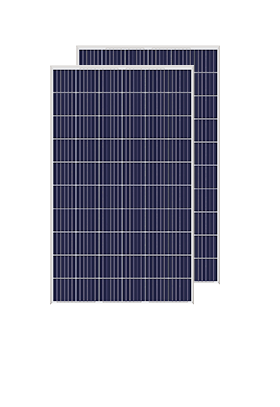


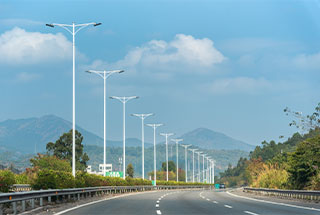
We have cooperated with more than 200 countries in solar energy projects and road lighting projects. We have exported products to many countries and participated in many important government projects around the world.




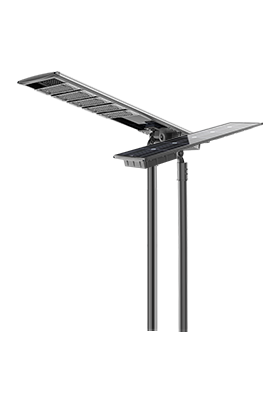


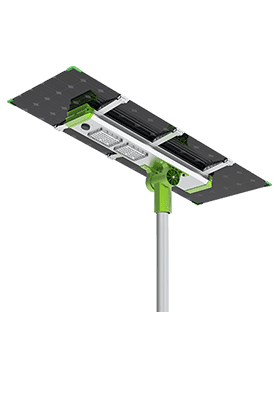
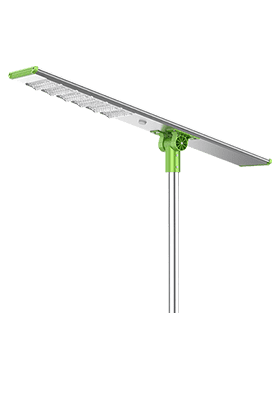
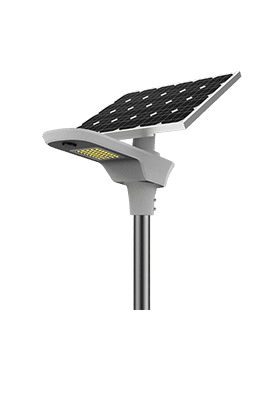


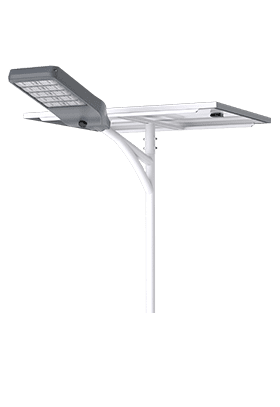
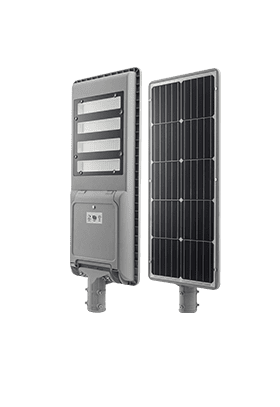
We have cooperated with more than 200 countries in solar energy projects and road lighting projects. We have exported products to many countries and participated in many important government projects around the world.

Anern has 17 years of experience in solar lighting and solar product manufacturing. Anern is headquartered in Guangzhou. With a production base of 30,000 square meters, our company has an R&D team of more than 100 people.
In 2026, North Carolina offers homeowners and businesses solar incentives including utility‑based net metering with full or bridged retail credits, 100% property tax exemption for residential systems, and rebate programs for solar + battery installations. The 30% federal solar Investment Tax Credit (ITC) no longer applies to systems installed in 2026, but utility incentives and tax exemptions can still make solar financially attractive. Incentives vary by utility territory and solar system design.
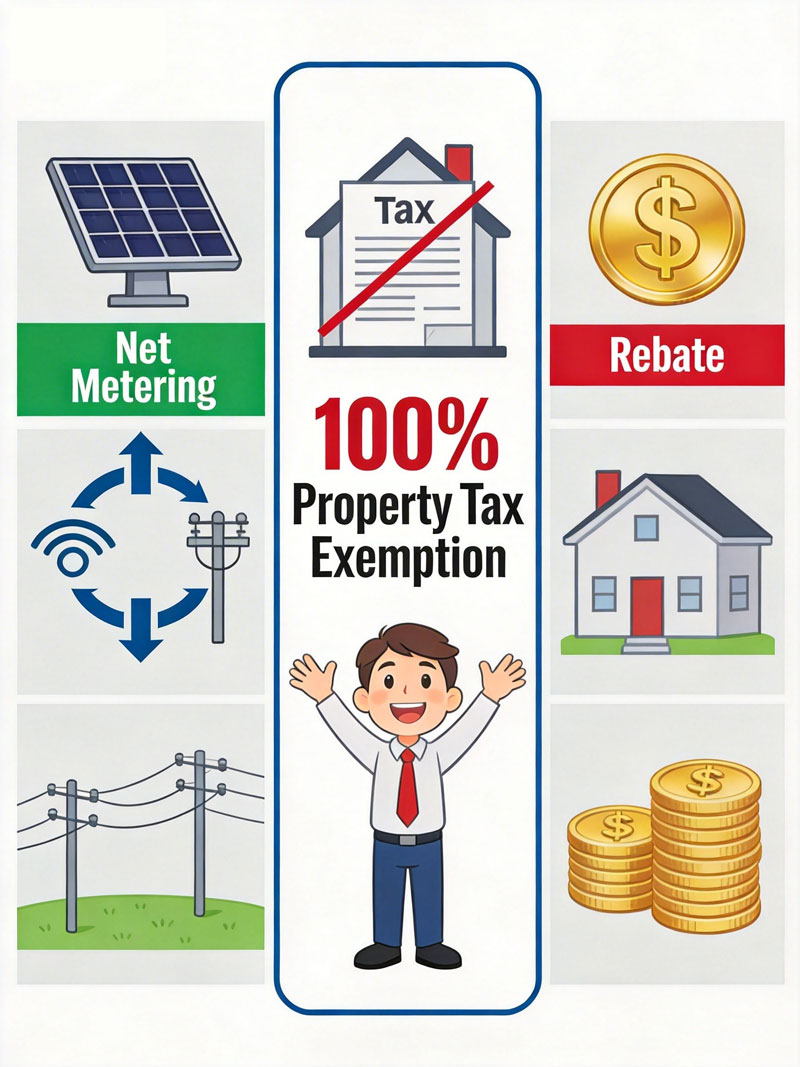
North Carolina solar incentives in 2026 include:
Net Metering / export credits from major utilities
Property tax exemption for residential solar systems
Duke Energy PowerPair rebate for solar + battery systems
Battery bill credits (EnergyWise / Power Manager)
Solar for All (community energy access program)
Local utility rebates or loans (varies by provider)
What North Carolina Does Not Offer in 2026:
A standalone state solar income tax credit
Federal residential ITC for systems installed after December 31, 2025
North Carolina utilities provide net metering or export credit programs:
Dominion Energy customers typically receive 1:1 retail net metering credits on excess solar generation.
Duke Energy customers may be eligible for a Bridge Rate until December 31, 2026, which offers better compensation than standard time‑of‑use (TOU) export credits, subject to capacity limits.
After Bridge Rate capacity is reached or the deadline passes, Duke customers are placed on TOU export rates, providing credits that vary by time of day and season and may be lower than full retail.
These credit programs allow export of unused solar power back to the grid and reduce electricity bills.
North Carolina offers a 100% property tax exemption for residential solar systems:
Solar installations increase home value but do not increase property taxes on that added value.
No separate application is typically needed for residential exemptions.
This exclusion protects savings by avoiding additional taxes on increased property valuation due to solar.
Note: Legislative proposals in 2025 could alter property tax abatement rules starting July 1, 2026, reducing exempt percentages over future years; verify current law before installation.
Duke Energy offers a significant solar incentive for customers who install both a solar system and a battery:
Solar rebate: ~$0.36 per watt for systems up to 10 kW
Battery rebate: ~$400 per kWh (up to ~13.5 kWh systems)
Combined one‑time incentives can reach up to ~$9,000 for solar + battery installs.
Eligibility requires:
Customer of Duke Energy Carolinas or Duke Energy Progress
Solar and battery installed simultaneously
Enrollment in associated programs (e.g., Power Manager/EnergyWise) for ongoing credits.
Some programs provide ongoing energy credits when you participate in battery control or management plans:
Ongoing bill credits may range from ~$23 to $92 per month depending on battery size and program participation.
This adds recurring value beyond upfront rebates.
North Carolina is planning a Solar for All program to expand access to solar for low‑income and disadvantaged communities through funding allocated by the federal government (estimated ~$156 million). The program aims to improve affordability and access for qualifying residents.
Certain local utilities or cooperatives may offer:
Rebates or financing loans for solar water heaters and PV systems
Revolving loan programs with low interest rates (up to 20 years)
Permit fee rebates or local incentives depending on municipality and utility provider.
Solar incentives in North Carolina continue to:
Lower upfront and long‑term cost
Protect homeowners from higher property taxes
Provide export bill credits
Reward pairing solar with storage
Expand access through community programs
Although the federal residential tax credit expired for 2026 installs, state and utility programs still offer meaningful economic value for many homeowners and businesses.
Example for a typical 8 kW solar + storage system with Duke Energy:
| Incentive | Estimated Value |
|---|---|
| Duke PowerPair Rebate (one‑time) | ~$7,000–$9,000 |
| Ongoing Battery Bill Credits | ~$276–$1,104/year |
| Property Tax Exemption (20 years) | ~$4,000–$5,000+ |
| Net Metering/Export Credits | Varies by usage |
| Total Estimated 25‑Year Value | ~$40,000+ (varies by utility & usage) |
Actual savings depend on system size, utility territory, export compensation, and electricity use.
❌ “North Carolina still has the federal solar tax credit in 2026.”
Residential federal ITC for systems installed in 2026 does not apply; only systems installed by December 31, 2025 can claim it.
❌ “Net metering always provides full 1:1 credits.”
While Dominion typically offers retail net metering, other utilities may shift to time‑of‑use export credits.
❌ “Property tax exemptions require extra forms.”
For many residential systems, exemptions apply automatically, but always confirm with your local assessor.
Solar may still be beneficial if:
You installed a system before December 31, 2025 to secure the federal ITC
You plan to pair solar with battery storage to stack rebates and credits
You are in a utility territory with favorable export compensation
You want predictable long‑term electricity savings
If you install in 2026 without federal ITC, rebates and export credits become more important to calculate ROI.
Check your utility territory (Dominion vs Duke) for best export compensation.
Enroll in rebate/battery programs early before capacity caps are reached.
Verify local property tax exemption rules with your county tax assessor.
Consider solar + battery pairing to maximize rebate stacking.
Watch for Solar for All program updates for low‑income eligibility.
Q1: Does North Carolina offer a state solar tax credit for 2026?
A1: No. North Carolina does not offer a state income tax credit for solar in 2026.
Q2: Is the federal solar tax credit still available in 2026?
A2: Residential federal ITC is not available for systems installed in 2026; only systems installed by December 31, 2025 can claim it.
Q3: How does net metering work in North Carolina?
A3: Net metering credits excess energy at retail value for Dominion customers, and Duke Energy offers Bridge or TOU rates.
Q4: Are there rebates for solar + battery systems in NC?
A4: Yes — Duke Energy’s PowerPair program offers up to ~$9,000 in combined solar + battery rebates.
Q5: Does solar increase property taxes in North Carolina?
A5: No. Residential solar systems are exempt from property tax increases.
Solar incentive programs, export compensation structures, and rebate availability in North Carolina may evolve during 2026 due to utility rule changes or legislative actions. Always confirm current program details with your utility provider and local authorities before installing solar.
Read more: